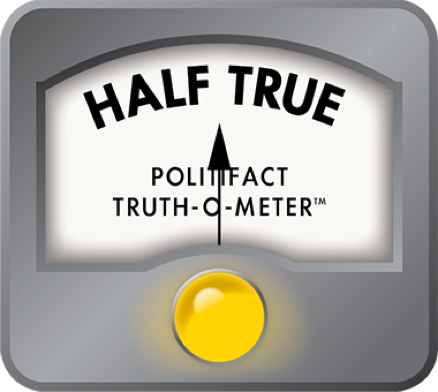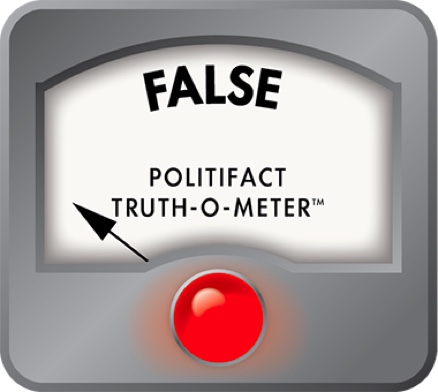

Her health care plan will cost $110-billion in the first year, which can be paid for with savings.

Our only agenda is to publish the truth so you can be an informed participant in democracy.
We need your help.
The health care plan proposed by Clinton doesn't offer lots of details, but in one spot the figure is in black and white: first-year cost, $110-billion. The proposal goes on to show how that cost would be paid for with savings from other changes to the health care system.
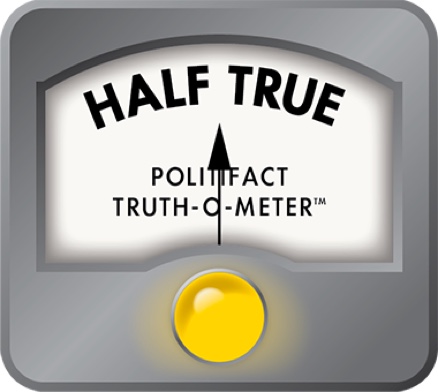
There's no way to verify the $110-billion figure, but those off-setting savings? They're pretty optimistic, which is why we rate this claim as half-true.
Much of the savings would come from "discontinuing" the 2001 tax cuts to households with incomes over $250,000 per year, which are scheduled to expire in 2010. Clinton, like most Democrats, has proposed letting those high-income tax cuts expire, which the Congressional Budget Office says would generate $52-billion in tax revenues.
Over half of the $110-billion would come from such things as saving $10-billion by phasing out excessive Medicare payments to HMOs and other managed care plans.
While it is true that the $10-billion in overpayments to Medicare HMOs exists in the system, so far the Senate has not agreed to such cuts. Whether Congress under a Clinton presidency would agree to slash reimbursements to a powerful private insurance lobby is yet to be seen.
The plan also estimates that $35-billion could be saved by "modernizing the health system" by encouraging health care providers to adopt cost-saving information technology programs and better management of chronic diseases such as diabetes.
Clinton's policy expert said the figure is a very conservative estimate and multiple studies suggest the actual figure will be much higher. The Clinton campaign cited a 2005 Rand Corp. study that put the potential savings at $77-billion per year.
But that study is not without critics.
Dr. David Himmelstein and Dr. Steffie Woolhandler, practicing physicians as well as professors at Harvard Medical School, criticized the Rand study, noting that it was funded by a technology company. At the time, the two physicians wrote in Health Affairs , "For decades, vendors have capitalized on this enthusiasm. But hospitals and clinics have ended up with little to show for their large outlays."
Himmelstein said Tuesday that promises of big savings through information technology is "pure vaporware."
"And though there's some evidence that disease management improves care, there's no evidence it saves money," he said. "People getting in to see their doctors means more cost, not less."
Perspective; Hope And Hype: Predicting The Impact Of Electronic Medical Records, September-October 2005, David U. Himmelstein and Steffie Woolhandler















In a world of wild talk and fake news, help us stand up for the facts.