Fact-check: What to know about US military boat strikes as death toll passes 200

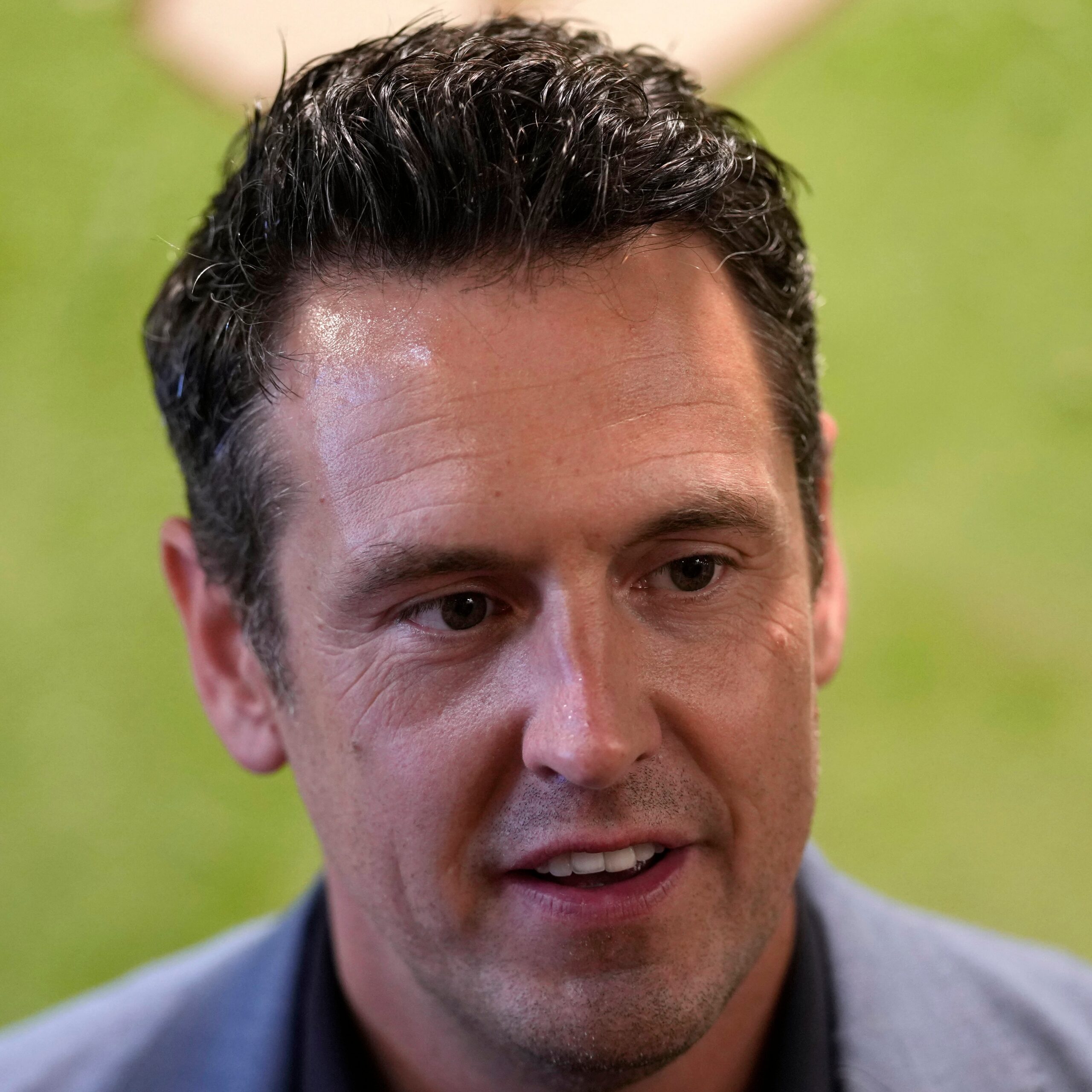
Secretary of State Marco Rubio defended U.S. military strikes on boats in the Caribbean Sea and Pacific Ocean during a Senate hearing June 2, saying the Defense Department determined the strikes’ legality and based its decisions on intelligence information.
“Every strike has a legal officer on the deck that has to make a determination about whether the call is legal or not, and this is done by the Department of War, the way it’s been done in other theaters around the world,” Rubio said in response to a question from Sen. Tim Kaine, D-Va., about the criteria to target boats.
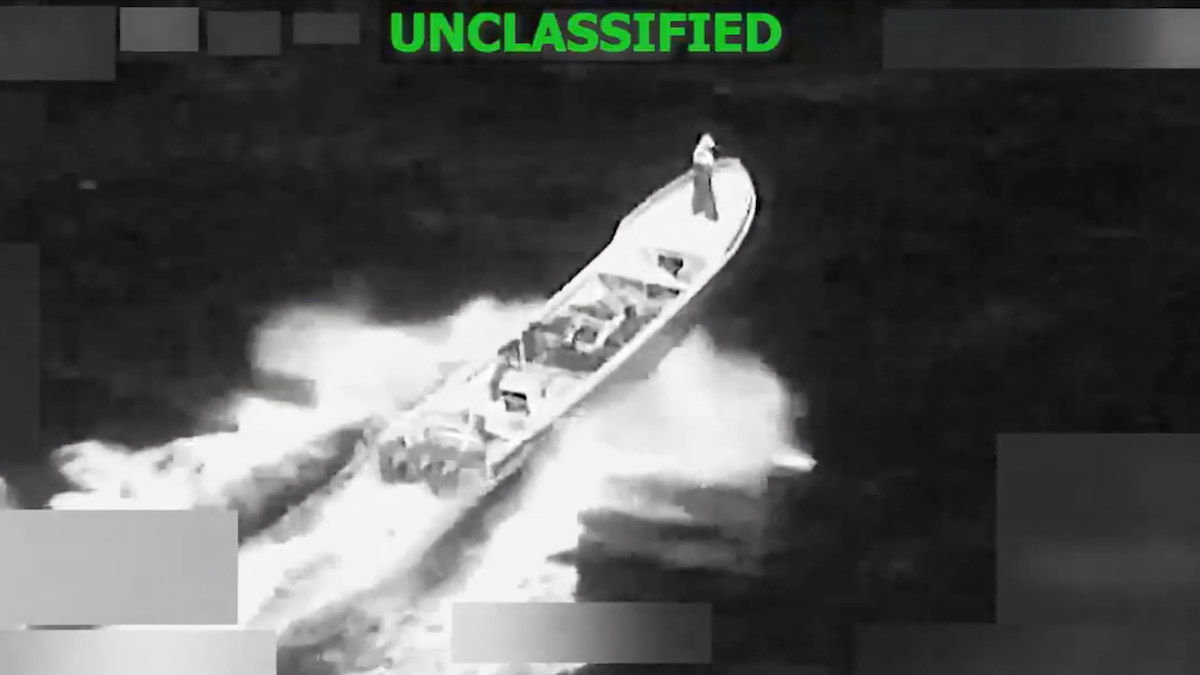
The U.S. military on May 30 struck another boat it said was engaged in “narco-trafficking operations” in the eastern Pacific Ocean, killing three men and increasing the total death toll to 205 people.
The U.S. Southern Command shared footage on X of the boats being blown up, but provided no evidence that the boat was involved in narcotrafficking.
The U.S. military started attacking boats off the coast of Venezuela on Sept. 2; the Trump administration has said it’s part of an effort to thwart drug smuggling. The U.S. has since struck at least 59 boats in the Caribbean Sea and eastern Pacific Ocean.
In October, President Donald Trump declared that the U.S. is in an “armed conflict” with drug cartels and designated some as terrorist organizations.
Here’s a rundown of our recent fact-checks and stories about the boat strikes.
Trump on number of lives potentially saved
Trump has said that with every boat destroyed, 25,000 American lives were saved.
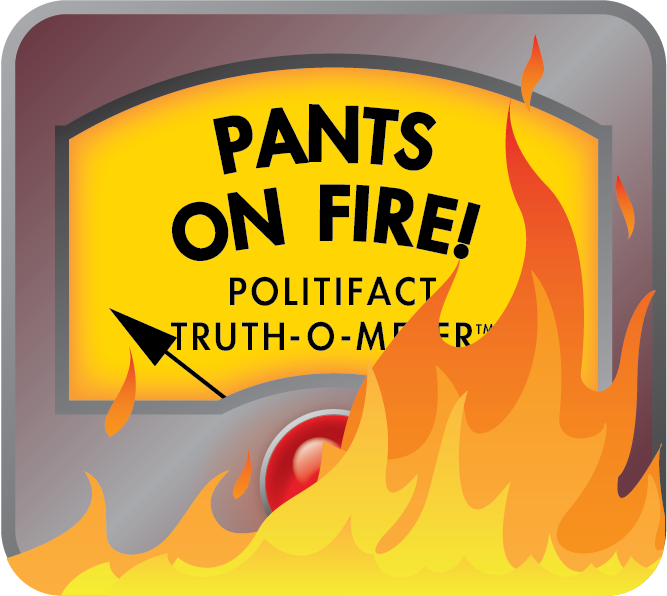
That’s Pants on Fire.
The Trump administration has provided no evidence about the type or quantity of drugs on the boats. This lack of information makes it impossible to know the lethality of the drugs.
Even if each of the boats were carrying 25,000 lethal drug doses, that doesn’t mean destroying them saved thousands of lives. There is no way to know how many lives were saved as a result of drug seizures, drug experts told PolitiFact.
There were over 68,000 U.S. drug overdose deaths from January 2024 to December 2025, according to the Centers for Disease Control and Prevention. If Trump’s statement were accurate, five boat strikes would have saved about double the number of lives that were lost to overdoses in a year.
Trump on amount of drugs seized
In January, after U.S. vessel strikes in the Caribbean Sea and Pacific Ocean, Trump said “drugs entering our country by sea are down 97%.” He said it again in May.
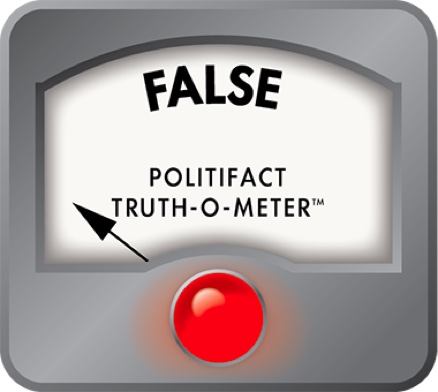
It’s False.
There has been a drop in Customs and Border Protection drug seizures since the strikes began. But the Coast Guard — not CBP — oversees most drug seizures on water, especially in international waters. And that agency has seen a steep increase in drug seizures.
When asked in February for evidence about the 97% claim, the White House pointed us to CBP statistics from July 2025 to November 2025. Those numbers showed a 98% drop in the pounds of drugs seized by CBP air and marine operations.
The White House didn’t explain why it chose those months. There has been a drop in CBP drug seizures since September when the vessel strikes began, but the percentage drop fluctuates depending on which months are being compared.
The White House cites a drop in CBP drug seizures as a success at the same time the Coast Guard cites an increase in drug interdictions as a success, too.
However, neither an increase nor a decrease in drug seizures shows how many drugs are entering the U.S. That number is unknowable, according to drug experts. Drug seizures tell us only how many drugs are stopped from entering the U.S.
Are the strikes legal?
The White House and the Defense Department say the attacks are legal.
But legal experts have said the attacks are illegal under maritime law or human rights conventions; others said it contradicted longstanding U.S. military practices.
“The administration has tried to define the boats as a military threat, but it has failed. It has not answered the question why it could not use U.S. vessels to intercept and search boats against which it can produce reasonable suspicion,” said Walter Olson, a senior fellow at the libertarian Cato Institute.
The U.S. has not signed the United Nations Convention on the Law of the Sea, but U.S. military legal advisors have previously said that the U.S. should “act in a manner consistent with its provisions.”
Separately, under Article 2(4) of the United Nations Charter, the U.S. “would only have the right to use military force against a foreign vessel on the high seas if it could be demonstrated that the vessel was engaging in an armed attack against the United States or that such an armed attack was imminent,” Anthony Clark Arend, a Georgetown University specialist in international law, said in September.
The Pentagon said in May that its watchdog will evaluate whether the U.S. military followed a targeting framework during the boat strikes.
Is Venezuela sending drugs to the U.S.?
The Trump administration said the people in the first boats the military struck were members of Tren de Aragua, a Venezuelan gang, and they were carrying drugs en route to the U.S.
The U.S. has provided no evidence that these people are gang members.
After multiple boat attacks, the U.S. captured former Venezuelan leader Nicolás Maduro and his wife, Cilia Flores, Jan. 3. Both are charged with narcoterrorism and weapons offenses.
Experts on drugs and Venezuela said the country plays a minor role in trafficking drugs that reach the U.S. Most fentanyl in the U.S. comes from Mexico, and most cocaine comes from Colombia.
InSight Crime, a think tank focused on crime and security in the Americas, reported that despite Maduro’s ousting, the Chavista regime that Maduro headed remains in place — which means “state-embedded drug trafficking, often described as the Cartel of the Suns, is also largely untouched,” the report says.
John Walsh, director for drug policy and the Andes at the Washington Office on Latin America, told PolitiFact that even if traffickers were affected by these attacks, they usually adapt.
“Now it’s hard to find a country in Latin America that’s not literally affected by the drug trade in one way or another, and that is a result of the ability of organized crime to spread and to adapt,” Walsh said. “The idea that these boat strikes would have some sort of decisive role in curbing supply just seems pretty illusory.”
Our Sources
U.S. Southern Command’s X post, May 30, 2026
U.S. Southern Command’s X post, May 29, 2026
U.S. Southern Command’s X post, May 27, 2026
U.S. Southern Command’s X post, May 26, 2026
CBS News, U.S. military strike on alleged drug boat in Pacific Ocean kills 3 people in fourth attack in a week, May 31, 2026
WOLA, TO DATE: U.S. Maritime Attacks in the Caribbean and Eastern Pacific, Nov. 7, 2025
CNN, Trump admin tells Congress the US is in ‘armed conflict’ with drug cartels, Oct. 2, 2025
The White House, Designating Cartels And Other Organizations As Foreign Terrorist Organizations And Specially Designated Global Terrorists, Jan. 20, 2025
PolitiFact, Fact-checking Donald Trump: Has each boat strike off the coast of Venezuela saved 25,000 lives?, Oct. 16, 2025
Roll Call, Interview: Tom Llamas of NBC News Interviews Donald Trump - February 4, 2026, Feb. 4, 2026
CDC, Provisional Drug Overdose Death Counts, accessed June 2, 2026
PolitiFact, Is President Donald Trump right that drugs entering the US by sea have dropped by 97%?, Feb. 23, 2026
Roll Call, Speech: Donald Trump Discusses Tax Cuts and the Economy in Suffern, New York - May 22, 2026, May 22, 2026
CBP, Air and Marine Operations Statistics, accessed June 2, 2026
U.S. Coast Guard News, U.S. Coast Guard marks 200,000 pounds of cocaine seized in Operation Pacific Viper, Feb. 5, 2026
PolitiFact, The U.S. attack against a Venezuelan ‘drug carrying boat’ raises legal questions, Sept. 8, 2025
PBS, Pentagon watchdog to evaluate U.S. military's boat strikes in Latin America, May 20, 2026
USNWC, U.S. Position on the U.N. Convention on the Law of the Sea, accessed June 2, 2026
InSight Crime, Cocaine and Venezuela’s Cartel of the Suns Post-Maduro, Feb. 25, 2026
PolitiFact, What are the charges against Venezuela's Maduro? How can the US indict foreign politicians?, Jan. 5, 2026
Email interview with Walter Olson, a senior fellow at the libertarian Cato Institute, June 1, 2026
Phone interview with John Walsh, director for drug policy and the Andes at the Washington Office on Latin America, June 1, 2026
C-SPAN, Secy. Rubio Testifies on Budget Request Amid Ongoing Iran Conflict, June 2, 2026
PolitiFact, Fact-checking Marco Rubio at Senate Foreign Relations Committee, June 2, 2026
The Associated Press, Trump says US is in ‘armed conflict’ with drug cartels after ordering strikes in the Caribbean, Oct. 2, 2025