Fact-checking claims that Florida’s property tax amendment will ‘defund’ essential public services
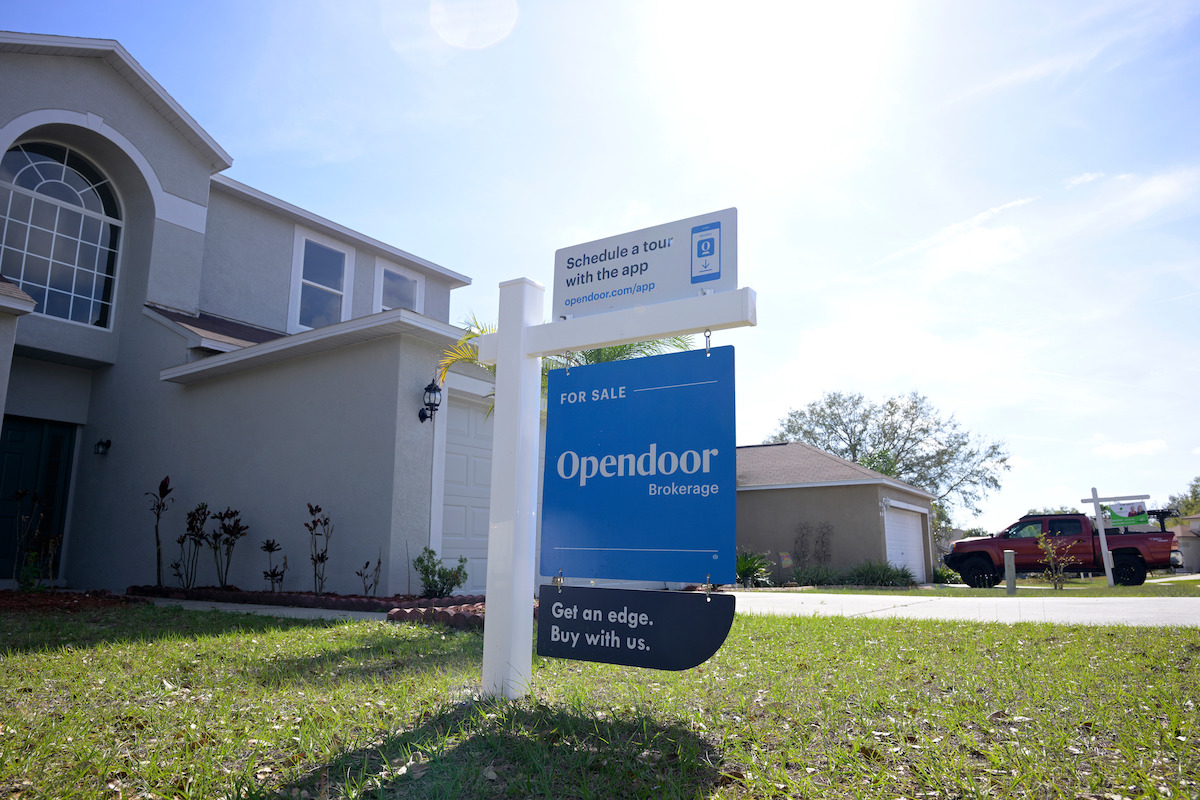

Some Florida Democrats are warning that a Republican plan to drastically reduce property taxes on Floridians’ primary homes isn’t as good as it seems, because it could mean losing essential local services.
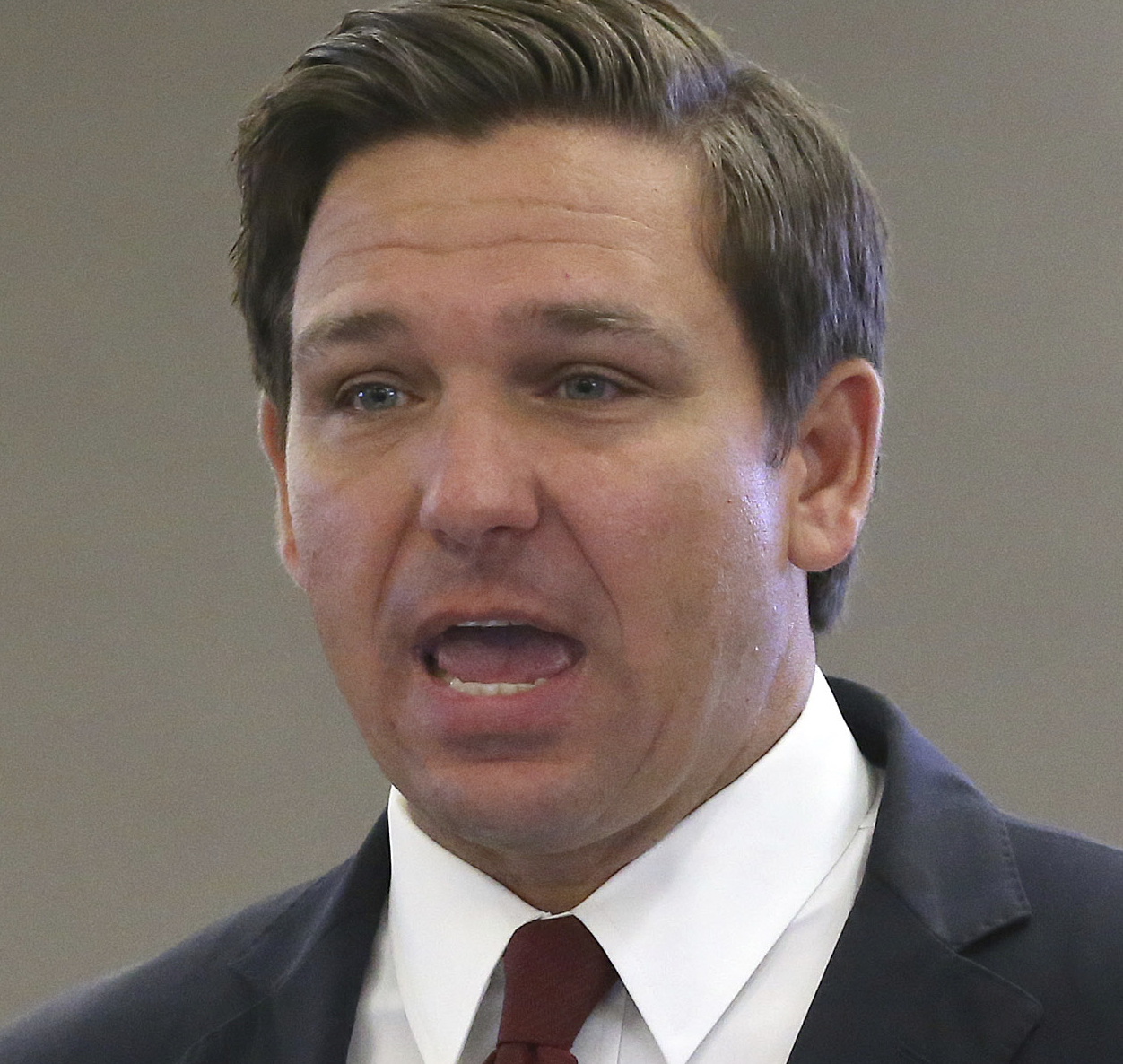
On June 2, the Republican-controlled Legislature voted in favor of putting Gov. Ron DeSantis’ property tax amendment on the ballot for voters to consider in the November election.
The amendment needs at least 60% of the vote to become law, but whether it makes it onto the ballot is still to be determined, because it’s likely to be challenged in court first.
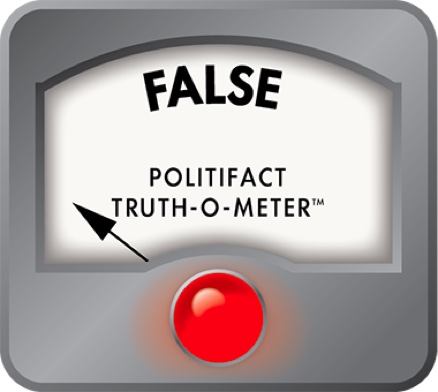
“This proposal, if enacted, will defund essential public services. If history is any indication, this will lead to increased fees and a punishing burden on working families through higher sales and excise taxes,” Jerry Demings, Orange County Mayor and Democratic gubernatorial candidate, told the Tampa Bay Times on May 27.
Florida House Democratic Leader Fentrice Driskell, D-Tampa, said June 1 that communities would “have to offset” the revenue loss “by increasing taxes and fees for public services and potentially making budget cuts.”
The ballot amendment raises Florida’s current $50,000 threshold for taxing primary residences, or homestead properties, to $150,000 in 2027 and to $250,000 in 2028. This would erase property taxes on primary homes assessed at these values or less.
The measure says the Legislature “shall” create a schedule to continue raising the exemption in subsequent years, but that’s optional.
The amendment also includes changes for second homes, businesses and other non-homestead properties, reducing their annual property tax increase cap from 10% to 5%.
Kurt Wenner, senior vice president of research at Florida TaxWatch, a nonpartisan government watchdog organization funded by business interests, said the measure is “so large and unknown” that no one knows what could happen if the amendment prevails.
“All local governments are different. They depend on varying amounts of property taxes and have different revenue options,” he said. “We’ll have to see when the revenue comes in, how they do their budgets and how they’re going to respond.”
The Legislature removed a provision that would have created a state trust fund to assist small, rural counties that stand to lose the most money.
A portion of property taxes help fund school districts; the proposal originally sought to eliminate some of the taxes that went to schools, but the final version kept them. This means that homeowners may see their city or county property taxes drop under the measure, but the portion of their bill for the local school district would remain.
Former Republican state Sen. Jeff Brandes, founder and CEO of the Florida Policy Project nonprofit, said whether the amendment defunds essential services largely depends on the county. Some counties get most of their tax revenue from primary residences, while others rely on commercial and agricultural properties, he said. “Nobody understands the fallout of this bill.”
A DeSantis spokesperson said the defunding claims are false and referred to the governor’s previous comments about local governments being able to absorb the loss because of how much property taxes have risen over the last several years. DeSantis has said that under his plan, municipalities’ budgets will resemble what they were around 2019 and give taxpayers a break.
Studies have shown that many Florida counties have had tax revenue increases that exceed recent inflation and population growth in the state.
But government spending on public safety, healthcare for public employees, utilities, maintenance and construction have all gotten more expensive, said Esteban Leonardo Santis, research director at the left-leaning Florida Policy Institute. “Forcing local budgets to collect property taxes at 2019 levels would defund them, because these costs would still remain,” Santis said.
Amendment guarantees local tax revenue loss, service cuts remain uncertain
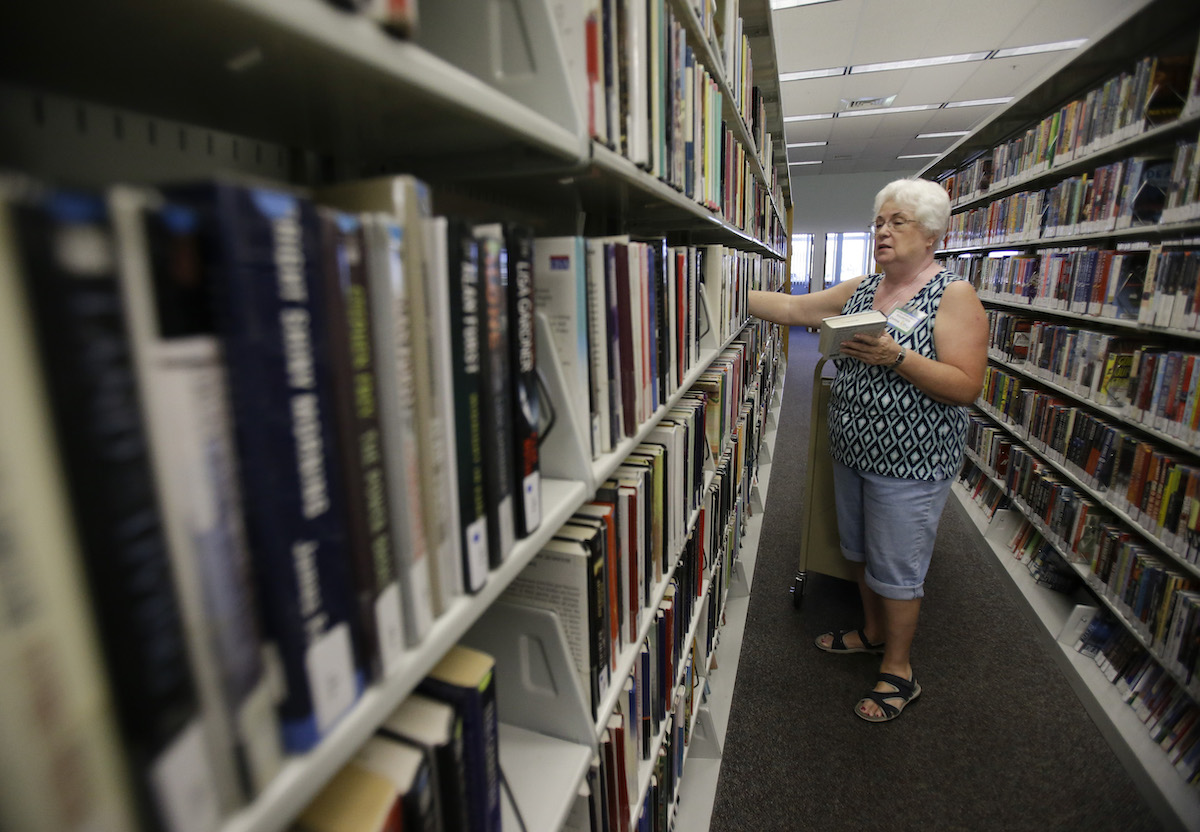
A volunteer at a Citrus County Library branch in Beverly Hills, Fla., puts books back on shelves in September 2014 (AP).
Experts said it’s difficult to determine which public services could be affected, and where, because each city and county is different, and the plan hasn’t undergone a fiscal impact study.
“Local governments are going to lose revenue, there’s no question about that,” Wenner said. “It will depend on whether they’re able to find efficiencies and non-essential things to cut. In areas with a lot of homesteads, it’s going to be tough for them not to reduce some services unless they raise revenue to replace it.”
The amount of revenue that comes from property taxes varies across the state. For counties, it can range from 12% to more than 50% of their budget, and for cities it can range from almost nothing to 90%, Wenner said.
Broward County, for example, could stand to lose $195 million in the first year under the measure, and $333.8 million in its second year, according to its property appraiser’s calculations.
By 2028, Hillsborough County said it could lose $478 million annually, plus an additional $83 million stemming from the lowered 5% cap on non-homestead properties.
The Florida Policy Institute said in a May 29 analysis that the measure would adversely impact counties, municipalities and special districts such as Children’s Services Councils and Hospital Districts. It found counties would lose an average of $4.8 billion annually under the $250,000 exemption.
The Florida Association of Counties reached a similar conclusion, saying it would cost counties $4.6 billion by fiscal year 2028-29. That could increase to $8.65 billion if homestead property taxes are fully eliminated.
For many rural, fiscally-constrained counties where properties have lower assessed values, the Florida Policy Institute said a $250,000 exemption would be close to a “full elimination” of taxes on primary residences.
Local governments may shift resources and raise taxes elsewhere

A Miami-Dade Fire Rescue truck in Surfside, Fla., in July 2022. (AP)
Tax experts said local governments will likely raise millage rates, which are used to calculate property taxes, or issue new taxes and fees to offset losses and keep services at their current levels.
“This is a tax shift, not a tax cut,” Brandes said. “There are scenarios where people will pay more in other taxes and fees, and renters and small businesses, which aren’t homesteaded, will likely feel the brunt of it.”
Counties and cities that can’t raise the revenue could become dependent on the state for money, he said, eventually forcing some to merge into larger municipalities to help offset costs.
They might find some fat to cut in their budgets, Wenner said, but “some don’t have that much to trim” will likely raise millage rates.
The Florida Constitution caps property tax millage rates for local governments at 10 mills. A “mill” is a unit of measurement: One mill equals $1 of tax for every $1,000 of assessed property value. So a rate of one mill on a $200,000 house equals $200 in annual taxes, excluding exemptions.
“Nothing in DeSantis’ measure addresses the millage, and how much it can go up,” Brandes said. “(Local governments) can move it up to the cap if they want, and they will.”
Tax bills have ad valorem taxes that are based on a property’s assessed value, which DeSantis’ measure addresses for primary homes with the new exemptions. They also have non-ad valorem taxes — flat fees that fund specific local services or infrastructure improvements.
Non-ad valorem taxes aren’t subject to exemptions, including for homesteads. Experts said counties and cities could try to make up the loss in funds by relying more heavily on these revenue sources, which can include local sales taxes, motor fuel taxes, tourist development taxes and utility taxes.
Local governments could pass ordinances to increase or create new fees or special assessments to raise money.
“They’re going to change the water bill, the garbage bill, the franchise fees, all these little things that people don’t see, to try to raise money,” Brandes said, “and people will end up paying more.”
RELATED: Will Florida’s Supreme Court have to review lawmakers’ property tax proposal? Only if someone sues
RELATED: Fact-checking DeSantis: Would his plan exempt 60% of Florida homeowners from paying property taxes?
UPDATE, June 5, 2026: We updated the story to describe the Florida Policy Institute as left-leaning.
Our Sources
The Tampa Bay Times, Florida’s candidates for governor react to DeSantis property tax plan, May 27, 2026
CBS News, Florida lawmakers tweak DeSantis' proposed property tax cut ahead of expected floor votes, June 2, 2026
Tallahassee Democrat, Recap: Florida House, Senate pass DeSantis property tax plan, June 2, 2026
Florida Phoenix, Local government advocate says property tax proposal would make Florida ‘more unaffordable’, June 1, 2026
Florida Association of Counties, FAC County Revenue Impacts Readers Guide and Disclaimer, Accessed June 1, 2026
Florida Policy Institute, Map: Projected Revenue Loss for Florida School Districts and Counties Under Governor’s Property Tax Reform Proposal, May 29, 2026
Florida Trident, For these Florida counties, eliminating property taxes would mean ‘a dismemberment of vital services’, Nov. 18, 2025
Florida TaxWatch, 2025 How Florida Counties Compare, Dec. 15, 2025
Florida TaxWatch, Analysis of the Governor’s Property Tax Amendment and Legislation, Recommends Florida Taxation and Budget Reform Commission Lead Debate, June 1, 2026
X.com, Gov. DeSantis interview with Sean Hannity, May 28, 2026
Florida Department of Revenue, Fiscally Constrained Counties FY 2025-2026, Accessed June 3, 2026
Florida Department of Revenue, Maximum Millage Compliance Reports, Accessed June 3, 2026
Fox News 13, Florida Legislature approves DeSantis property tax cut plan for November ballot, June 2, 2026
Sun Sentinel, Property tax cuts: Broward homeowners would save thousands while cities lose millions, May 29, 2026
Phone interview, Jeff Brandes, former state senator, founder and CEO of Florida Policy Project, June 2, 2026
Phone interview, Kurt Wenner, senior vice president of research at Florida Tax Watch, June 2, 2026
Email interview, Esteban Leonardo Santis, research director at Florida Policy Institute, June 2, 2026
Email interview, Molly Best, spokesperson for Gov. Ron DeSantis, June 3, 2026