Greenland deal: What Trump said about ‘permanent control over security’ and what’s next
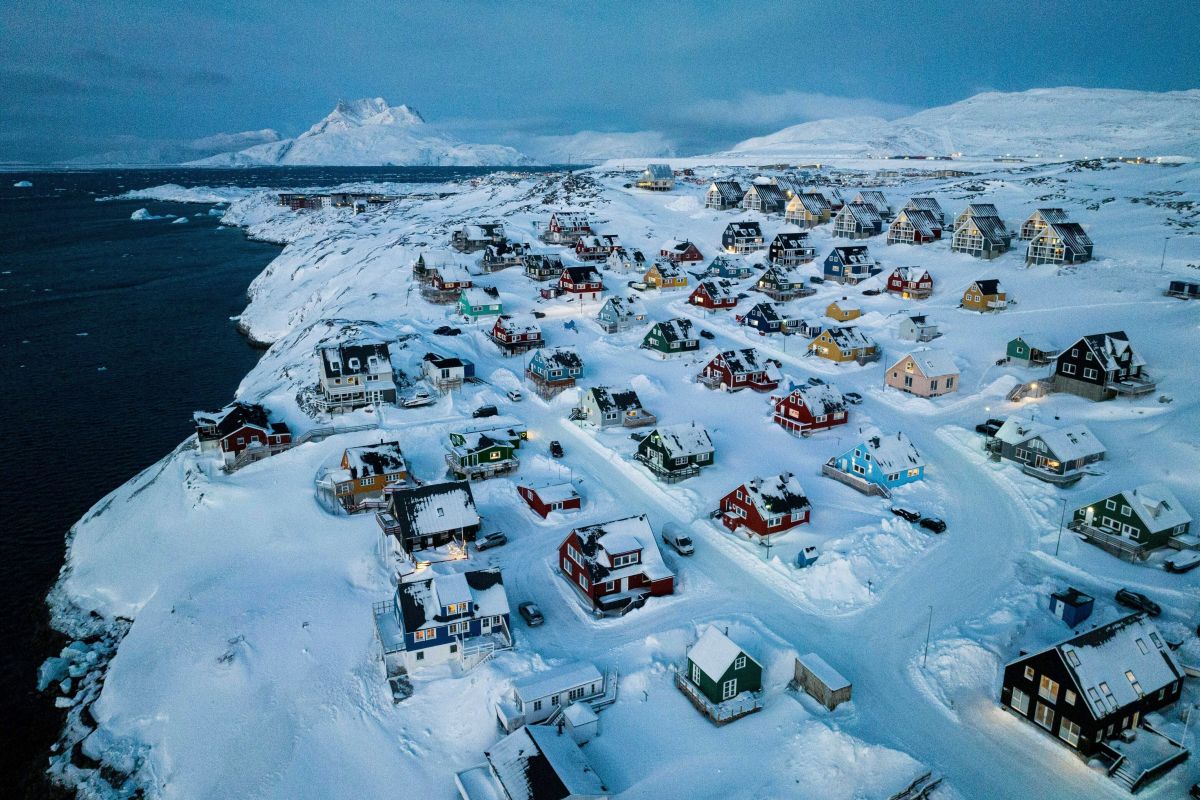

A long-running argument within the NATO alliance may have come to an amicable conclusion.
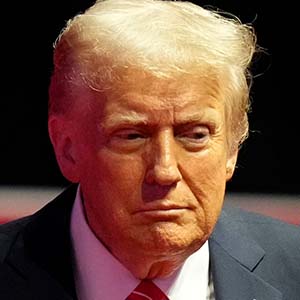
President Donald Trump on Sept. 18 announced a breakthrough on U.S. military presence in Greenland, a large Arctic island that’s part of Denmark but which Trump has said should come under U.S. control for national security reasons.
“The United States of America has entered into an Agreement with The Kingdom of Denmark, and Greenland, that gives the United States permanent control over security, and all other needs, in Greenland, completely addressing ALL of our many U.S. concerns,” Trump announced a breakthrough on Truth Social.
Because Greenland exercises home rule under Danish control, taking over Greenland could have put longstanding NATO allies on war footing against each other. NATO allies opposed a U.S. acquisition, with Denmark joining the United Kingdom, France, Finland, Germany, the Netherlands, Norway and Sweden for military exercises in Greenland in January.
Initial details about the new accord or its final language are thin. As Trump celebrated the Americans’ “dream come true,” Danish and Greenlandic leaders praised the discussions but said the deal isn’t complete yet.
It’s also not yet clear how much different it would be from the status quo. Already, the U.S. has military assets and personnel in Greenland.
“This Greenland agreement appears, from what we have heard, to be a new summation of agreements we have had formally or in an applied fashion with Denmark and the Greenlanders during the Cold War and up to the present,” said Evelyn Farkas, executive director of Arizona State University’s McCain Institute, which studies foreign policy.
It might resemble the USMCA trade agreement Trump negotiated in his first term with Mexico and Canada, which replaced the North American Free Trade Agreement “with a very similar agreement,” she said.
One thing Trump didn’t mention: The deal does not add Greenland as a 51st U.S. state, which Trump and his allies had mused about multiple times.
The parties said the deal is on track to be signed at the United Nations General Assembly, which is under way and ends Sept. 28.
Here are some questions and answers about the agreement with Greenland and Denmark, based on what we know now.
Why does Trump want Greenland under U.S. control?
The Arctic naval corridor between Greenland, Iceland and the United Kingdom, called the “GIUK Gap,” is a main transit route for Europe, the Americas and Russia.
The U.S. also has troops in Greenland at the Pituffik Space Base. Trump has said Greenland is crucial for his plans for the Golden Dome, a “state-of-the-art, next-generation missile defense shield” he promised in the 2024 campaign.
Greenland also has mineral deposits that are valuable for items such as batteries and electric vehicles.
Who controls Greenland now?
Denmark’s colonization of Greenland dates to the 1720s. In 1933, an international court settled a territorial dispute between Denmark and Norway, ruling that as of July 1931, Denmark “possessed a valid title to the sovereignty over all Greenland.”
After the 1945 approval of the United Nations charter — the organization’s founding document and the foundation of much of international law — Denmark incorporated Greenland through a constitutional amendment and gave it representation in the Danish Parliament in 1953.
Denmark told the United Nations that any colonial-type status had ended; the United Nations General Assembly accepted this change in November 1954. The United States voted to accept Greenland’s new status.
Since then, Greenland has, incrementally but consistently, moved toward greater autonomy. Greenlandic political activists successfully pushed for and achieved home rule in 1979, which established its parliament. Today, Greenland is a district within the sovereign state of Denmark, with two elected representatives in Denmark’s parliament.
What do we know about the deal?
Earlier this year — amid Trump’s military threats against Greenland — the three parties agreed to “high-level” negotiations to defuse tensions. Those talks produced the accord Trump announced.
Trump did not release a formal document, but in his post, he offered his characterization of some of the agreement’s main points:
- “The United States will FOREVER have the complete ability to do what is necessary in Greenland in order to secure and defend the security of Greenland, and the United States of America.”
- “No U.S. adversary can EVER have a base in Greenland, have a military presence in Greenland, or make sensitive investments in Greenland, without our express written approval.”
- “This is an ‘Infinite Life’ Agreement, there is no end.”
- “There will be NO COST to the United States”
As of Sept. 19 afternoon, the Trump administration had not released the agreement’s official text. State Department officials told PBS News and The Atlantic that the agreement gives the U.S. permanent rights to establish military bases, bans bases for non-NATO countries, blocks Chinese and Russian investments, ends any territorial claims by the U.S., and ensures that Greenland maintains its self-determination.
U.S. Secretary of State Marco Rubio said in a statement that the agreement “permanently and completely addresses our national security concerns in Greenland.”
Greenland’s premier, Jens-Frederik Nielsen, and Denmark’s prime minister, Mette Frederiksen, issued statements Sept. 18 with optimistic tones.
“I am pleased that we now have the prospect of a good agreement for Greenland, the Kingdom of Denmark and the United States,” Frederiksen said, adding that it strengthens shared security in the Arctic and the North Atlantic and “recognizes the sovereignty and territorial integrity of the Kingdom and the Greenlandic people’s right to self-determination.”
Denmark’s foreign minister, Lars Løkke Rasmussen, posted on Facebook that “next week could be a good week … for both Greenland, Denmark and the USA.”
A divergent note was that Nielsen framed the situation as the parties being “close to concluding an agreement,” rather than the done deal that Trump announced.
What are the next steps?
The parties say they intend to sign the agreement at the United Nations next week. It’s unclear whether the agreement qualifies as a treaty, which would require U.S. Senate approval; Trump did not use that word in his post.
How does the agreement compare with what Trump previously said he wanted?
In a January Oval Office interview with The New York Times, Trump said he would settle for nothing less than U.S. ownership of Greenland. “Because that’s what I feel is psychologically needed for success,” he said. “I think that ownership gives you a thing that you can’t do, whether you’re talking about a lease or a treaty.”
At the same time, Trump has long portrayed himself as a master negotiator, and the fact that he accepted an agreement short of making Greenland the 51st state is not surprising, analysts said.
Based on what’s publicly known, it’s hard to tell how things will be different from the way they are now.
“The NATO treaty already obligates the United States to come to the defense of Denmark, including Greenland,” said Greg Fox, Wayne State University law professor.
And in 1951, the U.S. signed a Greenland-related defense agreement with Denmark. “The 1951 agreement gave us a lot of what it sounds like he agreed to today,” said James J. Townsend Jr., a senior adviser to the Atlantic Council, a foreign policy think tank, and a former deputy assistant secretary of defense for European and NATO policy. (The agreement was updated in 2004.)
One tangible change, experts said, would be that the new agreement explicitly includes Greenland as a signatory. Greenland’s direct participation in the agreement would further solidify U.S. access to the island, even if Greenland one day decides to seek independence.
It’s unclear how the agreement would treat Russian or Chinese investments in Greenland; while those might have been unlikely under the prior agreements, the new agreement might provide a more explicit ban.
Trump said the agreement would be “infinite,” but the 1969 Vienna Convention on the Law of Treaties said that silence on an end date means that an agreement is effectively infinite, said Tom Ginsburg, international law professor at the University of Chicago. That could make Trump’s claim of newfound permanence insignificant.
To Trump, the value of the fight over Greenland is “performative not instrumental,” said John Pike, director of globalsecurity.org, a think tank.
“If it turns out that this agreement just restates terms of the existing treaty relations between the U.S. and Denmark, that seems to be a huge win for Denmark, Greenland, Europe and international law prohibiting the use of aggressive force,” Fox said. “Of course (Trump) can brag all he wants about ‘wins’ … but I imagine Denmark would be willing to live with that.”
What does this agreement mean for NATO?
At the very least, a signed agreement will be “one less irritant in trans-Atlantic relations” as the alliance faces other strategic challenges, especially a restive Russia, Pike said.
Bruce Stokes, a visiting senior fellow with the German Marshall Fund, told PolitiFact that “Trump will portray this deal as demonstrating the effectiveness of his threats at a time when he desperately needs a win.”
Our Sources
Donald Trump, Truth Social post, Sept. 18, 2026
Jens-Frederik Nielsen and Mette Frederiksen, statements, Sept. 18, 2026
Lars Løkke Rasmussen, Facebook post, Sept. 19, 2026
U.S. Space Force, “Pituffik Space Base,” accessed Sept. 19, 2026
Michael McFaul, X post, Sept. 18, 2026
Vienna Convention on the Law of Treaties, 1969
Danish Institute for International Studies, Why is Greenland part of the Kingdom of Denmark? A Short History, Oct. 9, 2025
Medieval Histories, Greenland Was Part of Denmark for 1000 years, Jan. 6, 2026
Department of State Office of the Historian, Convention Between the United States and Denmark for the Cession of the Danish West Indies, accessed Jan. 7, 2026 (Archived)
Oxford Reports on International Law, Legal Status of Eastern Greenland, Denmark v Norway, Judgment, April 5, 1933
Maria Ackrén, “Referendums in Greenland – From Home Rule to Self-Government,” 2019
SciencesPo, Greenland, Denmark and the US: the meaning of the colonial past to the ongoing dynamics, Feb. 14, 2025
The Library of Congress, Greenland’s National Day, the Home Rule Act (1979), and the Act on Self-Government (2009), June 21, 2019
History.com, The U.S. Bought 3 Virgin Islands from Denmark. The Deal Took 50 Years, May 28, 2025
U.S. Department of State, Agreement between the UNITED STATES OF AMERICA and DENMARK, Aug. 6, 2004
United Nations, 849 Cessation of the transmission of information under Article 73 e of the Charter in respect of Greenland, accessed Jan. 8, 2026
United Nations, “Committee on Information from Non-Self-Governing Territories Hears Danish Statement on Greenland,” Sept. 8, 1954
United Nations, Greenland and the UN: Colony or not a colony – that was the question, accessed Jan. 8, 2026
United Nations Digital Library, Cessation of the transmission of information under Article 73 e of the Charter in respect of Greenland, accessed Jan. 8, 2025
Center for Strategic and International Studies, “The GIUK Gap: A New Age of A2/AD in Contested Strategic Maritime Spaces,” Sept. 12, 2024
Nick Schifrin, X post, Sept. 18, 2026
The Conversation, “Greenland is rich in natural resources – a geologist explains why,” Jan. 8, 2026
Reuters, “US and Denmark reach deal on Greenland, Trump,” Sept. 18, 2026
BBC, “Nato welcomes Greenland deal as Trump says it will give US ‘permanent security control,’” Sept. 19, 2026
BBC, “US and Denmark reach deal over Greenland after Trump annexation threats,” Sept. 18, 2026
Politico, “White House: Trump ‘discussing a range of options’ to take Greenland — including military force,” Jan. 6, 2026
New York Times, “U.S. Has Reached Security Deal on Greenland, Trump Says,” Sept. 18, 2026
New York Times, “What Does Trump Want With Greenland?” Sept. 19, 2026
New York Times, “For Greenland’s Minerals, the Harsh Reality Behind the Glittering Promise,” March 3, 2025
New York Times, “Two Hours, Scores of Questions, 23,000 Words: Our Interview With President Trump,” Jan. 11, 2026
Washington Post, “Trump hails Greenland security deal that falls short of takeover,” Sept. 18, 2026
Washington Post, “Trump announces tariffs on European countries opposing Greenland takeover,” Jan. 17, 2026
The Atlantic, “The Greenland Fiasco Stumbles to an End,” Sept. 18, 2026
Tampa Bay Times, “How Iceland fits into Trump’s plans and how Icelanders feel about it,” Sept. 10, 2025
PolitiFact, “Construct an Iron Dome-like missile defense system for the U.S.,” accessed Sept. 19, 2026
PolitiFact, “Did the US give Greenland back to Denmark? Trump omits history, invokes Iceland in Davos speech ,” Jan. 21, 2026
PolitiFact, “Fact-checking Trump text about whether Denmark has a ‘right of ownership’ to Greenland,” Jan. 20, 2026
PolitiFact, “Trump administration sets its sights on Greenland after Venezuela. How does Denmark factor in?“ Jan. 8, 2026
Email interview with Diane Marie Amann, emerita law professor at the University of Georgia, Sept. 18, 2026
Email interview with Tom Ginsburg, international law professor at the University of Chicago, Sept. 18, 2026
Email interview with John Pike, director of globalsecurity.org, Sept. 19, 2026
Email interview with Greg Fox, Wayne State University law professor, Sept. 19, 2026
Email interview with James J. Townsend Jr., senior adviser to the Atlantic Council and former deputy assistant secretary of defense for European and NATO policy, Sept. 18, 2026
Email interview with Bruce Stokes, visiting senior fellow with the German Marshall Fund, Sept. 19, 2026
Email interview with Evelyn Farkas, executive director of Arizona State University’s McCain Institute, Sept. 19, 2026