

Donald Trump exaggerates 401(k) gains during his second term
If your time is short
-
The stock market has gone up during President Donald Trump’s second term, but his $30,000 figure for average 401(k) gains is not supported.
-
Fidelity Investments data shows that during the majority of Trump’s second term, average 401(k) account balances have risen by $9,454, or about one-third of the $30,000 figure Trump cited.
-
No age group saw an increase beyond about $16,000.
President Donald Trump has often talked up the stock market’s rise during his second term, saying increases in 401(k) retirement plan balances have made Americans wealthier.
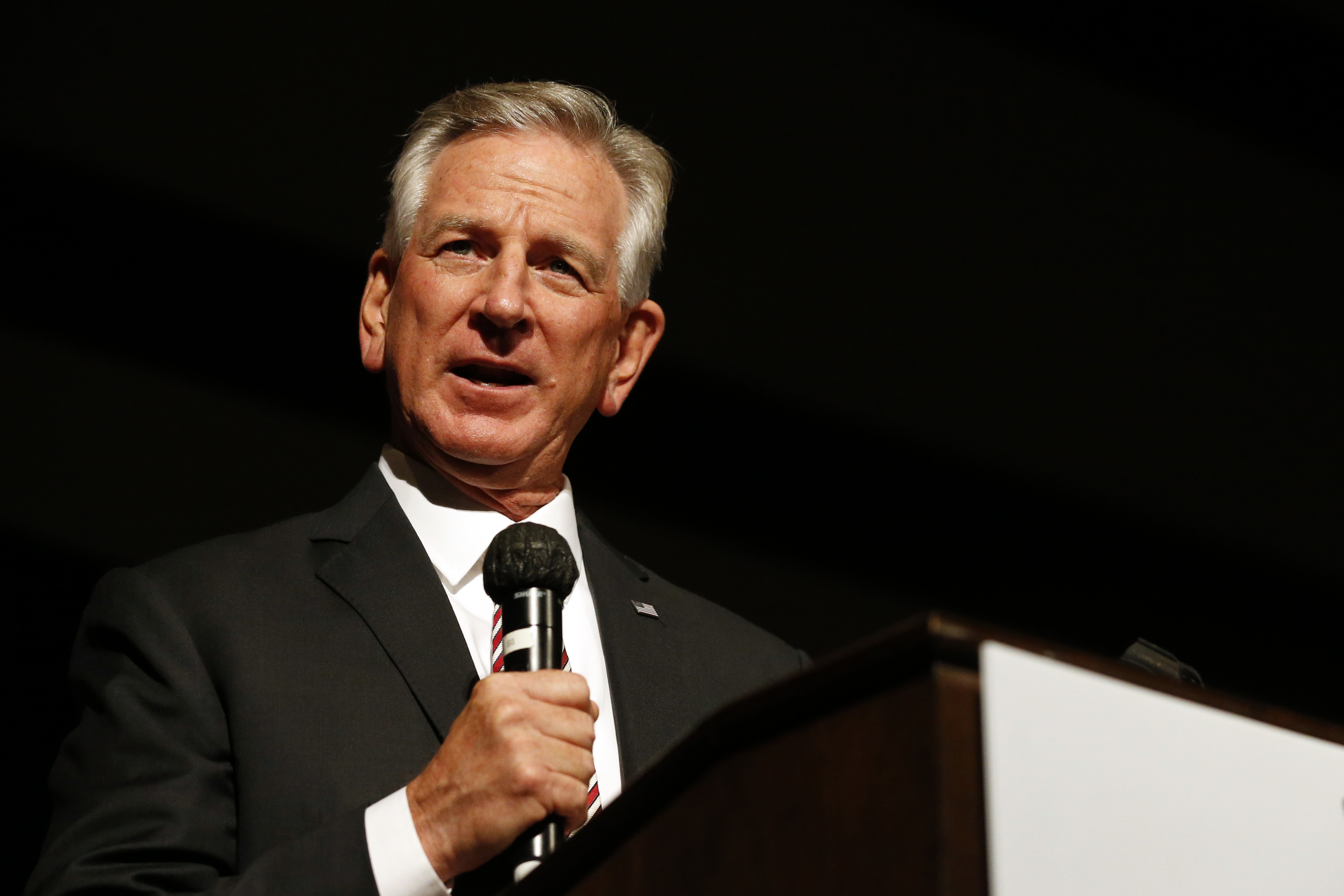
During a June 23 speech at a Mack truck plant in Macungie, Pennsylvania, Trump said, “The typical 401(k), as you know, is up almost $30,000 in … 13 months.”
He’s made similar points going back to his Feb. 24 State of the Union address.
The stock market has risen during Trump’s second term. But the average $30,000 gain he cited is not supported by data; that’s about triple the increase found in a large analysis of 401(k) balances. And a growing share of Americans are withdrawing 401(k) dollars before retirement to cope with unexpected hardships.
The White House offered no supporting evidence for Trump’s statement. White House spokesperson Kush Desai said “equity markets have hit multiple all-time highs” during Trump’s second presidency.
How much has the stock market increased during Trump’s second term?
The Standard & Poor’s 500, a metric that charts a broad selection of publicly traded stocks, shows notable gains since Trump took office on Jan. 20, 2025.
Between his second inauguration and the day of his February 2026 State of the Union address — the first time he mentioned the $30,000 figure — the S&P rose by about 13%. From his second inauguration to June 23, the day of his Pennsylvania speech, the S&P rose by about 24%.
401(k) balances are rising, but not as high as Trump said
What about the gains for typical 401(k) holders?
First, narrowing down a “typical” 401(k) account is challenging. People of different incomes, ages and company 401(k) policies can see their balances vary widely — and that’s before factoring in the mix of assets that make up their accounts.
“The (higher account balance) you have, the more gains you will have achieved,” said Joe Fitter, a senior lecturer in finance at Indiana University’s Kelley School of Business.
Fidelity Investments, a financial institution that operates many 401(k) plans, provides the best available data.
Every quarter, Fidelity examines balances within more than 26,000 corporate 401(k) plans serving roughly 25 million participants. It also breaks down the average balance by the account holder’s age.
We looked at Fidelity’s data for the quarterly period ending Dec. 31, 2024, and for the period ending March 31, 2026. Comparing these two figures offers a measure of the growth in 401(k) balances during the first 15 months of Trump’s second term — a good approximation of how much growth occurred during the period he’s been making this claim.
Fidelity offered breakdowns for 11 age ranges, starting at age 20 and ending at 70 and older. Averaging the gains for these 11 ranges produced an increase of $9,454 — about one-third of the $30,000 figure Trump cited.
The single biggest average increase for any particular age range was 55 to 59, which saw a rise of about $16,000.
Experts said the average gains might be lower than $9,454.
“Averages in data like this tend to get pulled up by high-balance accounts, so the median would likely be lower than the $9,000 figure,” said Mark A. Johnson, an investments and portfolio management fellow at Wake Forest University’s business school.
A $30,000 gain during this period would likely have required a balance of at least $200,000 in a 401(k), said Mark Williams, a lecturer in finance at Boston University’s Questrom School of Business. But that’s not a typical amount; about 10% to 20% of U.S. adults have an account that big.
In addition, the balance increase doesn’t stem only from stock market gains. Some of the increase comes from the account holder’s own contributions and potentially those of their employer.
Why 401(k) balances may not be rising as fast as the overall stock market
The percentage increases by age in Fidelity’s 401(k) data do not necessarily match the overall growth rate of the stock market. From December 31, 2024, through March 31, 2026, the S&P 500 rose by about 11%, but the average 401(k) Fidelity measured rose by about 6.5%, and several age ranges, especially among the youngest and oldest groups, saw smaller increases.
One reason for the lag is that 401(k) accounts typically contain a mix of investment categories. Williams said the typical 401(k) mix is 60% to 65% stocks, with the remainder in other assets, such as bonds, that are less volatile. During the time period in question, bond returns were flat, he said, and that would hold down overall 401(k) returns.
Another important reason is that 401(k) accounts are a two-way street: Account owners can take out money, though they may have to pay a penalty to do so.
In general, 401(k) accounts are designed to provide retirement income, so early withdrawals — money taken out before age 59 1/2 — may incur a 10% early withdrawal penalty, plus income taxes.
However, certain circumstances may allow an early withdrawal without incurring a penalty, including birth or adoption costs, a new disability, disaster recovery, medical or other emergencies, funeral expenses and payments to avoid an eviction or foreclosure.
Exercising this option has become increasingly common, the investment firm Vanguard reported in March. The Vanguard data showed that about 6% of the participants in its 401(k) plans took a hardship withdrawal in 2025, up from about 4.8% in 2024 and higher than the level prior to the coronavirus pandemic.
Dorothy C. Kelly, a personal finance lecturer at University of Virginia’s McIntire School of Commerce, said that 401(k) gains have limited immediate use to Americans younger than 59 1/2 who are facing a cash crunch or higher monthly bills.
“The net worth of ordinary Americans with retirement accounts may be benefiting from current high stock prices, but a growing illiquid asset such as a retirement account does not help with working Americans’ monthly bills,” she said.
Our ruling
Trump said that in the past 13 months, “The typical 401(k) … is up almost $30,000.”
The stock market has notched notable increases during Trump’s second term, but a $30,000 rise is not supported.
Fidelity Investments data shows that between Dec. 31, 2024, and March 31, 2026, the average increase in 401(k) balances was $9,454. No age group Fidelity studied saw an increase beyond about half of Trump’s $30,000 figure.
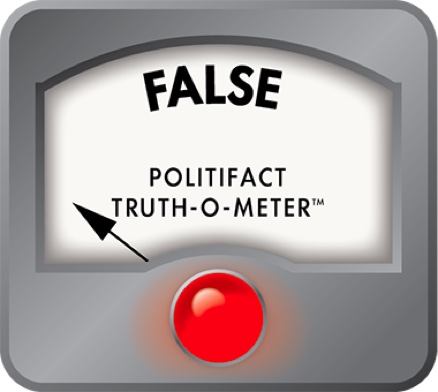
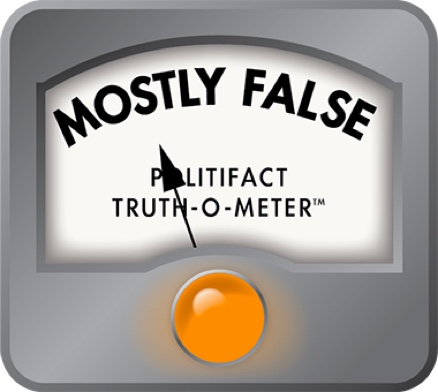
The statement contains an element of truth but ignores other information that would give a different impression, so we rate the statement Mostly False.
Our Sources
Donald Trump, remarks in Macungie, Pennsylvania, June 23, 2026
Donald Trump, remarks in Suffern, New York, May 22, 2026
Associated Press, "Read the complete transcript of Trump’s 2026 State of the Union," Feb. 24, 2026
Fidelity Investments, "How do your retirement savings stack up?," through Dec. 31, 2024, and through March 31, 2026.
Fidelity Investments, "Options if you need your 401(k) money now," accessed June 24, 2026
Yahoo Finance, Standard & Poor’s 500 historical data, accessed June 24, 2026
World Economic Forum, "Americans' retirement accounts – and hardship withdrawals – hit new highs. Here's what to know" March 11, 2026
Vanguard, "How America Saves 2026," accessed June 24, 2026
CNBC, "Trump says ‘401(k)s are way up’ — but workers are tapping them at record rates," March 4, 2026
Email interview with Joe Fitter, senior lecturer in finance at Indiana University’s Kelley School of Business, June 24, 2026
Email interview with Mark A. Johnson, investments and portfolio management fellow at Wake Forest University’s business school, June 24, 2026
Email interview with Dorothy C. Kelly, lecturer in personal finance at University of Virginia’s McIntire School of Commerce, June 24, 2026
Email interview with Mark Williams, lecturer in finance at Boston University’s Questrom School of Business, June 25, 2026
White House statement to PolitiFact, June 24, 2026