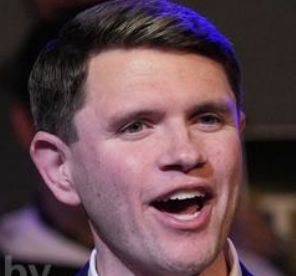
Vivek Ramaswamy “pushed an Alzheimer’s drug that he knew didn’t work. He made hundreds of millions of dollars scamming people.”
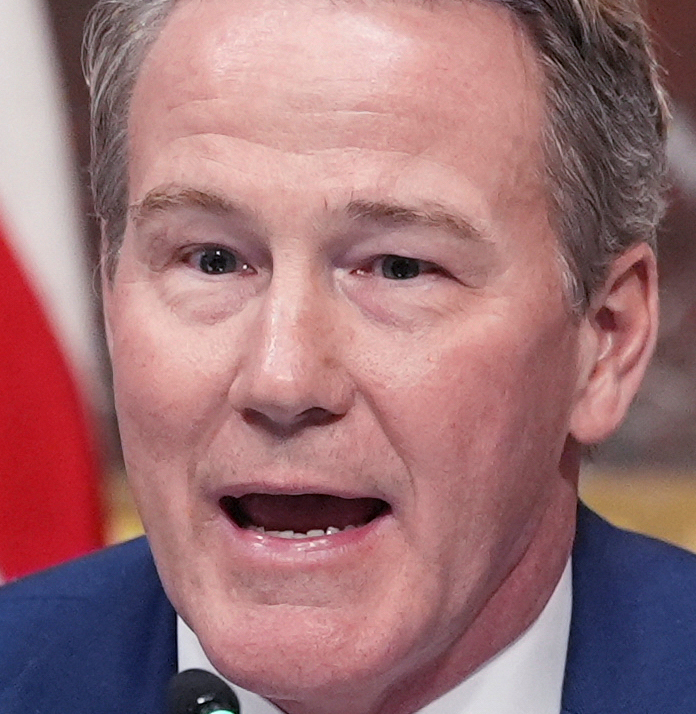
Ramaswamy promoted a failed Alzheimer’s drug, but did he profit from knowing it would fail?
If your time is short
- After acquiring the drug intepirdine from GlaxoSmithKline in 2014, Vivek Ramaswamy promoted the pill as a promising treatment for Alzheimer’s although four Phase 2 Alzheimer’s trials had not shown statistically significant results except when it was used with another drug, saying that it “has an impact on improving cognition and function” and was “statistically significantly better than the placebo.”
- Soon after Axovant went public, intepridine failed in its Phase 3 clinical trial and its stock price plunged and never recovered before the company was dissolved in 2023.
- A former chief investigator for the U.S. Securities and Exchange Commission said Ramaswamy’s actions amounted to a failed bet, not a scam.
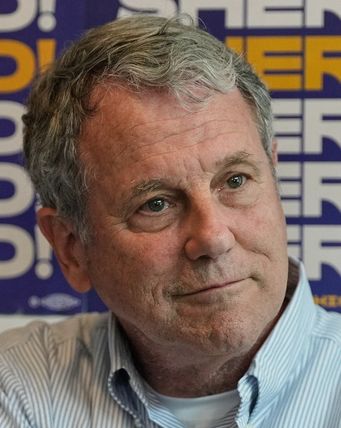
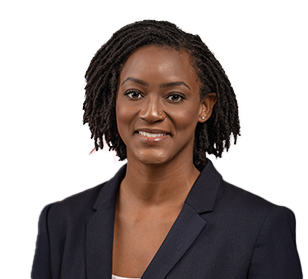
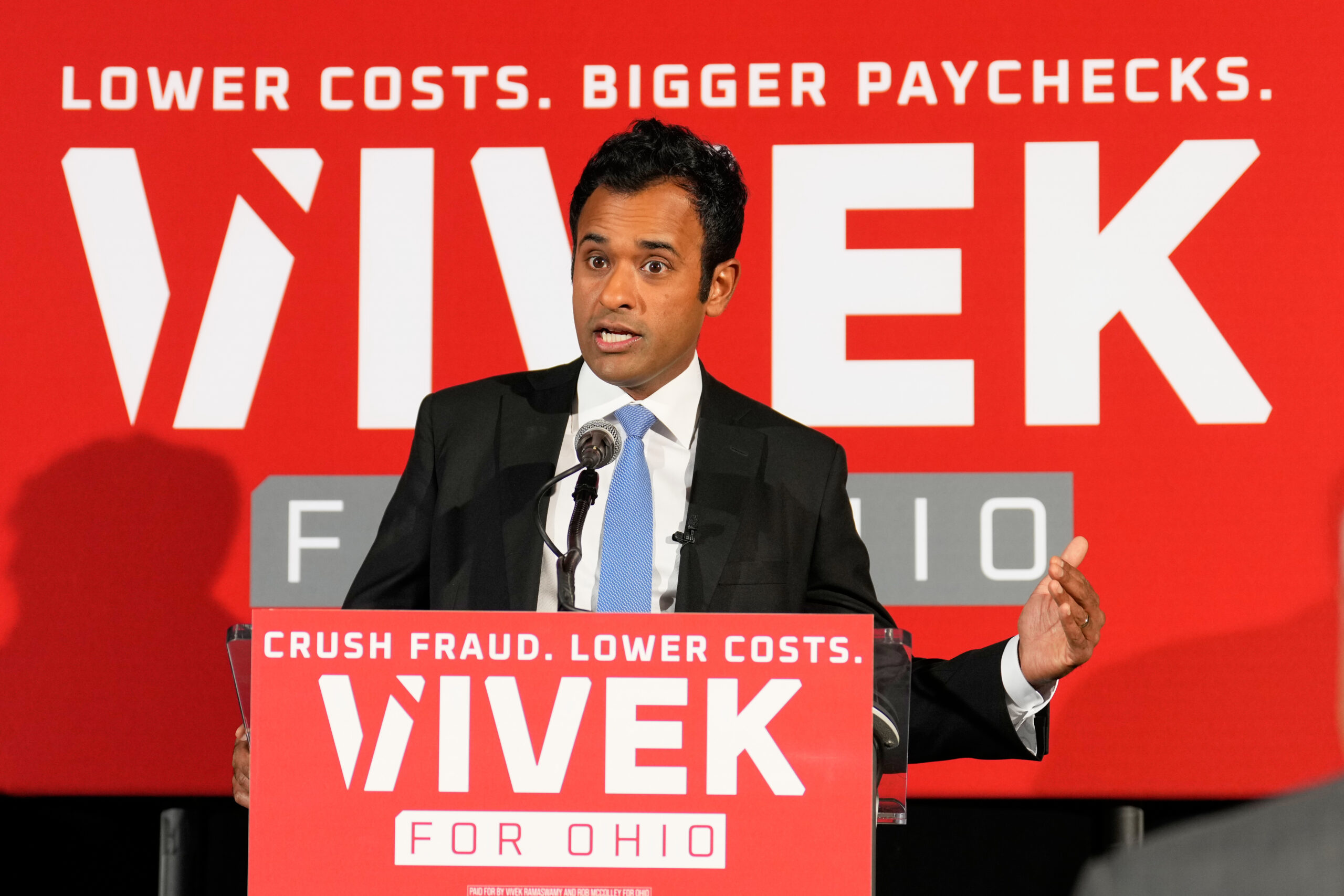
As Ohio’s Nov. 3 gubernatorial election approaches, Democratic candidate Dr. Amy Acton is attacking her Republican opponent Vivek Ramaswamy over his role in promoting a failed Alzheimer’s drug.
An Acton campaign ad that aired widely on Ohio TV stations featured Bexley, Ohio’s Norman Wernet III, who the ad calls “Norm.”
“Norm’s wife has Alzheimer’s,” Acton wrote in a Sept. 21 Facebook post sharing the ad.
“What Vivek Ramaswamy did to families like ours is unforgiveable,” Wernet says in the video. “He pushed an Alzheimer’s drug that he knew didn’t work. He made hundreds of millions of dollars scamming people like me.”
In 2014, before entering politics, Ramaswamy founded the biopharmaceutical company Roivant Sciences. Soon after, he created subsidiary Axovant Sciences, which acquired the drug intepirdine from GlaxoSmithKline for $5 million December 2014.
Intepirdine was being studied as a potential treatment for Alzheimer’s disease when used in tandem with another medication. GSK’s testing didn’t show strong results for the pill, which aimed to increase a chemical in the brain that plays an important role in memory function. And after Axovant acquired intepirdine and launched a Phase 3 clinical trial involving more than 1,300 dementia patients, the results were poor: Researchers found it provided no significant improvement over the placebo.
PolitiFact’s review of the drug’s development timeline shows Ramaswamy had access to GSK’s mixed and largely unsuccessful trial results when he acquired intepirdine and announced plans for further testing. He later publicly promoted the drug’s effectiveness, relying on a preliminary, unpublished analysis that showed some positive results.
Asked for evidence to support Acton’s statement, her campaign pointed to Ramaswamy’s promotion of the drug and a paper his mother helped author reanalyzing GSK’s earlier trial data. Ramaswamy’s campaign did not respond to PolitiFact’s request for comment.
What was known about intepirdine when Ramaswamy acquired it?
By the time Axovant acquired intepirdine, GSK had already conducted four Phase 2 studies of the drug in people with mild-to-moderate Alzheimer’s disease. (In the drug development process, Phase 2 involves more people than Phase 1 trials and assesses a drug’s effectiveness.):
- A 2010 study of 371 patients found that higher doses improved how patients functioned overall, but their cognitive improvements were not statistically significant.
- A 2011 study of 198 patients found some improvement when the drug was used alone or with donepezil, a prescription medication used to treat memory loss in patients with dementia and Alzheimer’s disease.
- A 2015 publication reported results from two larger trials conducted between 2008 and 2010. The first involved 576 patients and found no statistically significant improvement over the placebo when intepirdine was used alone.
- The second trial involved 684 patients who were already taking donepezil. Patients who received intepirdine showed statistically significant improvements on some measures, but the overall trial failed.
Taken together, the four GSK trials showed some signs of promise when intepirdine was used along with donepezil, an existing Alzheimer’s drug. But the studies did not show intepirdine worked on its own.
Roivant had access to the underlying GSK trial data as part of the acquisition, as a company press release shows.
What did Ramaswamy say at the time?
As Axovant, then valued at $3 billion, prepared to go public in 2015, Ramaswamy made several media appearances to talk about intepirdine.
In a June 11, 2015, interview with Forbes, he called it “a great drug candidate” and said that, if approved, it could make “a huge difference for a lot of patients.”
In an Oct. 6, 2015, interview on CNBC, he said: “We do know that that has an impact on improving cognition and function in these patients. We had a large study proving that a little bit ago.” Ramaswamy’s comments did not make clear that some of the more favorable results came from patients taking intepirdine in combination with donepezil, rather than from intepirdine alone.
In the same interview, he also said that the drug was “statistically significantly better than the placebo.”
Ramaswamy’s campaign did not respond to PolitiFact’s questions about what study he was referring to; however, a July 2015 analysis co-authored by his mother, Dr. Geetha Ramaswamy, an Axovant employee, reported favorable findings.
Geetha Ramaswamy and her colleagues reanalyzed GSK’s early research from 2008 and 2010. The team published their abstract analysis in the Alzheimer’s Association journal Alzheimer’s & Dementia, writing intepirdine was “well-tolerated and effective in improving cognition and function” when taken with donepezil. The researchers recommended further testing.
The abstract was preliminary, prepared for a conference and contained limited information.
Kathy Liu, an expert in psychiatry at University College London who researches agitation and personalized treatments in Alzheimer’s disease, told PolitiFact that conference abstracts generally provide less information than full peer-reviewed studies, and such findings are not typically viewed as definitive evidence that a drug works.
Axovant then tested intepirdine in a Phase 3 clinical trial — a drug’s largest study — but the medication failed to improve cognition and daily functioning in its participants. Axovant stopped developing the drug in January 2018.
Did Ramaswamy make ‘hundreds of millions’ from intepirdine?
U.S. Securities and Exchange Commission filings identify Ramaswamy as Axovant’s principal executive officer and board member beginning in March 2015.
Ramaswamy previously worked at investment firm QVT Financial before founding Roivant in 2014. Ramswamy sold a portion of his Roivant stake to Viking Global Investors, and his tax returns show he made millions selling investments during this period.
Axovant raised $362.2 million by selling 24.15 million shares at $15 each according to its June 2015 initial public offering, but the public records make it difficult to understand how much of Ramaswamy’s earnings from Axovant and Roivant directly resulted from intepirdine.
In September 2017, as Axovant announced that intepirdine failed its Phase 3 trial, the company’s stock price plummeted and never recovered.
Roivant Sciences Ltd., where Ramaswamy was CEO until 2021, owned 69.8% of Axovant, according to a 2017 proxy statement. Ramaswamy personally owned less than 1% of the company. So his larger financial interest in Axovant came through Roivant’s ownership rather than the shares he held directly.
Axovant recorded $36.7 million in compensation for Ramaswamy in fiscal 2016 in the form of company stock, plus $41,312 in fiscal 2016 and $1 million in fiscal 2015 under a compensation arrangement through Roivant.
After Axovant abandoned intepirdine’s development in 2018, the company shifted its focus to gene therapies. The company became Axovant Gene Therapies in 2019 and then Sio Gene Therapies in 2020.
In a June 27, 2023, interview with The New York Times, Ramaswamy discussed the drug’s failure. “On a personal level, it grates on me a little bit,” he said. “The business model of Roivant was to see these drugs through the market, and we could have cashed out big, and employees could have cashed up big, but that was not the business model.”
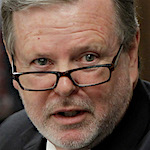
Dr. David P. Weber, a forensic accounting professor at West Virginia University and former chief investigator for the SEC, said the terms “scam” and “pump and dump” overstate what the available evidence establishes about Ramaswamy’s promotion of intepirdine. Acton in August also used the term “pump and dump scheme” to describe Ramaswamy’s actions on intepirdine. The SEC defines that as spreading “false or misleading information to create a buying frenzy that will ‘pump’ up the price of a stock and then ‘dump’ shares of the stock by selling their own shares at the inflated price.” Such activity is illegal and comes with criminal penalties. Ramaswamy has not been charged with a crime.
“A failed bet is not fraud,” Weber said, noting that Alzheimer’s drug development has historically had an extremely high failure rate.
Weber said the company’s decision to conduct an expensive Phase 3 trial goes against the allegation that its promoters knew the drug would fail. He added that a failed clinical trial does not, on its own, establish fraud.
Our ruling
Acton’s ad said Ramaswamy “pushed an Alzheimer’s drug that he knew didn’t work. He made hundreds of millions of dollars scamming people.”
Intepirdine had been tested extensively before Ramaswamy’s company acquired it in 2014. Of four phase 2 Alzheimer’s trials GSK had conducted, three produced mixed or negative results, and a fourth found some improvements when the drug was used with donepezil.
As Ramaswamy prepared to go public with Roivant, the company that he created to purchase intepirdine, his public statements did not fully reflect the limits of GSK’s findings but he promoted it as a potential Alzheimer’s treatment. After the company went public, a Phase 3 trial failed to confirm intepirdine improved patients’ cognition or ability to perform daily activities. The company’s stock price dropped and never recovered.
By 2018, the company stopped developing intepirdine.
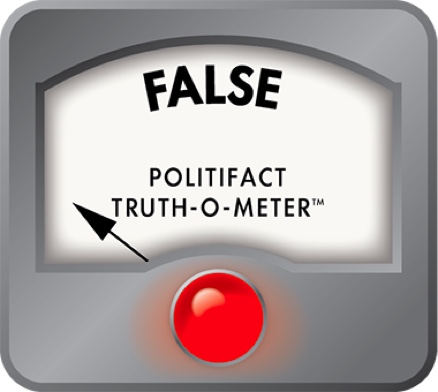
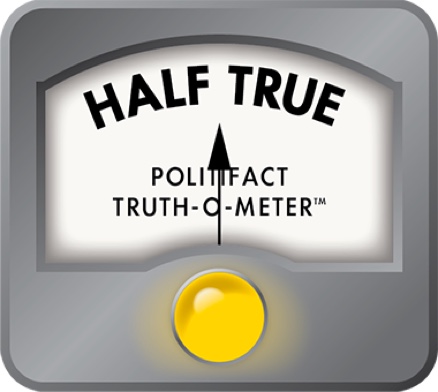
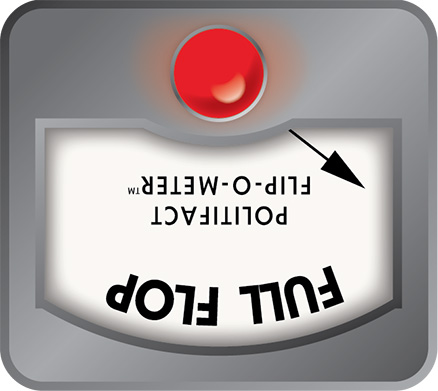
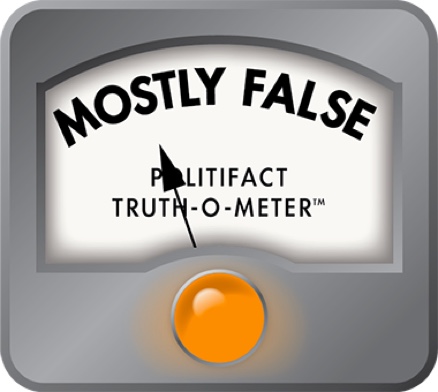
Whether Ramaswamy made “hundreds of millions” from the drug as the ad claims is not clear. An expert said the available evidence does not establish that Ramaswamy knowingly misled investors about a drug he knew would fail. SEC filings do not determine whether he later sold the shares for cash or how much of his overall earnings from Axovant and Roivant were directly attributable to intepirdine. We rate this claim Mostly False.
PolitiFact Researcher Caryn Baird contributed to this report.
Our Sources
Amy Acton campaign, Sept. 21 advertisement, Sept. 21, 2026
Email interview with Amy Acton spokesperson, Sept. 23, 2026
Email interview with Kathy Liu, expert in psychiatry at University College London, Sept. 28, 2026
Email interview with David Weber, forensic accounting professor at West Virginia University, Oct.11, 2026
Roivant Sciences, “Roivant Sciences Announces Change to Its Board of Directors,” Feb. 21, 2023
Roivant Sciences, “Roivant Acquires SB742457 From GlaxoSmithKline,” Dec. 23, 2014
Nathan Vardi, Forbes, “The 29-Year-Old Behind The Giant Biotech IPO That Rose By 75% Speaks”, June 11, 2015
CNBC, interview with Vivek Ramaswamy, Oct. 6, 2015
Yale University, Vivek Ramaswamy’s 2015 tax return, Dec. 31, 2015
U.S. Securities and Exchange Commission, Axovant Sciences S-1 filing, May 11, 2015
U.S. Securities and Exchange Commission, Axovant Sciences quarterly filing, Sept. 30, 2016
U.S. Securities and Exchange Commission, Axovant Sciences 2017 proxy statement, Aug. 18, 2017
U.S. Securities and Exchange Commission, Axovant Sciences 8-K filing, Jan. 8, 2018
U.S. Securities and Exchange Commission, Axovant Gene Therapies name-change filing, Nov. 10, 2020
U.S. Securities and Exchange Commission, Form 144 filed by Vivek Ramaswamy, July 28, 2023
U.S. Securities and Exchange Commission, Roivant Form 4 filing, July 2023
U.S. Securities and Exchange Commission, Roivant Form 144 filing, July 2023
U.S. Securities and Exchange Commision, “Pump and Dump Schemes,” accessed Oct. 12, 2026
U.S. Securities and Exchange Commission, “Axovant Sciences Announces Topline Results from Phase 3 MINSET Trial of Intepirdine,” Sept. 26, 2017
National Library of Medicine, Phase 2 study of intepirdine in patients with mild-to-moderate Alzheimer’s disease, Aug. 7 2010
National Library of Medicine, exploratory study of intepirdine alone and in combination with donepezil, May 26, 2011
National Library of Medicine, analysis of two clinical trials of intepirdine, May 7, 2015
National Library of Medicine, Phase 3 trial of intepirdine, May 31, 2021
Alzheimer’s Association, conference abstract on intepirdine responder analysis, July 1, 2015
Robinhood, “Axovant Gene Therapies Stock Price and History,” accessed Oct. 12, 2026