President Donald Trump’s tariffs “cost each Michigan household $5,619.”


Senate candidate Abdul El-Sayed overstates Michiganders’ cost for Trump’s tariffs
If your time is short
- The $5,619 figure comes from dividing Michigan importers’ estimated tariffs costs by the number of households in the state. It is not a measure of what each household actually paid.
- Michigan imports vehicles and automobile parts that are distributed nationwide, so importers’ tariff costs aren’t paid solely by Michigan households.
- Before the Supreme Court rolled back some of the tariffs, studies show tariffs had increased taxes by about $1,000 per household nationally, and states with high imports may be more affected.
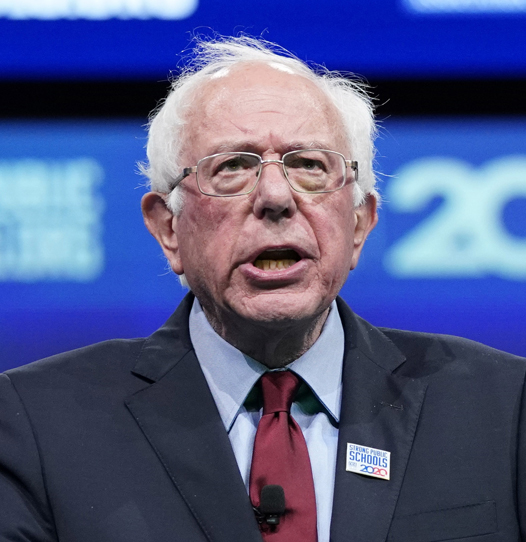
Michigan Democratic U.S. Senate candidate Abdul El-Sayed said President Donald Trump’s tariffs come at a high cost for Michiganders.
El-Sayed posted a graphic on X with an image of his Republican opponent Mike Rogers alongside an image of Trump, with text that says, “Trump’s tariffs cost each Michigan household $5,619.”
The post’s caption said, “Mike Rogers called it ‘necessary.’” (After Trump imposed 50% tariffs on $20 billion in Canadian goods in August, Rogers released a statement saying tariffs “are necessary, but are not a one-size-fits-all solution.”)
Mike Rogers called it “necessary.” pic.twitter.com/sRoOhIKOS8
— Dr. Abdul El-Sayed (@AbdulElSayed) September 1, 2026
The number is an accurate measure of tariffs paid by Michigan importers, not of how much each household paid.
After this story published, an El-Sayed campaign spokesperson responded to PolitiFact’s request for comment about information behind the number. The spokesperson pointed us to several news outlets that cited $5,619 as the amount paid by each Michigan household, saying El-Sayed drew from that coverage. The campaign also noted a Sept. 15 opinion column in The Wall Street Journal where Michigan Gov. Gretchen Whitmer made the same point.
But a director at the organization that originally published the data told PolitiFact the number is not a measure of what each Michigan household actually paid.
The $5,619 figure comes from the National Taxpayers Union Foundation’s tariff burden measure, which calculates tariffs paid on all goods imported into the state. The analysis, which used estimates prepared by Trade Partnership Worldwide, found that imports to Michigan have incurred $23 billion in tariff costs since January 2025, when Trump took office.
The report divides the $23 billion by the number of Michigan households to arrive at $5,619. But Michigan’s imports aren’t all bought by Michiganders, so you can’t attribute the total amount to Michigan households.
“For Michigan, a bunch of the cost is paid by manufacturers importing machinery or auto parts. … It is not the amount paid by each household,” Bryan Riley, director of the National Taxpayers Union Foundation’s Free Trade initiative, said.
The reason the number can’t be divided cleanly as a cost paid by each Michigan household is because goods imported into one state aren’t sold only in that state. They’re part of national supply chains. And Michigan is an outlier because of its outsized share of the country’s car manufacturing, said Jason Miller, a Michigan State University supply chain management professor.
Michigan is the “state of destination” for $10.5 billion of vehicles imported from Canada and $21.5 billion of vehicles imported from Mexico, according to U.S. Census data that Miller analyzed. But it’s not where all these cars are sold; Michigan is a distribution point for car imports. The cars are ultimately shipped all over the country.
“Clearly, we don’t have all the cars from Mexico being consumed in Michigan versus Ohio,” Miller said. “We also can’t assign tariffs to goods in the state of destination data.”
Another reason those costs aren’t all paid by Michiganders is because importers absorb some of the costs in the form of lower profit margins, Miller said.
“The cost is primarily borne by Americans but we do not attempt to allocate the overall total between final consumers, businesses, or importers,” Riley said.
Nationally, the extra taxes paid because of Trump’s tariffs from March 2025 to July 2026 break down to about $851 per person, Miller said. Other estimates have placed the tax burden at around $1,000 per U.S. household. That’s before accounting for $166 billion in refunds after the Supreme Court struck down Trump’s initial tariffs. Riley said the refunds are not accounted for in the National Taxpayers Union Foundation’s data.
Because imports are generally shipped across the country, it’s difficult to estimate how the tariff burden breaks down by state, Miller said. Still, states with higher imports likely are disproportionately affected by tariff costs. A New York Fed study found that states where imports make up a higher share of consumer spending are more affected than states that spend less on imported goods.
The study found that imported goods make up 4.1% of Michigan consumers’ spending, which means it ranked 22nd out of the 31 states analyzed in terms of its exposure to tariff increases. That’s above Colorado and Nebraska, but below states such as California, New Jersey and Texas.
Our ruling
El-Sayed said Trump’s tariffs “cost each Michigan household $5,619.”
Tariffs are increasing consumer costs. Before the Supreme Court rolled back some of the tariffs, studies show tariffs had increased taxes by about $1,000 per household nationally; states with high imports may be more affected.
But the number El-Sayed cites represents all tariffs paid by Michigan importers. Because of Michigan’s auto industry, its importers have a high tariff burden. Those products are sold across the country, so Michiganders don’t bear all that cost.
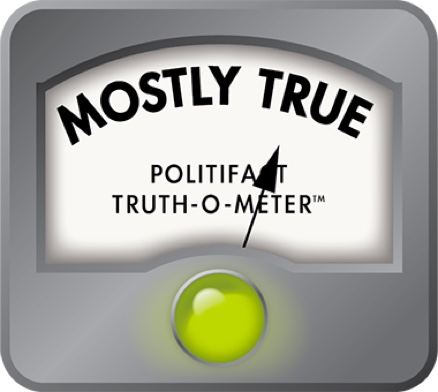
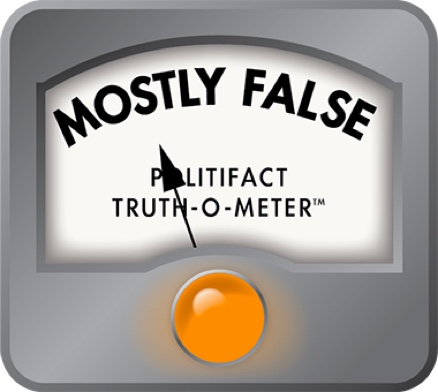
The statement contains an element of truth but ignores critical facts that would give a different impression. We rate it Mostly False.
UPDATE, Sept. 17, 2026: This story was updated to include a response received after publication from El-Sayed’s campaign.
Our Sources
Abdul El-Sayed, X post, Sept. 1, 2026
National Taxpayers Union Foundation, Michigan Tariff Impact: $23B in Executive Tariff Costs, Aug. 4, 2026
Center for Automotive Research, Tariff Impact Analysis, accessed Sept. 16, 2026
The New York Times, Companies Have Shielded Buyers From Tariffs, but Not for Long, Oct. 24, 2025
Tax Foundation, Tracking the Impact of the Trump Tariffs & Trade War, Sept. 10, 2026
Yahoo Finance, New data shows that the US government’s $166 billion tariff refund process is quickly tapering off, Sept. 11, 2026
Federal Reserve Board of Governors, Which states are most exposed to tariff increases? A new measure based on the consumption channel, accessed Sept. 16, 2026
Mike Rogers for Senate, Michigan Democrats Have Managed Our State’s Decline; Now, It’s Time for a Change, Aug. 29, 2026