Fact-checking the Trump administration’s count of 250,000 noncitizens on the voter rolls
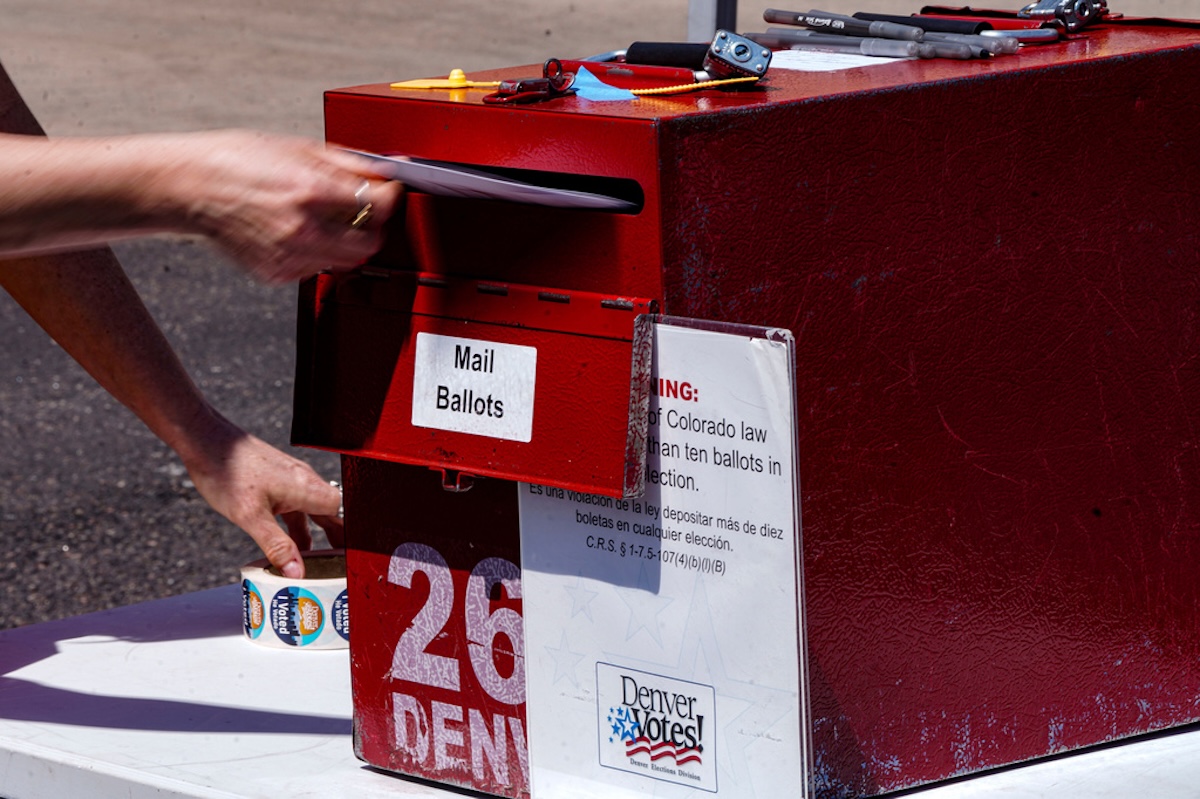


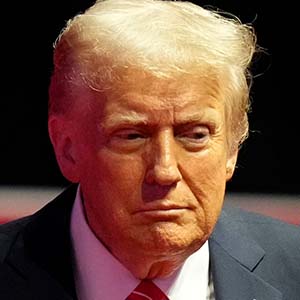
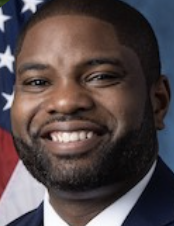
In back-to-back events, President Donald Trump and Homeland Security Secretary Markwayne Mullin spotlighted noncitizen voting as a threat to the U.S. election system — even though years of evidence shows it is a statistical rarity with no impact on election results.
Trump’s July 16 primetime address continued to push lawmakers to pass the SAVE America Act, which would require Americans to provide a government-issued photo ID to vote and documentary proof of citizenship, such as a passport or birth certificate, when they register. The legislation is stalled in the Senate over voter disenfranchisement concerns.
As the 2026 midterms approach, the Trump administration is seeking voting data from states, though many leaders have refused. Judges have blocked administration efforts to obtain this voter data.
In a release of documents alongside Trump’s address, the Department of Homeland Security said “over 250,000 non-citizens are illegally registered to vote in just the four states,” citing California, Pennsylvania, New Jersey and Nevada, which are all led by Democratic governors.
Mullin repeated the 250,000 figure in a July 17 news conference. “We’ve identified 250,000 noncitizens registered to vote in just four states,” he said.
Is that number legitimate? Mullin presented it as a certainty, but voting experts urged caution.
First, databases are subject to errors, mistaken identities and outdated citizenship information; historically, states have found that the actual number of noncitizens registered to vote drops significantly once a large-sounding number is vetted for accuracy.
Second, the DHS data does not answer whether registered noncitizens ever cast a ballot — much less had a decisive impact on any election results. Trump and Mullin’s rhetoric gives the unsupported impression that they did.
While Trump has spotlighted allegations of noncitizen voters for more than a decade, it is illegal for noncitizens to cast a ballot in federal races. Violations are “routinely investigated and prosecuted,” but there is “no evidence that noncitizen voting has ever been significant enough to impact an election’s outcome,” the Bipartisan Policy Center concluded in February.
Let’s take a closer look at what the buzzy 250,000 figure could mean — and what it doesn’t.
How did DHS calculate this number?
Homeland Security broke down its count of “potential” noncitizen registered voters by state, using more cautious language than Mullin:
- California: 190,832
- New Jersey: 35,152
- Nevada: 15,903
- Pennsylvania: 14,576
Each state’s number represents less than 1% of the state’s registered voters.
Neither Mullin’s remarks nor a department press release explain how the 250,000 figure was collected. A response to PolitiFact’s inquiry did not provide any additional details.
David Becker, an elections expert who attended a White House briefing this week, cited a White House official saying the data comparisons were done with commercial data. Becker said that data does not allow a comparison to public voter files because it lacks personally identifiable information such as driver’s license or Social Security numbers.
“You’re going to create a lot of false matches because of that,” Becker told reporters in a July 17 webinar.
This year, with encouragement from the Trump administration, several states have used SAVE — short for Systematic Alien Verification for Entitlements — to make initial estimates of the number of noncitizen voters on their rolls. SAVE is a federal web service that government agencies can use to verify the immigration status of applicants seeking benefits such as Medicaid, housing loans and unemployment compensation.
It’s not clear what data and methodology federal immigration officials used for the review of the four Democratic-run states. Homeland Security said those states had not used the SAVE system.
Officials from the targeted states treated the 250,000 figure with skepticism.
Nevada Secretary of State Francisco Aguilar said the “numbers are wildly speculative at best and the Department of Homeland Security hasn’t shared anything that backs it up.”
Pennsylvania Secretary of State Al Schmidt said that “all evidence has shown that noncitizen voting is extremely rare across the country” and that the state will review any information by Homeland Security to evaluate the claims’ validity.
How reliable is the 250,000 figure?
Experts cited several reasons to be cautious about the headline number and how Trump and Mullin framed it.
For starters, Homeland Security’s letters to state officials used more cautious language — glossed over in public remarks by Trump and Mullin — that called it a “preliminary review” and said that there “may be as many as” the number of noncitizens they found on the voter rolls.
At his press conference, Mullin did not identify the individuals as potential noncitizens; he simply called them “noncitizens.”
Another reason for caution is history.
In the past, when government officials have announced initial numbers of noncitizens on voter rolls, those figures have dropped dramatically after months of vetting by state and local officials and the media.
In 2012, then-Florida Gov. Rick Scott ordered state officials to clear the rolls of noncitizen voters ahead of the election.
Florida initially assembled a list of about 180,000 potential noncitizens. With more scrutiny, however, officials whittled the count to about 2,600 names, then 198, then 85. The initial list was rife with errors, even flagging a Brooklyn-born World War II veteran.
Texas officials have also found errors when looking for noncitizen voters. In April, then-Texas Secretary of State Jane Nelson wrote a letter to federal immigration officials raising concerns about the data’s accuracy, Votebeat reported. The state has flagged about 2,000 potential noncitizens on the voter rolls.
“As my staff has informed you, county voter registrars have obtained citizenship documentation from some Texas voters who were identified in the SAVE system as potential non-citizens,” Nelson wrote. “We are aware of instances in which state driver’s license records inaccurately reflect a person’s current citizenship status.”
Nelson added that some people had been mistakenly registered to vote because of clerical errors by a voter registrar, even after the person had acknowledged on a voter registration application that they were not U.S. citizens.
Did they vote?
A natural question when discussing election integrity: Did illegal voting occur?
Neither Mullin nor his department said how many of the 250,000 noncitizens voted and over what period.
State reviews in recent years have found that few noncitizens actually cast ballots even if they’re registered.
Georgia officials said they have found about 139 votes cast by noncitizens out of 32 million votes cast since 1992.
In 2024, Ohio Republican Secretary of State Frank LaRose referred 597 apparent noncitizen registered voters for prosecution. Of that number, he said 138 cast ballots.
In 2025, Iowa lowered its initial estimate of potential noncitizens registered to vote from more than 2,100 to 277; the state said 35 people cast ballots that were counted in the 2024 general election.
RELATED: Fact-checking Trump’s address: What he said about China and 2020 election, what documents show
Our Sources
Homeland Security, Recognizing and Addressing Threats to Statewide Voter Registration Databases and preventing alien voting, July 16, 2026
Homeland Security, DHS Secretary Markwayne Mullin Sends Letters to Secretaries of State Warning About Non-Citizens on Voter Rolls and X post, July 17, 2026
Fox News, More than a quarter-million noncitizens may be registered to vote in 4 key states, DHS alleges, July 16, 2026
DHS Secretary Markwayne Mullin, press conference, July 17, 2026
White House, Executive Order 14248, March 25, 2025
PolitiFact, Trump tweets that 58,000 noncitizens voted in Texas. That hasn’t been proven, Jan. 18, 2019
PolitiFact, Trump’s claim that millions of immigrants are signing up to vote illegally is Pants on Fire!, Jan. 12, 2024
PolitiFact, Donald Trump wrongly says noncitizens can vote when there is same-day voter registration, May 8, 2016
PolitiFact, One of the ‘main functions’ of the Department of Homeland Security’s SAVE database is ‘checking voter registration citizenship status,’ Ken Detzner says, Nov. 14, 2013
Bipartisan Policy Center, Four things to know about noncitizen voting, Feb. 20, 2026
KFF, Number of Voters and Voter Registration as a Share of the Voter Population, 2024
Associated Press, Ohio finds 597 noncitizens who voted or registered in recent elections, a fraction of its electorate, Aug. 21, 2024
U.S. Citizen and Immigration Services, USCIS Deploys Common Sense Tools to Verify Voters, May 22, 2025
Votebeat, Federal judge blocks Trump administration’s overhaul of SAVE database, June 22, 2026
U.S. District Court Northern District of Florida, Ruling in Florida v. Mullin, July 2026
Iowa Secretary of State Paul Pate, Iowa Secretary of State’s audit of voter registration lists finds 277 confirmed noncitizens registered to vote, March 20, 2025
California Secretary of State Shirley Weber, California Secretary of State Shirley N. Weber, Ph.D., Sets the Record Straight About President Trump’s Fallacious Election Fraud Claims, July 17, 2026
David Becker, executive director of the Center for Election Innovation & Research, webinar with reporters, July 17, 2026
Text interview with Robert Sinners and Mike Hassinger, Georgia Secretary of State spokespersons, July 17, 2026
Al Schmidt, Secretary of the Commonwealth of Pennsylvania, statement to the media, July 17, 2026
Francisco Aguilar, Nevada Secretary of State, statement to the media, July 17, 2026
Email interview with Jonathan Diaz, director of voting advocacy and partnerships at the Campaign Legal Center, July 17, 2026
Department of Homeland Security, statement to PolitiFact, July 17, 2026