Get PolitiFact in your inbox.

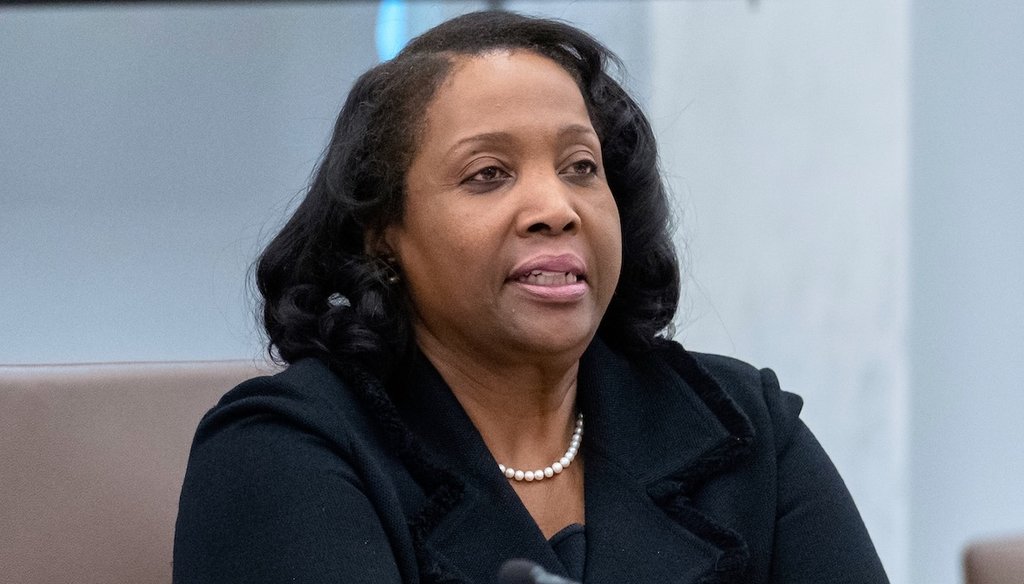
Federal Reserve Board of Governors member Lisa Cook listens during an open meeting of the Board of Governors at the Federal Reserve on June 25, 2025. (AP)

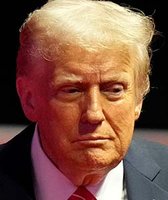
President Donald Trump is seeking to fire Federal Reserve Board member Lisa Cook, citing allegations surrounding mortgage forms she filed before she became a Fed governor.
The Federal Reserve is arguably the most important player in shaping the economy in the U.S. — and possibly the world. In his second term, Trump has consistently attacked the institution and its chair, Jerome Powell, for failing to lower interest rates as fast as he wants.
But the Fed was established to be independent of political influence, and the effort by Trump to fire Cook represents a breach of historical norms — and possibly the law. Cook was nominated by President Joe Biden and is the first Black woman to serve as a Fed governor. Her term runs until 2038, and she has said she is not resigning.
Here’s some background on the legal dispute and what it may entail.
How are Fed board members chosen and how long do they serve?
The Fed is headed by seven governors nominated by the president and confirmed by the Senate. The president selects and the Senate confirms a chair and two vice chairs from among the governors. These governors serve nonrenewable 14-year terms, while the chair and vice chairs serve renewable four-year terms.
The Fed’s most closely watched power comes from monetary policy decisions, which are determined by the Federal Open Market Committee. This committee, which meets at least every six weeks, includes the seven governors, the president of the New York Fed, and four presidents of the remaining 11 regional banks, who rotate on and off the committee.
This structure means that Cook is one of the committee’s seven permanent members. One position is currently vacant, following Biden appointee Adriana Kugler’s Aug. 8 resignation. Trump nominated White House Council of Economic Advisers chair Stephen Miran to succeed Kugler, which will require Senate confirmation. Cook, if she is forced out, would offer Trump a second governor vacancy to fill.
During his first term, Trump appointed Michelle Bowman and Christopher Waller as Fed governors. He also initially appointed Powell as chair, before becoming disenchanted with him.
What has Trump done to try to oust Cook?
After increasing rhetoric against Cook, Trump on Aug. 25 released a letter in which he said he was immediately dismissing Cook on Truth Social.
Trump cited a "criminal referral" from Federal Housing Finance Agency Director William Pulte, a Trump appointee, relating to mortgage fraud. Pulte and Trump allege that Cook falsely attested on loan forms that homes in both Atlanta and Ann Arbor, Michigan, qualified as her primary residence, potentially allowing her to secure a lower interest rate.
"The Federal Reserve has tremendous responsibility for setting interest rates and regulating reserve and member banks," Trump wrote. "The American people must be able to have full confidence in the honesty of the members entrusted with setting policy and overseeing the Federal Reserve. In light of your deceitful and potentially criminal conduct in a financial matter, they cannot and I do not have such confidence in your integrity."
Cook said the firing was unsupported by the law.
"President Trump purported to fire me 'for cause' when no cause exists under the law, and he has no authority to do so," her statement said. "I will not resign. I will continue to carry out my duties to help the American economy as I have been doing since 2022."
On Aug. 26, her lawyer, Abbe Lowell, announced that Cook would sue to block her firing.
The same day, the Fed said through a spokesperson that "Cook has indicated through her personal attorney that she will promptly challenge this action in court and seek a judicial decision that would confirm her ability to continue to fulfill her responsibilities as a Senate-confirmed member of the Board of Governors of the Federal Reserve System."
How can a Fed governor be removed?
The Federal Reserve Act says governors can be removed from their position only "for cause." The interpretation of this phrase will be central to the legal fight over Cook’s status.
"‘For cause’ generally means inefficiency, neglect of duty, or malfeasance in office," said Daniel Farber, a University of California-Berkeley law professor. "Arguably, none of those apply since the conduct took place before Cook was in office. But legal precedent is scanty."
In addition, Trump’s decision to fire Cook rests on "allegations from one of his loyalists," rather than a conviction, said Carl Tobias, a University of Richmond law professor.
Trump may not need a conviction, which could take more than a year to play out, said Frank O. Bowman III, a University of Missouri emeritus law professor. But Bowman said something more than an allegation ought to be necessary.
"Unless judges are willing to impose some minimal process, some standard of misconduct seriousness, and some evidentiary standard, the ‘for cause’ requirement becomes illusory," Bowman said.
Legal experts expect the Supreme Court to weigh in on the question eventually. Under Trump, the court has been deferential to the president’s ability to fire federal officials, even those that had previously been assumed to be safe from such ousters.
However, in a May procedural decision, a majority allowed Trump to proceed in removing members of the National Labor Relations Board and the Merit Systems Protection Board — but specifically noted that the Federal Reserve is a "uniquely structured, quasi-private entity" that fell outside the bounds of its decision to green-light Trump’s firings elsewhere.
If Cook’s case reaches the high court, Farber said, "the odds favor her, but I don't think it's a slam-dunk case."
Why is this dispute important?
Trump wants the Fed to lower interest rates, which could encourage investment and home purchases.
However, some economists say this would be risky — not only because inflation hasn’t fully returned to the Fed’s target 2% rate since spiking to around 9% in 2022, but also because Trump’s aggressive tariff policy could drive prices higher. The Fed was designed with political insulation, because higher rates to keep inflation low may not be popular with the president or other elected officials.
Our Sources
Donald Trump, letter shared on Truth Social, Aug. 25, 2025
Federal Reserve Act, "Section 10. Board of Governors of the Federal Reserve System," accessed Aug. 26, 2025
Supreme Court, "Donald J. Trump, President of the United States, et al v. Gwynne A. Wilcox, et al, on application for a stay," May 22, 2025
Congressional Research Service, "Introduction to Financial Services: The Federal Reserve," January 6, 2025
New York Times, "Lisa Cook is confirmed as a new Fed governor," May 10, 2022
New York Times, "Fed Governor Steps Down Early, Giving Trump Opportunity to Shape Central Bank," Aug. 1, 2025
New York Times, "‘A Loyalist Inside the Building’: Trump’s Temporary Fed Pick Could Have a Lasting Effect," Aug 8, 2025
New York Times, "Trump, in a Move With Little Precedent, Says He Is Firing a Fed Governor," Aug. 25, 2025
New York Times, "Can Trump Fire a Fed Governor? What to Know About the Legal Arguments," Aug. 22, 2025
NBC News, "Supreme Court grants Trump request to fire independent agency members but says Federal Reserve is different," May 22, 2025
NBC News, "Trump says he's removing Fed governor Lisa Cook, citing his administration’s allegations of mortgage fraud," Aug. 25, 2025
CNN, "Trump has accused Fed Governor Lisa Cook of mortgage fraud. Here’s what we know," Aug. 25, 2025
CNBC, "Fed responds to Trump effort to fire Lisa Cook," Aug, 26, 2025
Email interview with Carl Tobias, University of Richmond law professor, Aug. 26, 2025
Email interview with Frank O. Bowman III, University of Missouri emeritus law professor, Aug. 26, 2025
Email interview with Michael Gerhardt, University of North Carolina law professor, Aug. 26, 2025
Email interview with Daniel Farber, University of California-Berkeley law professor, Aug. 26, 2025
Browse the Truth-O-Meter
More by Louis Jacobson