Stand up for the facts!
Our only agenda is to publish the truth so you can be an informed participant in democracy.
We need your help.
I would like to contribute

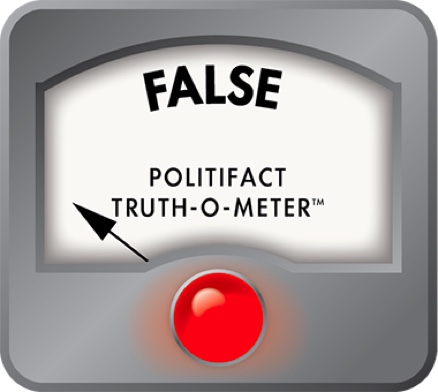
Graphic by Sara OBrien, Poynter

On Feb. 28, the world learned that the United States and Israel had launched wide-ranging attacks on Iranian military and leadership targets. Tensions between the U.S. and Iran had been building for weeks, and prior to that, for decades. But the specific timing and the broad sweep of the military campaign caught many people off guard.
At such a tense moment, fact-checking is crucial. PolitiFact and other fact-checking outlets around the world, including Agence France-Presse, Germany’s Deutsche Welle, Iran’s Factnameh, India’s BOOM, and Israel’s Globes' Whistle, jumped in.
On the war’s first day, PolitiFact investigated whether President Donald Trump was right when he said Iran could "soon" have missiles capable of reaching the U.S. Trump contradicted a 2025 federal government assessment that said such capabilities are years away. In short order, we looked at what the war might mean for petroleum markets (nothing good) and whether the U.S. had a "virtually unlimited supply" of munitions to fight the war. (It varies by type.) And we delved into misleading social media posts, some of them using artificial intelligence, and offered advice on how not to get fooled by war fabrications online.
Trump asserted multiple times in mid-March that U.S. and Israeli strikes had already "destroyed 100% of Iran’s military capability." We concluded that although data showed that the U.S. had weakened Iran’s military capabilities, Iran was continuing to fire missiles and drones at its neighbors and U.S. military sites.
Determining the truth of something happening under classified conditions on the other side of the world is not easy, and fact-checkers’ assessments inevitably require caveats about what we don’t know. But PolitiFact and other fact-checking outlets know how to use the resources that do exist, including data and the assessments of experts we’ve found to be trustworthy. We value transparency — not anonymous sources, who may have an agenda — and we value fairness, including reaching out to whoever is making the claim, including the Trump White House.
On International Fact-Checking Day, April 2, we’re reflecting on our mission of holding powerful politicians to account, and of cutting through the clutter to provide our readers with a better understanding of often overwhelming news developments from across the globe.
The Iran war is an example of why the tradition of open-minded but clear-eyed fact-checking that PolitiFact and its colleagues around the world is needed every day.
Here are three political themes over the past year in which PolitiFact identified an immediate need for clarity, and sought to provide it. Each topic inspired public confusion on a matter of high import: war, democracy and the global economy.
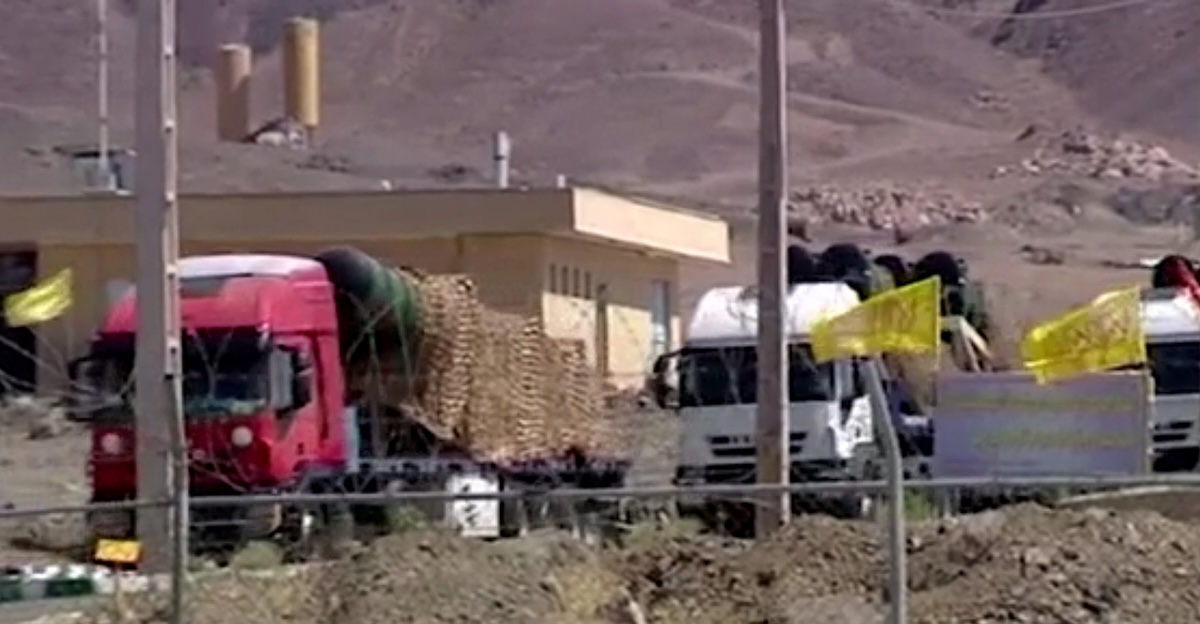
A video broadcast on Iranian state television shows trucks outside the Fordo nuclear facility in Iran on Aug. 29, 2016. (Via AP)
The 2025 U.S. airstrike on Iranian nuclear facilities
After the United States attacked three Iranian nuclear sites on June 21, 2025, Trump said that "Iran’s key nuclear enrichment facilities have been completely and totally obliterated."
Trump’s comment immediately caught our eye because battle damage assessments take time to produce — and because Trump’s certitude contrasted with more measured assessments from Vice President JD Vance, Defense Secretary Pete Hegseth and Israeli military officials. So we jumped into action.
As Trump doubled and tripled down on his "obliterated" characterization, we published an extensively reported article that exposed uncertainty in Trump’s analysis. We concluded that Trump’s arrival at such certitude, so quickly, was questionable.
Assessing the results of a bombing raid begins with the use of overhead surveillance, from satellites and sometimes from drones, military experts told us. Reports from the participating pilots can also be valuable, although they might be hampered by high altitude and darkness.
In the case of the Iran strikes, the targets were located hundreds of feet underground and would not be visible on satellite imagery. Unless military forces or spies were on the ground, the U.S. would have to surveil conversations by Iranian officials or lower-level workers at the sites, or be fed information by Iranians working with U.S. intelligence. A completed assessment is also not as definitive as Trump’s "obliterated"; it is usually offered on a spectrum with a specific level of confidence — either high, low or somewhere in between.
Making these judgments is a painstakingly time-consuming process, requiring much more time than Trump would have had before making his initial statement shortly after the mission was completed.
In the nine months since that strike, a bit more information has become public about the 2025 strike, but little additional certainty, even though Trump continues to use such maximalist phrasing.
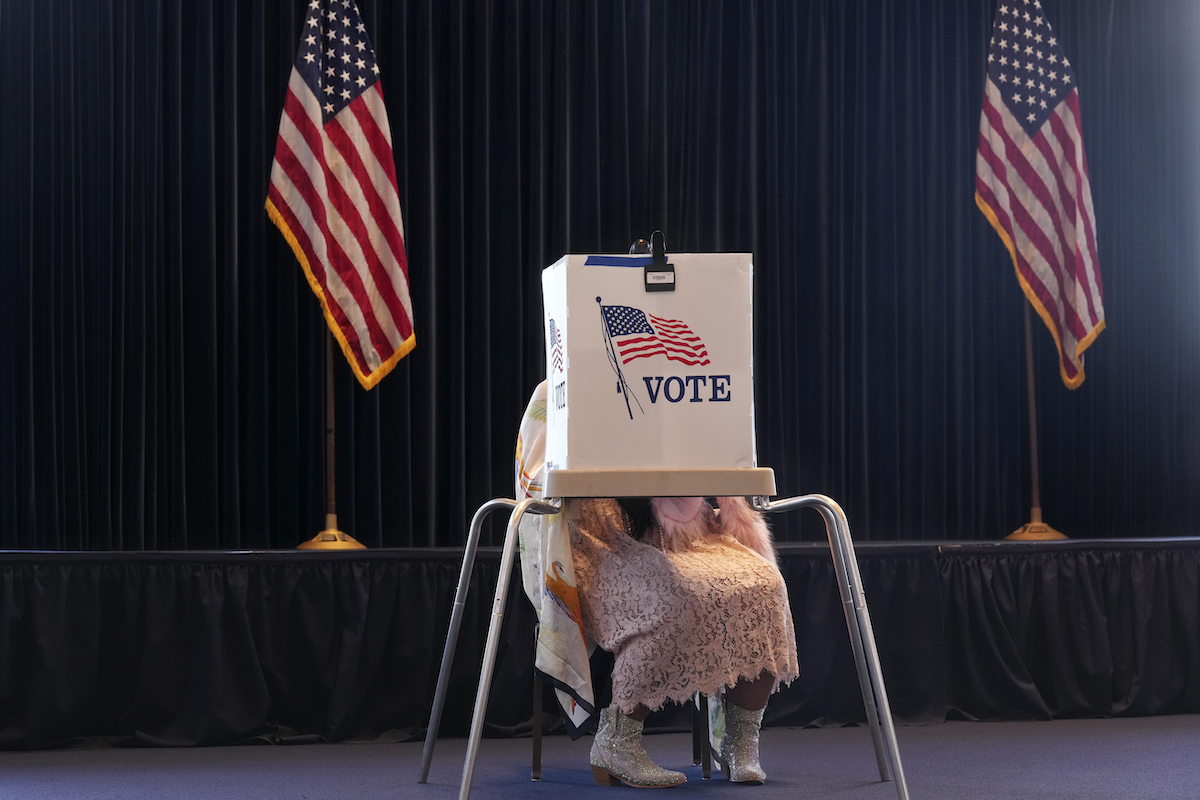
A voter works on her ballot at a polling place at the Ronald Reagan Presidential Library on Election Day, Tuesday, Nov. 5, 2024, in Simi Valley, Calif. (AP)
What’s the truth about a proposed rewrite of election law?
In the Trump era, he and his supporters have regularly questioned the legitimacy of the voting process. The audacity of these claims has led our readers to care a lot about the discussion over preserving democratic norms around voting. Our most-clicked 2025 fact-check concerned how married women who take their spouse’s name would be affected by a proposed law backed by Trump and his allies.
That debate and reader interest continued in 2026.
Having argued for years that he lost the 2020 election because it was "rigged" — even though it wasn’t — Trump has sought to curb practices like voting by mail and require voters to present documentation of their citizenship status before registering to vote. Verifying citizenship is commonly practiced across the world, experts say, but many countries have national ID cards, often mandatory and at no cost. That’s not the case in the U.S.
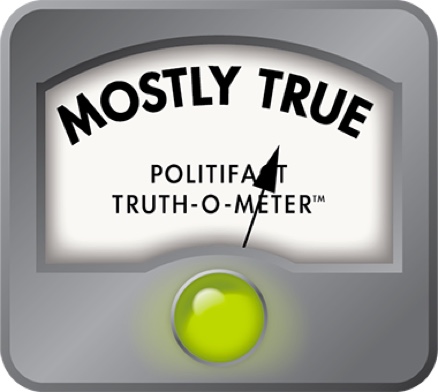
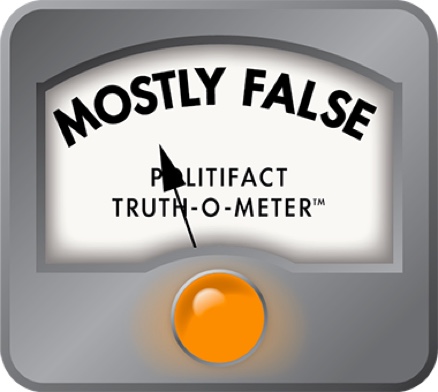
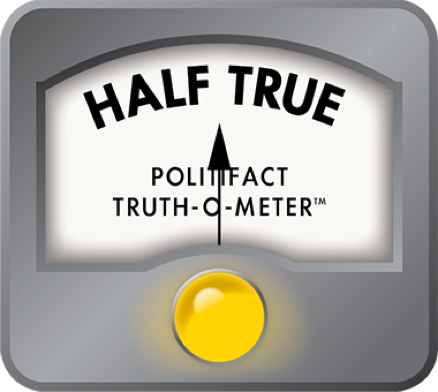
As lawmakers have been debating the Safeguard American Voter Eligibility (or SAVE America) Act, we’ve published numerous fact-checks of claims for and against the legislation. The mixed Truth-O-Meter ratings underscore another truth about fact-checking: Rhetoric is rarely black and white.
We’ve analyzed Democratic leaders’ talking points that it would force Americans to register in person (pretty much), require every voter to reregister (not really) and that 9% of American citizens lack the proposed identification requirement (basically right).
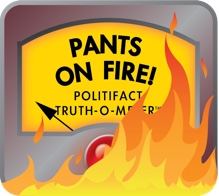
We also fact-checked Trump’s statement that "mail-in voting means mail-in cheating." That earned a Pants on Fire.
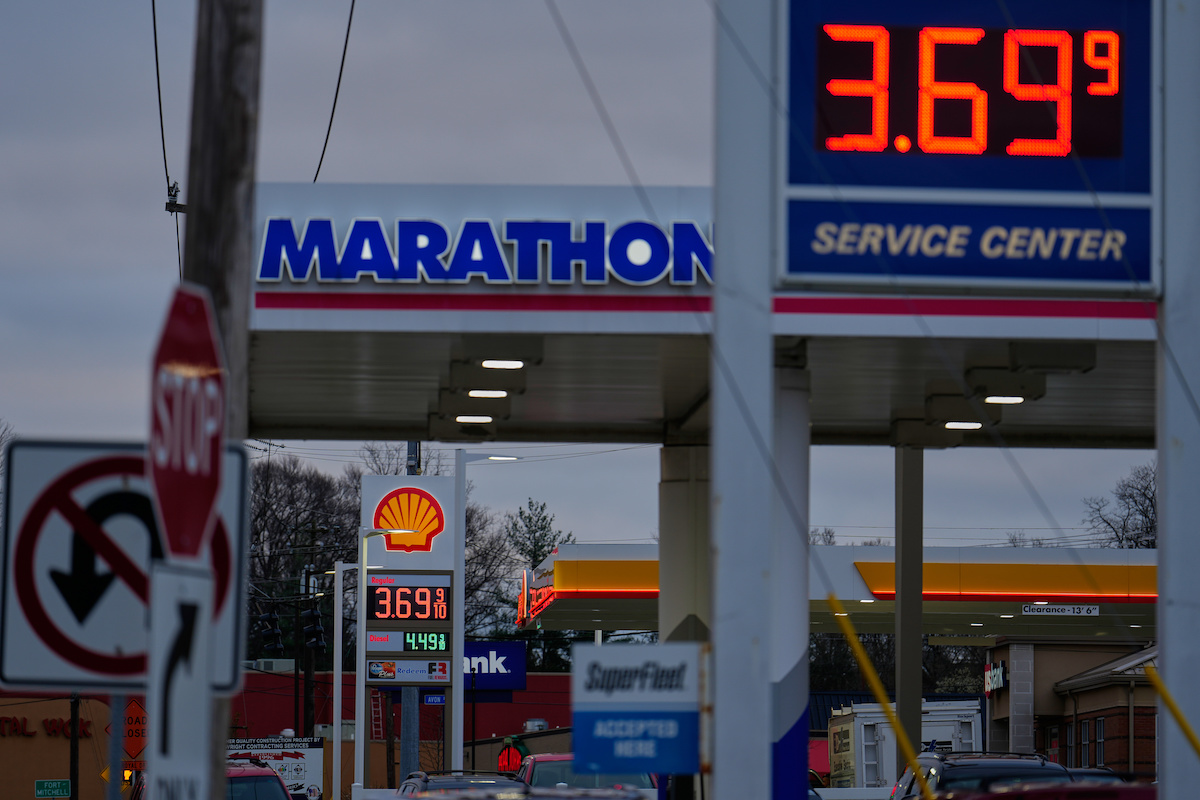
Gas prices are displayed at a station March 24, 2026, in Chicago. (AP)
How could the Iran war affect gasoline prices?
Crude oil prices, and the prices for many other commodities, have soared after Iran threatened tanker traffic in the Strait of Hormuz. Hardly any country has been immune. Amid widespread U.S. voter concern about high consumer prices — an issue that may have done more than anything to propel Trump back into the Oval Office in 2024 — few price increases hit consumers everywhere harder than prices at the gasoline pump.
The international market for oil is confusing and sometimes counterintuitive. For instance, the release of oil from underground stockpiles or increased Venezuelan production may not do much to lower gasoline prices for Americans. And higher output from U.S. oil producers may not be able to keep prices down.
In a March 12 Fox News interview, Energy Secretary Chris Wright downplayed the impact of stalled tanker traffic in the Strait of Hormuz. "The United States — we produce more oil than we can consume. We’re a net oil exporter," Wright said.
Wright’s comment was misleading.
The U.S. does produce a lot of crude oil, but it’s not a net exporter of crude oil on its own — and it’s not clear that the U.S. could meet its own consumption needs without also buying some oil from other countries.
The reason for this is a refinery mismatch — something the average reader may not know, but which an energy secretary should. The U.S. doesn’t have enough refinery capacity to make gasoline out of all the oil it produces domestically, so it exports some of the type of oil it can’t refine and imports some of the kind of oil that can be refined here. This makes the U.S. dependent for at least some of its oil on the international market, where the Strait of Hormuz blockage is pushing prices higher.
Once again, it was a case where we heard something our leaders were saying that raised our eyebrows. And if that’s the case, we think our readers will benefit from a deep, dispassionate investigation — especially at a time in which every day brings urgent news developments.
That’s what keeps us motivated to go into work every day.
Louis Jacobson is PolitiFact’s chief correspondent. A longtime Washington journalist, he joined PolitiFact in 2009. Reach him at [email protected]
Our Sources
Sources linked in article
Browse the Truth-O-Meter
More by Louis Jacobson