Stand up for the facts!
Our only agenda is to publish the truth so you can be an informed participant in democracy.
We need your help.
I would like to contribute


If Your Time is short
-
The colors of Earth appear more muted in newly released photos because of a difference in camera technology and lighting compared to photos taken during the 1972 Apollo 17 mission.
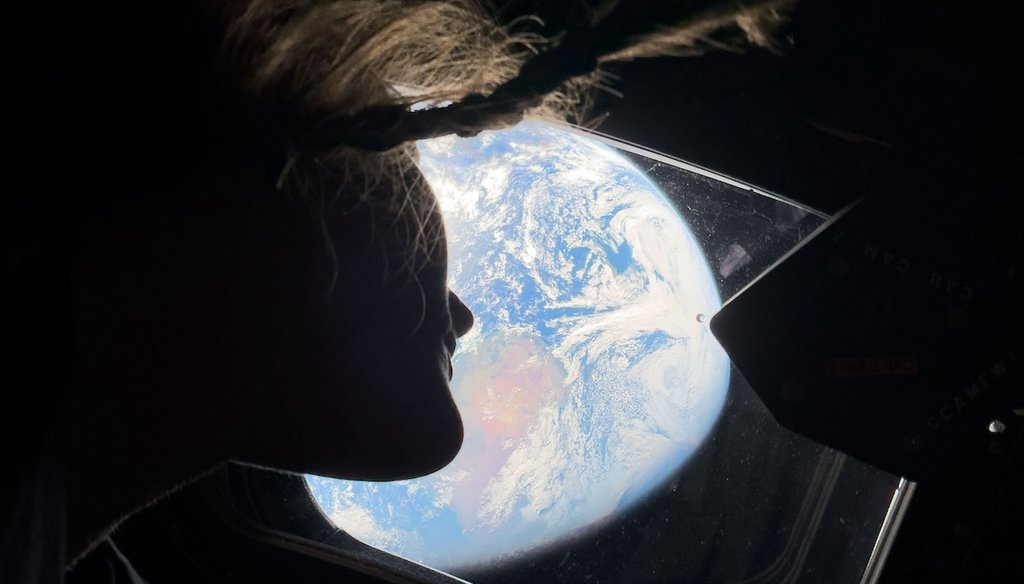
As the Artemis II spacecraft made its way around the moon, NASA released new photos of Earth that left some social media users grumbling about how the blue planet had aged in 54 years.
"The visible shifts in cloud patterns, ocean coloration and land degradation reflect rising global temperatures, biodiversity loss and environmental stress," one user wrote, sharing side-by-side images of the Artemis II images and one taken during the Apollo 17 flight in 1972.
NASA released the juxtaposed Earth photos in its own April 3 X post, with the simple caption "1972 ➡️2026 Apollo 17 ➡️ Artemis II." The 1972 mission was the last time humans stepped foot on the moon.
The colors in the recent photo are noticeably more muted — the blues more gray, the whites less crisp — than they appear in the 1972 image.
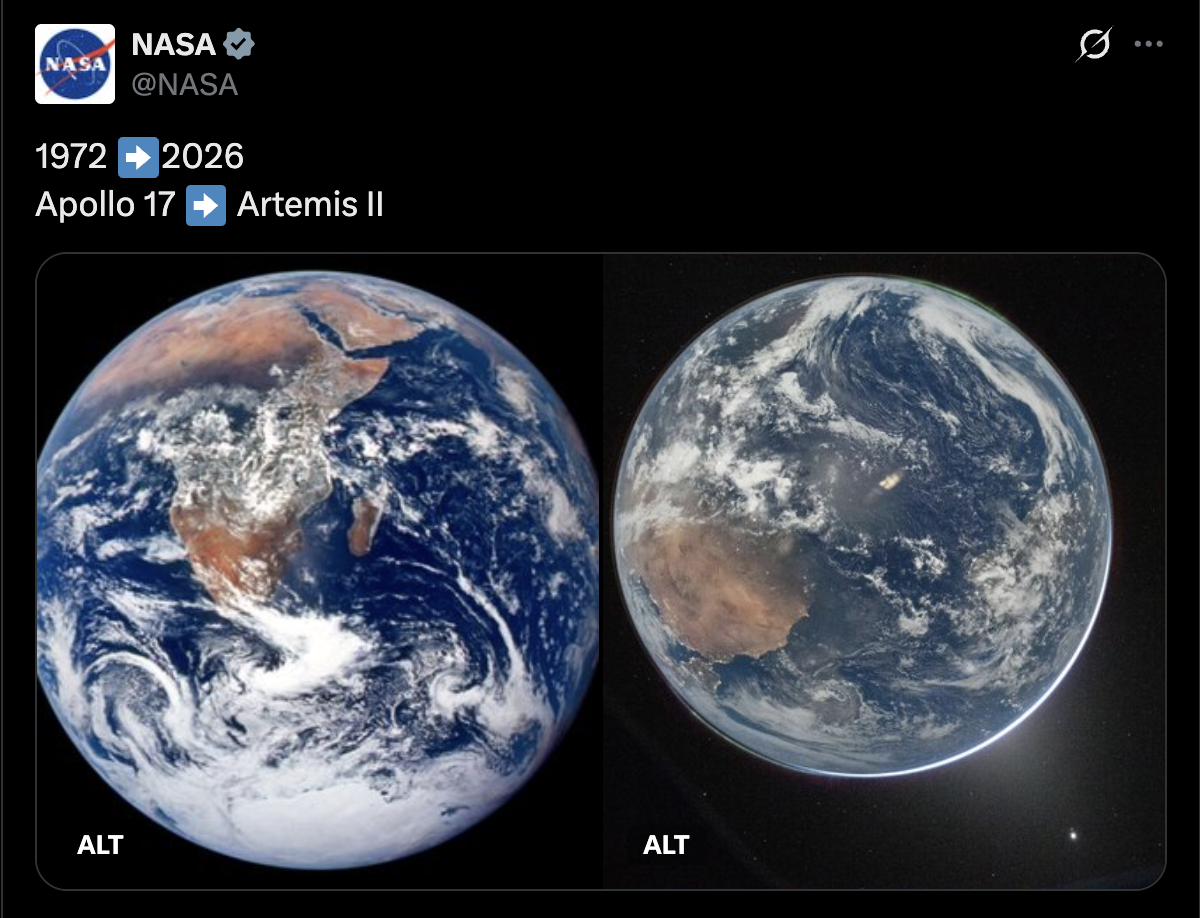
(Screenshot of NASA’s X post.)
Other social media commenters offered explanations that turned out to be more aligned with the facts: The differences were because of camera quality and lighting, they said.
NASA spokesperson Lauren Low told PolitiFact that one of the reasons Earth appears duller is because the new photo was taken at night, with only moonlight lighting the planet. The 1972 photo was taken in direct sunlight. The two images were also processed differently, she said.
NASA uses data collected from space to measure signs of climate change, such as land and ice coverage. But the color difference in these images "is not caused by climate change," Low said in an email.
The 1972 photo was taken with a film camera and the 2026 photo was made with a digital camera.
Modern digital cameras tend to be more color-accurate and less stylized, making photos appear "less vivid straight out of camera," said Matt Kendall, an Alabama-based photographer.
"Film — especially what was used during the Apollo missions — naturally boosts saturation and contrast, which makes images appear more vibrant right out of the camera," Kendall said. "It also has a different response to light, often emphasizing blues and warm tones in a way that feels more ‘punchy.’"
Our Sources
NASA, X post, April 3, 2026
X post, April 3, 2026
X post, April 5, 2026
X post, April 4, 2026
NASA, "Climate Change", accessed April 7, 2026
Matt Kendall, website, accessed April 7, 2026
Email Interview with Lauren Low, NASA public affairs specialist, April 7, 2026
Email Interview with Matt Kendall, photographer, April 7, 2026