Stand up for the facts!
Our only agenda is to publish the truth so you can be an informed participant in democracy.
We need your help.
I would like to contribute


An Iranian flag flutters near the reactor building of the Bushehr nuclear power plant in Bushehr, Iran, in 2010. (AP)

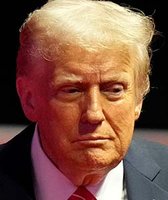
For days, President Donald Trump has said the U.S. would attack civilian infrastructure such as power plants in Iran by the evening of April 7 if the warring countries cannot reach an agreement.
That morning, Trump said on Truth Social that "a whole civilization will die tonight, never to be brought back again."
Attacking civilian targets is widely considered a war crime in most cases.
But on April 6, a day before Trump’s deadline, Fox News host Jesse Watters downplayed that idea, saying there’s plenty of historical precedent for what Trump threatened.
"Bombing power plants is not a war crime," Watters said. "Bill Clinton destroyed Serbia's entire energy infrastructure. Both Bushes took out Iraq's electricity grid. Rolling Thunder, North Vietnam — Lyndon Johnson took out the power plants. You do it under the laws of warfare. Proportionality, dual-use systems. It can be done humanely."
Watters was referring to the Balkan, Gulf, Iraq and Vietnam wars, respectively. We wondered if he was right that the U.S. bombed civilian infrastructure during those conflicts, and if it did, whether that justified what Trump has said he’ll do if no agreement is reached.
Fox News didn’t respond to PolitiFact’s questions about Watters’ comments. International law provides some leeway in determining whether it’s justified to bomb facilities with both military and civilian uses. Military historians said that in all the wars Watters cited, the U.S.attacked power plants that served both purposes.
However, they said, the U.S. historically tried to minimize actions that risked civilians’ lives and could be considered war crimes. This was especially true after the Vietnam War, when U.S. actions affecting civilians prompted enhanced protections under international law.
"The U.S. has always aspired to respect the principle of distinction — differentiating between civilian and military targets — and the principle of proportionality," said Milena Sterio, a Cleveland State University law professor who specializes in international law.
But Trump’s public threat to attack civilian infrastructure is unprecedented, Sterio said. The U.S. "has always denied that it intentionally targeted civilians — even if some of its attacks did cause harm to civilians."
Trump’s rhetoric indicates far fewer constraints than the U.S. used during the earlier wars Watters cited.
"When Trump threatens to obliterate a civilization, he’s not making a distinction between power plants and anything else," said Pace University law professor Alexander K.A. Greenawalt.
A history of U.S. bombing power plants
In addition to the wars Watters cited, the U.S. bombed power plants during both World War II and the Korean War, according to military historians. The U.S. strategy in both wars was "to collapse the ‘industrial web’ that sustained both the adversary's fighting forces, as well as the ability of the central leadership to exert command and control over its forces," said Joseph Stieb, a University of North Carolina historian.
In Vietnam, the U.S. attacked power plants during the campaign Watters mentioned — Rolling Thunder, from 1965 to 1968 — and in a later campaign, 1972’s Operation Linebacker.
"In Vietnam, the U.S. literally ran out of targets and made little effort to distinguish between civilian and military targets," Stieb said. "The point of the Vietnam bombing was largely to break the will of the North Vietnamese through punishment, which meant hitting targets not necessarily because they had innate military value but because they were a means of inflicting punishment."
But such practices do not justify an unconstrained campaign against Iran, experts said. "In Vietnam, we often fought unethically," said Michael O’Hanlon, director of foreign policy research at the Brookings Institution.
NATO didn’t reduce Yugoslavia's electrical grid to rubble during the Balkan Wars in 1999; it used projectiles carrying carbon filaments to cause short-circuits and blackouts.
Such "graphite bombs" were generally nonlethal upon impact, but the resulting blackouts could have later killed civilians — babies on ventilators, for example — potentially constituting war crimes, said Gerard Toal, a Virginia Tech government and international affairs professor.
In Iraq, the U.S. again attacked power plants, and did so fairly widely, but it tried to limit the destruction, including by using graphite bombs, experts said.
"Overall, I would not say the Iraq bombing campaigns were riddled with war crimes," Stieb said. "Most of the attacks on infrastructure fit within the ambiguities of what you are allowed to bomb for military purposes."
The military experts said Trump’s rhetorical framing sets today’s situation apart from the previous wars.
During the wars Watters mentioned, "military decision-making included internal adjudication over proportionality and limiting civilian casualties," said Gregory A. Daddis, a Texas A&M University historian. Such care and deliberation is hardly guaranteed "when the commander-in-chief is threatening that ‘a whole civilization will die tonight’ if his demands are not met," he said.
Standards in international law
Experts said an important piece of context to consider before comparing different wars is that international law has changed over time.
"We dropped atomic bombs on cities during World War II," Greenawalt said. "Whether or not that was a crime then, it certainly would be one under current law."
It’s also misleading to point to Vietnam to justify a potential attack on civilian infrastructure in Iran since U.S. action in that war helped lead to tighter civilian protections under international law, experts said.
Trump’s sweeping rhetoric also undercuts the specific justification he could use to keep the attacks on facilities on the right side of international law — the requirement of "military necessity" to bomb dual-use infrastructure.
If Trump carries through on his threats of unconstrained bombing, "that would involve colossal harm to civilians and their property," said Dakota S. Rudesill, an Ohio State University law professor who specializes in international security. "The civilian suffering would be massive. It is hard to see how the military benefit would justify it."
RELATED: Is it a war crime to bomb civilian infrastructure, as Donald Trump has threatened?
Our Sources
Jesse Watters, remarks on Fox News, April 6, 2026
Donald Trump, Truth Social post, April 7, 2026
PolitiFact, "Is it a war crime to bomb civilian infrastructure, as Donald Trump has threatened?" April 2, 2026
Email interview with Kyle Longley, historian at Chapman University, April 7, 2026
Email interview with Christopher Hamner, George Mason University historian, April 7, 2026
Email interview with David Silbey, military historian at Cornell University, April 7, 2026
Email interview with Susan L. Woodward, emerita political science professor at the Graduate Center of the City University of New York, April 7, 2026
Email interview with Mark F. Cancian, senior adviser at the Center for Strategic and International Studies, April 7, 2026
Email interview with Michael O’Hanlon, director of foreign policy research at the Brookings Institution, April 7, 2026
Email interview with Milena Sterio, Cleveland State University law professor, April 7, 2026
Email interview with Dakota S. Rudesill, Ohio State University law professor, April 7, 2026
Email interview with Gregory A. Daddis, Texas A&M University historian, April 7, 2026
Email interview with Gerard Toal, government and international affairs professor at Virginia Tech, April 7, 2026
Email interview with Alexander K.A. Greenawalt, Pace University law professor, April 7, 2026
Email interview with Stuart Ford, University of Illinois-Chicago law professor, April 7, 2026
Email interview with Joseph Stieb, University of North Carolina historian, April 7, 2026
Browse the Truth-O-Meter
More by Louis Jacobson