
Our only agenda is to publish the truth so you can be an informed participant in democracy.
We need your help.

People attend a candlelight vigil for former House Speaker Melissa Hortman and her husband Mark, who were fatally shot, at the state Capitol, June 18, 2025, in St. Paul, Minn. (AP)

Vice President JD Vance did not point to a source, but a White House spokesperson separately cited an article about a Center for Strategic and International Studies study of 750 terrorist attacks and plots in the U.S. from 1994 to July 4, 2025.
The study found that in the first six months of 2025, left-wing terrorist attacks outnumbered those by the right. But the study showed that for more than 30 years before 2025, right-wing attacks had outpaced left-wing attacks.
Such tallies are imperfect, because there’s no single definition of "political violence."
Following the September assassination of conservative influencer Charlie Kirk, President Donald Trump and Vice President JD Vance have shaped their political agenda by blaming the left for political violence.
"Political violence, it's just a statistical fact that it's a bigger problem on the left," Vance said while guest-hosting The Charlie Kirk Show podcast Oct. 15 in the aftermath of Kirk’s killing. About a minute later, he added, "Right now that violent impulse is a bigger problem on the left than the right."
A Vance spokesperson did not answer our questions. When referring to left-wing violence, a White House spokesperson recently pointed to a Sept. 28 Axios article about a study by the Center for Strategic and International Studies, a nonprofit policy research organization.
The study found that "2025 marks the first time in more than 30 years that left-wing terrorist attacks outnumber those from the violent far right." The study also showed that for the 30 years before 2025, right-wing attacks had outpaced left-wing attacks.
"The rise in left-wing attacks merits increased attention, but the fall in right-wing attacks is probably temporary, and it too requires a government response," the study’s authors wrote.
Vance’s statement oversimplified political violence and drew from part of one study of a six-month period. The federal government has no single, official definition of "political violence" and ascribing ideologies such as left-wing and right-wing is sometimes complicated. There is no agreed upon number of left- or right-wing politically violent attacks.
Research before 2025 largely points to higher levels of right-wing violence over longer periods of time.
Trump has used the administration’s statements about rising left-wing violence to designate antifa as a domestic terrorist organization, and administration officials also said they will investigate what they call left-wing groups that fund violence.
Although political violence is a small subset of violent crime in the U.S., it "has a disproportionate impact because even rare incidents can amplify fear, influence policy and deepen societal polarization," University of Dayton sociology professors Arthur Jipson and Paul J. Becker wrote in September after Kirk’s assassination.
In an email interview with PolitiFact, Becker said the report in question, "indicates there MAY be a shift occurring from the Right being more violent but 5 vs. 1 incidents in 6 months isn't enough to completely erase years of data and reports from multiple sources showing the opposite or to dictate new policies."
The Center for Strategic and International Studies, a national security and defense think tank, published a September report examining 750 terrorist attacks and plots in the U.S. between 1994 and July 4, 2025.
The report defined terrorism as the use or threat of violence "with the intent to achieve political goals by creating a broad psychological impact."
The authors wrote that it is difficult to pinpoint some perpetrators’ ideologies, which in some cases are more of what former FBI director Christopher Wray called a "salad bar of ideologies." For example, Thomas Crooks, who attempted to assassinate Trump in 2024, searched the internet more than 60 times for Trump and then-President Joe Biden in the month before the attack.
The full CSIS report gave a more complete picture of politically motivated violence:
Left-wing violence has risen from low levels since 2016. "It has risen from very low levels and remains much lower than historical levels of violence carried out by right-wing and jihadist attackers."
Right-wing attacks sharply declined in 2025, perhaps because right-wing extremist grievances such as opposition to abortion, hostility to immigration and suspicion of government agencies are "embraced by President Trump and his administration." The report quotes Enrique Tarrio, the former Proud Boys leader pardoned by Trump, who said, "Honestly, what do we have to complain about these days?"
Left-wing attacks have been less deadly than right-wing attacks. In the past decade, left-wing attacks have killed 13 victims, compared with 112 for right-wing attackers. The report cited several reasons, including that left-wing attackers often choose targets that are protected such as government or law enforcement facilities, and target specific individuals.
The number of incidents by the left is small. A graphic in the report showing the rise in left-wing attacks in 2025 as of July 4 is visually striking. It is based on a small number of incidents: four attacks and one disrupted plot.
Studies have not uniformly agreed on some attackers’ ideological classifications. The libertarian Cato Institute categorized the person charged in the shooting deaths of two Israeli embassy staffers in May 2025 as left-wing, while the CSIS study described the motivation as "ethnonationalist." (Ethnonationalism is a political ideology based on heritage, such as ethnic identity, which can create clashes with other groups.) The Cato study counted only deaths while the CSIS analysis was not limited to deaths.
"While Vance’s statement has a factual anchor for that limited timespan, it selectively emphasizes one short-term slice rather than the broader trend," Jipson, of the University of Dayton, told PolitiFact. "In that sense, it can be misleading: It may give the impression that left-wing violence is generally now more dangerous or prevalent, which is not borne out by the longer view of the data."
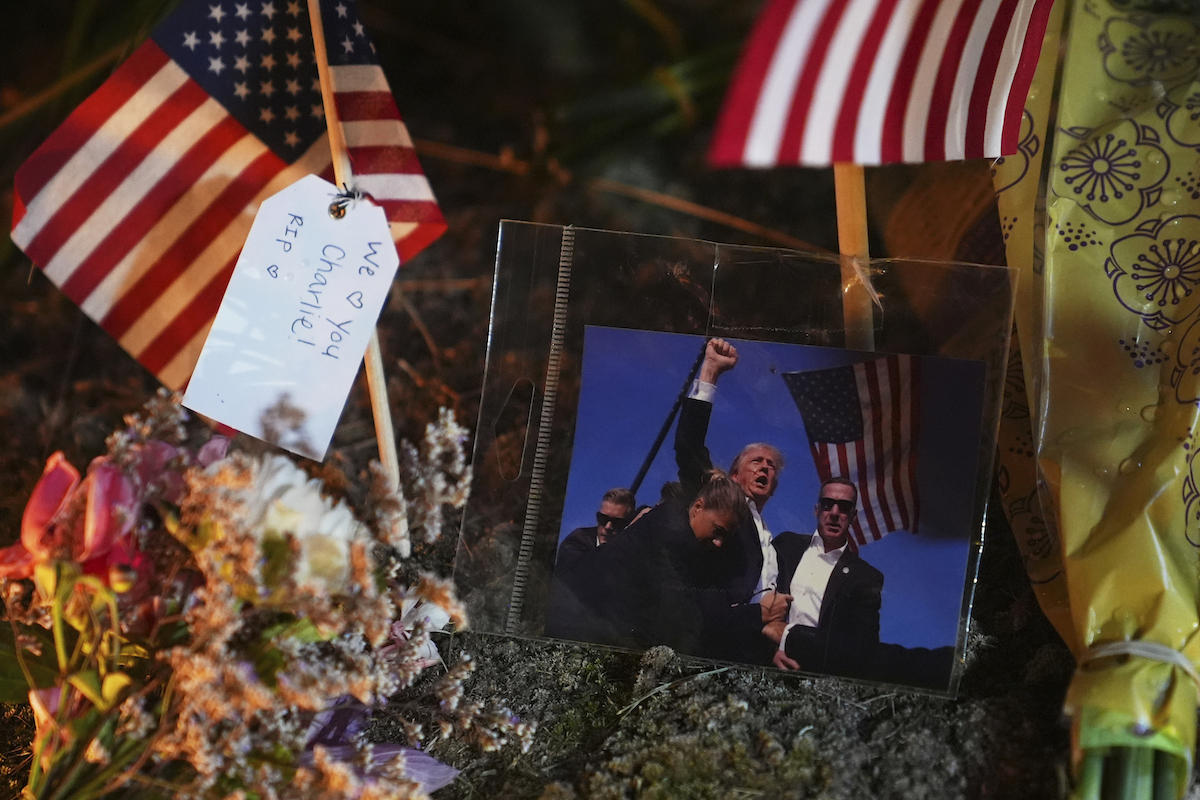
A photo of Trump is seen at a growing memorial for Charlie Kirk outside Timpanogos Regional Hospital after Kirk was shot and killed Sept. 10, 2025, in Orem, Utah. (AP)
The Cato analysis, published after Kirk’s death, said 3,597 people were killed in politically motivated U.S. terrorist attacks from Jan. 1, 1975, through Sept. 10, 2025.
Cato found right-wing attacks were more common than left-wing. This research has been highlighted by some House Democrats.
Cato wrote that during that time period, terrorists inspired by Islamist ideology were responsible for 87% of people killed in attacks on U.S. soil, while right-wing attackers accounted for 11% and left-wing terrorists accounted for about 2%. Excluding the Sept. 11, 2001, attacks showed right-wing attackers were responsible for a majority of deaths. Measuring homicides since 2020 also showed a larger number by the right than the left.
Vance said, "Political violence, it's just a statistical fact that it's a bigger problem on the left."
Vance did not point to a source, but a White House spokesperson separately cited an article about a study that examined political violence from 1994 to July 4, 2025. It found in the first six months of 2025, left-wing terrorist attacks outnumbered those by the right. It is based on a small number of incidents: four attacks and one disrupted plot.
The study also showed that for 30 years before 2025, right-wing attacks had outpaced left-wing attacks.
The study detailed that left-wing "remains much lower than historical levels of violence carried out by right-wing and jihadist attackers." Research before 2025 largely points to higher levels of right-wing violence over longer periods of time.
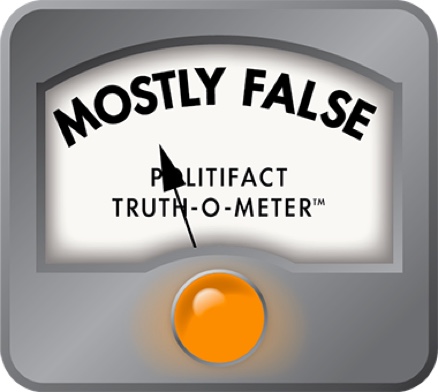
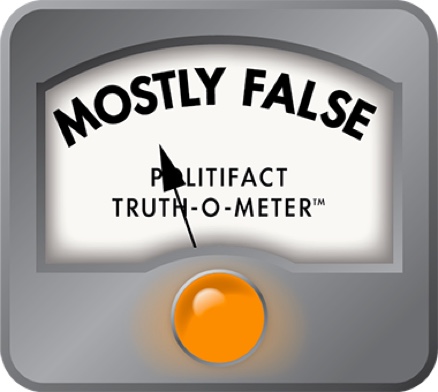
The statement contains an element of truth because left-wing violence rose in the first six months of 2025. However, it ignores that right-wing violence was higher for a much longer period of time. We rate this statement Mostly False.
Chief Correspondent Louis Jacobson contributed to this fact-check.
RELATED: Nihilistic violent extremism: What the FBI term means and why experts warn against overuse
RELATED: 'Rough road ahead': Charlie Kirk’s assassination highlights the rise in US political violence
The Charlie Kirk Show, Vice President Vance and the Trump Admin Honor Charlie, Oct. 15, 2025
Center for Strategic and International Studies, Left-Wing Terrorism and Political Violence in the United States: What the Data Tells Us, Sept. 25, 2025
The Atlantic, Left-Wing Terrorism Is on the Rise, Sept. 23, 2025
Cato Institute, Politically Motivated Violence Is Rare in the United States, Sept. 11, 2025
Foreign Affairs, America’s New Age of Political Violence, Oct. 9, 2025
Reuters, Nation on edge: Experts warn of 'vicious spiral' in political violence after Kirk killing, Sept. 11, 2025
National Institute of Justice, What NIJ Research Tells Us About Domestic Terrorism, Jan. 4, 2024
Jason Paladino, DOJ Scrubbed Study Showing Right-Wing Violent Attacks Outpace All Other Extremism, Sept. 12, 2025
Axios, Study: Left-wing terrorism outpaces far-right attacks for first time in 30 years, Sept. 28, 2025
Factcheck.org, What We Know About Political Violence in America, Oct. 2, 2025
CNN, The data doesn't back up Trump's claims that the left is more violent, Sept. 20, 2025
PBS, Analysis: What data shows about political extremist violence, Updated Sept. 22, 2025
Washington Post, Left-wing actors responsible for more attacks this year, report says, Sept. 25, 2025
New York Times, In Trump’s Second Term, Far-Right Agenda Enters the Mainstream, Updated Aug. 27, 2025
House Homeland Security Committee Democrats, X post, Oct. 15, 2025
Abigail Jackson, White House spokesperson, X post, Sept. 28, 2025
Fiveable, key term - Ethnonationalism, Accessed Oct. 20, 2025
Email interview, Arthur Jipson, University of Dayton sociology associate professor, Oct. 16-17, 2025
Email interview, Paul J Becker, University of Dayton sociology associate professor, Oct. 16-17, 2025
Email interview, Robert Pape, political science professor and director of the Chicago Project on Security and Threats at the University of Chicago, Oct. 16, 2025








In a world of wild talk and fake news, help us stand up for the facts.