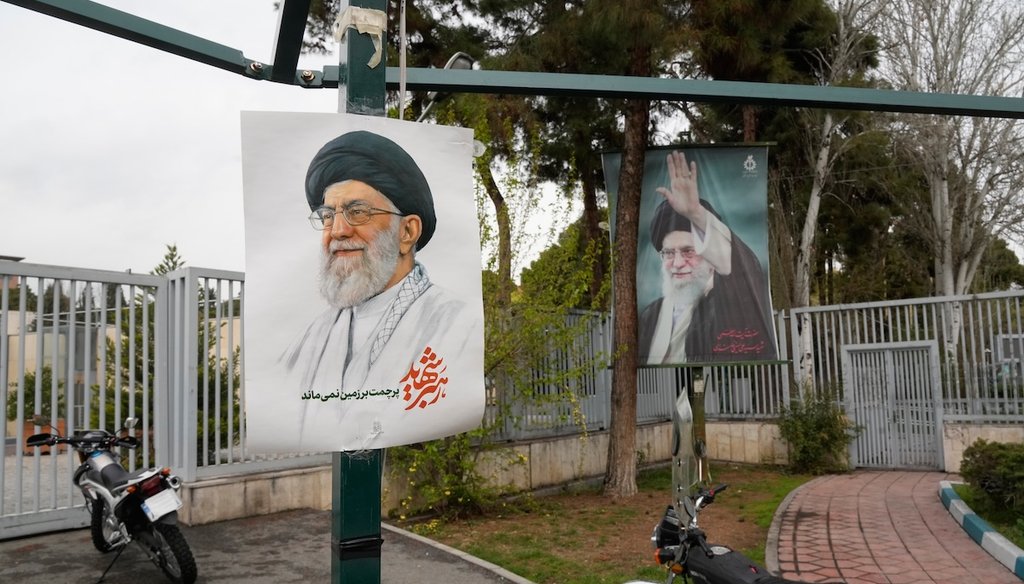

Pictures of the late Iranian Supreme Leader Ayatollah Ali Khamenei hang in front of the Iran University of Science and Technology in Tehran, Iran, on March 31, 2026. (AP)


The U.S. has killed many top Iranian officials, including its supreme leader.
Multiple foreign policy and military experts said regime change is about more than changing people; it’s about changing governing institutions.
Iran’s government structure shows no sign of loosening its hold on power or changing its ideology.
Since the Iran war began Feb. 28, the U.S. and Israel have reported killing many Iranian officials, including Supreme Leader Ayatollah Ali Khamenei. After Khamenei’s death, Iranian government officials said his son, Mojtaba Khamenei, took power.
On multiple occasions, administration officials including the president have declared that Iran has undergone regime change following U.S. military action.
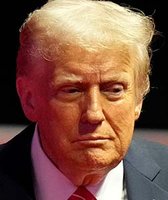
President Donald Trump mused in comments on March 24, March 26 and March 27 that regime change had already happened in Iran.
On March 25, White House Press Secretary Karoline Leavitt was asked about Trump’s mention of regime change the previous day. She said, "I mean, has it not?" She later added, "There has been a change in the regime leadership, which is what the president said, so thank you for confirming he was right."
Aboard Air Force One on March 29, Trump said, "We've had regime change, if you look already, because the one regime was decimated, destroyed. They're all dead. The next regime is mostly dead. And the third regime, we're dealing with different people than anybody's dealt with before."
Two days later, Defense Secretary Pete Hegseth echoed the statement in a press conference, saying that "regime change has occurred."
When we asked White House staff why they were using this term, spokesperson Anna Kelly said, "The regime has changed because the former leaders are dead."
Military and foreign policy experts say this regime change explanation is insufficient to fulfill the term’s traditional meaning. Removing top officials is a necessary step in regime change, but not sufficient, they said
"It's fair to say that there has been a leadership change in the regime, but the regime is still there because the basic structures, like the constitution, are intact," said Mark F. Cancian, a senior adviser at the Center for Strategic and International Studies, a national security think tank. "Regime change (in Iran) implies that the government is something other than the current theocratic structure."
Boaz Atzili, an American University foreign policy and global security professor, agreed that a regime consists of more than people.
A regime consists of "ideas and institutions," Atzili said. "The institutions remained intact."
The Islamic Revolutionary Guard Corps, the armed forces branch that is widely considered a backbone of the regime’s power, is maintaining and possibly even gaining more control, analysts say. Other Iranian government power centers, such as the Guardian Council and the Council of Experts, are also still in place.
Michael O’Hanlon, the director of research in foreign policy at the Brookings Institution, said he’s not aware of a formal definition of "regime change," but he said that what has occurred in Iran would not meet the "common sense standard of a complete removal of previous leadership and its ideology."
Analysts said there are signs Iran’s new leaders are more extreme than the ones who were killed.
"Judging from their backgrounds, these leaders — some pulled out of retirement — are more hardline, anti-U.S., and anti-Israel than those they replaced," Barbara Slavin, a distinguished fellow at the Stimson Center, a foreign-policy think tank, wrote in a recent analysis.
If regime change was the goal, "it has so far failed miserably," Atzili said.
On CNN March 31, foreign policy analyst Fareed Zakaria said, "The system of government in Iran is fully in place. The people who have replaced the old office holders appear to be more hardline, more militaristic. … So, how you can claim this is a new regime, I don’t understand."
Later in the same show, John Bolton — a pro-interventionist on Iran who served as Trump’s national security adviser during his first term but later broke with him — described the conditions in Iran as "moving in the direction of possible regime change."
At least one Trump administration official — Secretary of State Marco Rubio — has taken a more cautious approach to using the phrase.
On ABC’s "Good Morning America" on March 30, Rubio said that the U.S. is "dealing with a 47-year-old regime that still has a lot of people involved in it who aren’t necessarily big fans of diplomacy or peace."
Trump said that in Iran, "We've had regime change."
The U.S. has killed many top Iranian officials, including its supreme leader. But multiple foreign policy and military experts said regime change is about more than just people; it’s about governing institutions.
Iran’s current government structure appears intact, bolstered by the same ideology and using the same levers of power.
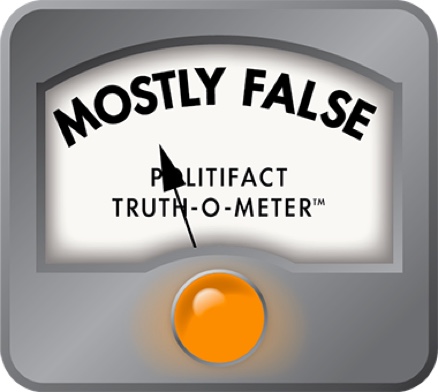
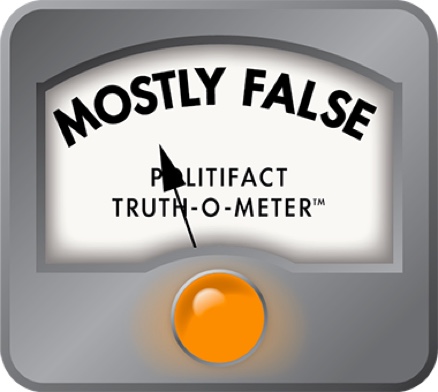
Because killing top Iranian leaders is a step toward regime change but insufficient to achieve it, we rate the statement Mostly False.
RELATED: Barack Obama says regime change in Iraq took eight years
Roll Call, "Donald Trump Speaks to Reporters On Board Air Force One," March 29, 2026
Roll Call, "Donald Trump Attends the Swearing In Ceremony of Markwayne Mullin," March 24, 2026
Roll Call, "Donald Trump Calls In to a Live Interview on Fox News' 'The Five,’" March 26, 2026
Roll Call, "Karoline Leavitt Holds a Press Briefing at The White House," March 25, 2026
Associated Press, "Pete Hegseth holds Pentagon briefing on Iran war," March 31, 2026
Good Morning America, "1-on-1 with Sec. of State Marco Rubio," March 30, 2026
Stimson Center, "Iran’s Not So New Leaders May Strike a Hard Bargain," March 26, 2026
CNN, transcript, March 31, 2026
CNN, "President Trump tells reporters the U.S. could be done with its war with Iran within two to three weeks," March 31, 2026
Al Jazeera, "Why the Iranian regime did not collapse after Khamenei’s assassination," March 17, 2026
The Washington Post, "U.S. Intelligence says Iran’s regime is consolidating power," March 16, 2026
Email interview with Barbara Slavin, distinguished fellow at the Stimson Center, March 31, 2026
Email interview with Michael O’Hanlon, director of research in foreign policy at the Brookings Institution, March 31, 2026
Email interview with Boaz Atzili, American University foreign policy and global security professor, March 31, 2026
Email interview with Mark F. Cancian, senior adviser at the Center for Strategic and International Studies, March 31, 2026
White House, statement to PolitiFact, March 31, 2026











In a world of wild talk and fake news, help us stand up for the facts.