Video hosted by Grace Abels, edited by Ellen Hine
Video Credit: PolitiFact
Stand up for the facts!
Our only agenda is to publish the truth so you can be an informed participant in democracy.
We need your help.
I would like to contribute
Speaker Johnson walks back saying Trump informed on Epstein to FBI. We examined the timeline
House Speaker Mike Johnson caused confusion when he said President Donald Trump had been an FBI informant against deceased sex offender Jeffrey Epstein.
“He's not saying that what Epstein did was a hoax," Johnson said in Sept. 5 remarks to the press. "It's a terrible, unspeakable evil. He believes that himself, when he first heard the rumor, he kicked him out of Mar a Lago. He was an FBI informant to try to take this stuff down.”
News outlets reported that a few days later, Johnson’s office walked back calling Trump a FBI informant. In a statement, the office said Johnson was reiterating comments from the Epstein victims’ attorney. Johnson’s office summarized the attorney’s comments by saying that more than a decade ago, Trump was the only one willing to help prosecutors expose Epstein.
Johnson appears to have been referring to comments made by Brad Edwards, a lawyer for Epstein’s victims during a press conference promoting the Epstein Files Transparency Act sponsored by Reps. Thomas Massie, R-Ky., and Ro Khanna, D-Calif. Edwards said he spoke to Trump in 2009 and that Trump "told me things that were helping our investigation."
Edwards did not specify what Trump’s “help” entailed in 2009. But, as Staff Writer Grace Abel explains, the timeline doesn’t line up with what is known about FBI investigations into Epstein.
Keep Watching
Is Starbucks not allowing orders with Charlie Kirk's name?
Fake citations in MAHA report likely AI-generated
Could NOAA cuts affect severe weather warnings?
Trump's plan for Guantánamo Bay migrant detention
VoteFact: How election experts know 2020 wasn't stolen
VoteFact: How election officials keep votes safe
AI retirement home?
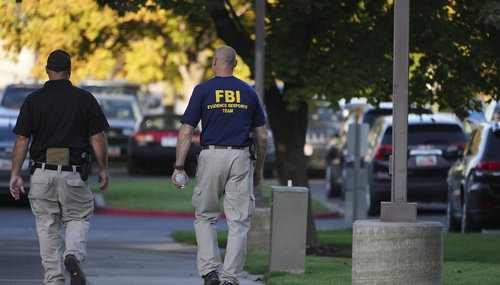
Image altered by AI led to false claims about shooter in Charlie Kirk’s death
Our latest debunk of 2020 misinfo in OK schools