Would Trump’s Iran deal bring ‘peace’? Here’s why that is a stretch.

If your time is short
-
The U.S. and Iran signed a memorandum of understanding which includes a cease fire and are expected to finalize it at a June 19 ceremony in Geneva. That will kick off 60 days of negotiations, including over Iran’s nuclear ambitions.
-
Donald Trump said he is the only president to "achieve real peace" with Iran. But most experts told us that based on what is known so far, the deal does not amount to a peace agreement.
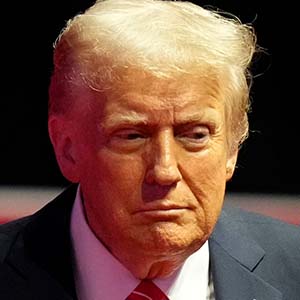
As President Donald Trump said the U.S. had reached a deal with Iran, he also said he’s the only president to achieve peace there.
“This Great Deal will bring Peace and Security to the whole Region,” Trump wrote June 14 on Truth Social. “Many presidents have tried to make Peace with Iran, and all have failed before me. The Leaders of the Region have, for the first time, found a President who can help them achieve real Peace.”
The two countries signed a memorandum of understanding June 15 and are expected to finalize it at a June 19 signing ceremony in Geneva. However, that will not be the last word — it will kick off another 60 days of negotiations, including over Iran’s nuclear ambitions and stockpiled enriched uranium.
At the same time he declared a peace deal, Trump told The New York Times that if Iran and the U.S. fail to reach a nuclear accord, he would restart military attacks or make the United States “the guardian of the Middle East” in return for 20% of the region’s revenues.
Experts told PolitiFact that Trump is overselling the status of the U.S.-Iran framework. They also expressed caution because the White House has not published the memorandum of understanding.
“We are not and we have never been talking about peace with Iran,” said Aaron David Miller, a Carnegie Endowment for International Peace senior fellow and a former Middle East adviser to Republican and Democratic secretaries of state. “No president has pursued peace, normalized peace relations. This is just another round in a historical conflict of almost half a century, between Islamic Republic and various Republican and Democratic administrations.”
Barbara Slavin, a distinguished fellow at the Stimson Center, a foreign policy think tank, said that a true peace agreement would declare a permanent end to hostilities between the two countries and normalization of diplomatic relations, which were cut by the U.S. in 1980 as Iran held U.S. diplomats as hostages.
Trump has repeatedly called himself a peacemaker and campaigned for the Nobel Peace Prize, while exaggerating his role or accomplishments.
The White House did not answer our questions about Trump’s comments and the memorandum.
Here, we examine whether the new deal constitutes a peace agreement, and whether a nuclear agreement reached among Iran and several nations under President Barack Obama was a peace deal.
Is Trump’s agreement a peace deal?
Miller said the Trump memorandum of understanding does not normalize the economic and political relationship between the two nations.
Miller said the U.S. negotiations with Iran are not akin to binding peace treaties. The 1979 agreement between Egypt and Israel is one example.
The memorandum of understanding, Slavin wrote in an article for the Stimson Center, “resolves none of the complicated disputes between the U.S. and Iran over its nuclear program, missile arsenal, or support for regional militants who, like the Islamic Republic of Iran, oppose the existence of Israel as a Jewish-ruled state.”
The U.S. didn’t go to war with Iran before Trump was in office, “so he is claiming credit for stopping a war he started,.” Slavin said.
Nate Swanson, a former U.S. official who worked on Iran issues including the implementation of the 2015 nuclear agreement, said this isn’t a “peace agreement.”
The deal codifies the ceasefire and lays out potential areas for negotiations.
“Bilateral relations have not been restored; sanctions have not been lifted, and very little substance has been achieved to date,” Swanson said.
That said, there’s no one way to cut a peace deal. If interpreted as an agreement to stop violence, Trump has cut such a deal “at least for the time being,” Brendan Green, University of Cincinnati associate professor and expert on nuclear strategy and American foreign policy, said.
Lots of wars have ended without normal diplomatic relations, Green added.
“I think it is basically fine to call this a ‘peace deal,’ Green said. “But the real question is whether it will actually keep the peace past the sixty day negotiating period on other outstanding issues. For that, we will just have to wait and see.”
The 2015 deal was about stopping a nuclear Iran
Obama oversaw a nuclear agreement, not a peace agreement.
The United States and Iran signed the 2015 agreement, as well as China, Russia, France, Germany and the United Kingdom. The deal did not mention typical components of a peace deal, such as an exchange of ambassadors or Iran’s repression of its people.
“It was a narrow deal on a discrete issue,” Miller said.
Under the deal, Iran agreed to refrain from pursuing nuclear weapons and to allow continuous monitoring of its compliance in exchange for economic sanction relief. Different parts of the agreement were scheduled to last between 10 and 25 years; some elements were to last indefinitely. Obama officials hoped for future renegotiations.
Iran agreed to relinquish 97% of its enriched uranium stockpile and 70% of its centrifuges, which are machines used to enrich uranium, to stop plutonium production and to dismantle a plutonium reactor. If Iran broke any of these pledges, the other signatories would be able to reimpose sanctions.
Trump, who campaigned on a promise to renegotiate the deal, pulled out of the deal in 2018 and did not negotiate a new one.
PolitiFact Staff Researcher Caryn Baird contributed to this article.
RELATED: Trump wrong that a 2015 Obama-era deal gave Iran the right to nuclear weapons
Our Sources
PolitiFact, Ask PolitiFact: What was the Iran nuclear deal and why did Trump drop out? June 18, 2025
Washington Post, Israelis denounce trumps deal with iran, June 15, 2026
New York Times, Iran War Live Updates: U.S. and Iran Sign Preliminary Deal, but Its Terms Remain Secret, June 15, 2026
NBC News, U.S. and Iran reach framework deal to end war and reopen the Strait of Hormuz, June 15, 2026
President Donald Trump, Truth Social post, June 14, 2026
President Donald Trump, Truth Social post, June 14, 2026
New York Times, Trump Claims Strait Will Be ‘Permanently Toll-Free’ Under Agreement With Iran, June 14, 2026
PolitiFact, Trump promise Renegotiate iran deal, 2020
Barbara Slavin, Stimson Center, Trump takes the deal and claims victory in the iran war, June 15, 2026
Atlantic Council, Experts react: the U.S. and Iran just announced an interim peace deal. Here's what we know so far, June 14, 2026
Roll Call/Factbase, Donald Trump speech Turning Point USA, April 17, 2026
Roll Call/Factbase, Donald Trump remarks prime time address, December 17, 2025
Reuters, Israeli fire kills four gaza mediators hold more ceasefire talks, June 15, 2026
CBS Mornings, Interview with Vice President JD Vance, June 15, 2026
Interview with Aaron David Miller, senior fellow, Carnegie Endowment for International Peace, June 15, 2026
Interview with Barbara Slavin, distinguished fellow, Stimson Center, June 15, 2026
Interview with Brendan Green, associate professor, University of Cincinnati, June 15, 2026
Interview with Nate Swanson, resident senior fellow and director of the Iran Strategy Project at the Atlantic Council, June 15, 2026