“Vaccine makers are exempt from all liability for vaccine injury and death.”

Our only agenda is to publish the truth so you can be an informed participant in democracy.
We need your help.

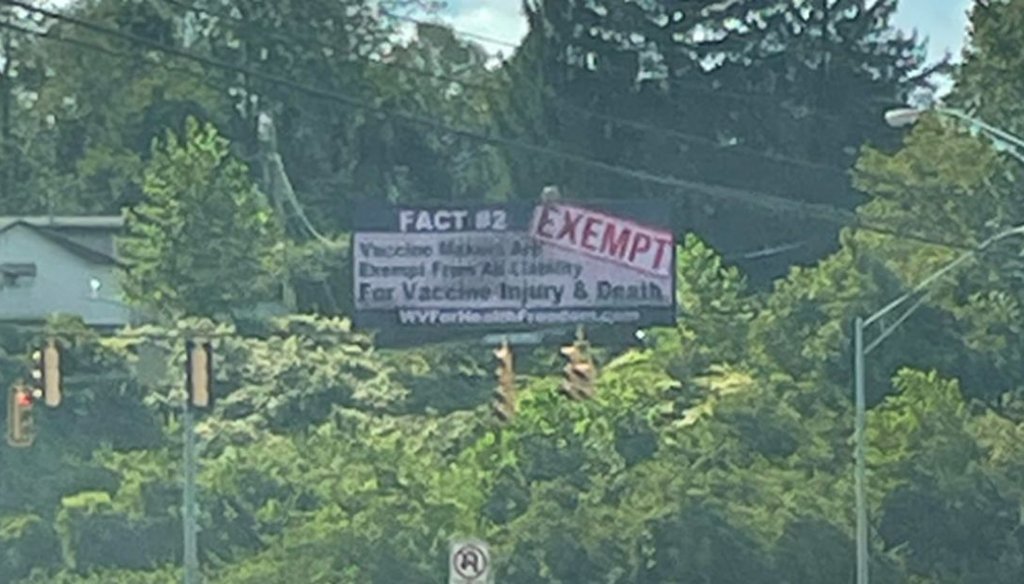
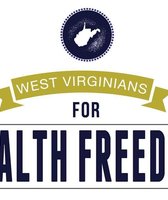
A billboard sponsored by the group West Virginians for Health Freedom in Morgantown, W.Va., on Aug. 29, 2025. (Natalie Ribar)

Under federal law, vaccine manufacturers benefit from significant lawsuit protections, including being shielded against suits about design defects. These protections are paired with a fund that is empowered to make compensation payments to injured parties in lieu of filing a lawsuit.
Vaccine makers’ liability protections are not unlimited. Companies may be sued if the complaining party rejects the compensation fund’s offer; if negligence and fraud is alleged; and when a company’s vaccines are intended for adult use.
A billboard near West Virginia University questions vaccine manufacturer protections, a topic in the news as Health and Human Services Secretary Robert F. Kennedy Jr. seeks to change vaccine policy.
"Vaccine makers are exempt from all liability for vaccine injury and death," says the billboard, which was sponsored by West Virginians for Health Freedom, a group that advocates for parental choice on vaccine requirements and risks.
The billboard has advertised vaccine-skeptical perspectives for years, and passing motorists might wonder if the claim is true. So PolitiFact West Virginia took a closer look.
Dr. Alvin Moss — a WVU professor of nephrology and medicine who was referred to PolitiFact West Virginia by West Virginians For Health Freedom — pointed to an academic paper that described vaccine manufacturers’ legal immunities as "broad" and a description of a Supreme Court case that characterized the industry’s legal protections as "significant." (He said he was speaking in his personal capacity, not on behalf of his employer.)
However, broad and significant are not synonymous with "all," which is the word the billboard used. In practice, the laws that provide manufacturers with extensive liability protections do include exceptions and limits that allow lawsuits in some circumstances.
The most important law governing vaccine liability is the National Childhood Vaccine Injury Act of 1986. This law created the National Vaccine Injury Compensation Program, a no-fault system for people who believe they have been injured by routinely recommended childhood vaccines. A fund is able to pay out awards to people claiming injury; the fund is filled by revenues from a 75 cent tax per disease prevented on each vaccine dose.
Initially, this law clamps down on the ability to pursue a lawsuit. Under the act, people who receive a covered vaccine must file a claim through the compensation program before they file suit. They must then wait for 240 days after filing to see if they are presented with an acceptable offer. If the program fails to issue a decision during that period, or if the petitioner loses their case, or they are awarded compensation but the petitioner rejects the program’s offer, the person can then file a civil lawsuit against the vaccine manufacturer.
There are other limits. A 2011 decision in the Supreme Court case Bruesewitz v. Wyeth held that manufacturers cannot be sued over a claim related to design defects. Suits related to warnings are allowed only if the manufacturer failed to warn the doctor, not the patient.
Other claims, like those related to negligence and fraud, can be pursued, though they are considered harder to prove.

An earlier version of the billboard from 2023. (Bob Britten)
The law limits the types of vaccines that receive liability protections, said Renee Gentry, a law professor and director of the Vaccine Injury Litigation Clinic at George Washington University Law School.
The law covers routine childhood vaccines and does not address adult-only vaccines such as those for shingles or pneumonia. Manufacturers of these vaccines may be, and have been, sued.
COVID-19 vaccines fall under the Public Readiness and Emergency Preparedness Act. This law offers broader liability protection, effectively shielding manufacturers from litigation.
So while manufacturers are protected from lawsuits for some of the vaccines they make, these legal protections aren’t across-the-board, said Dorit Reiss, a law professor who specializes in vaccine liability. For instance, Reiss said, more than 200 cases have been brought against Merck related to its Gardasil vaccine, which aims to protect against HPV. Some of that litigation is ongoing.
Moss, the doctor who was referred to PolitiFact West Virginia by West Virginians For Health Freedom, downplayed the protections for adult vaccines, saying that "childhood vaccines constitute a very high percentage of vaccines given."
Data from the federal Health Resources and Services Administration shows that childhood vaccinations are more numerous than adult vaccines, but adult vaccines still account for a large number of vaccines given. The influenza vaccine, which is mostly given to adults, had more than 2.5 billion doses distributed between Jan. 1, 2006, and Dec. 31, 2023.
On its billboard, West Virginians For Health Freedom said, "Vaccine makers are exempt from all liability for vaccine injury and death."
Under federal law, vaccine manufacturers do benefit from significant lawsuit protections, including being shielded against suits about design defects. These protections are paired with a fund that is empowered to make compensation payments to injured parties in lieu of filing a lawsuit.
However, vaccine makers’ liability protections are not — as the billboard says — unlimited. Companies may be sued if the injured party rejects the compensation fund’s offer; if negligence and fraud are alleged; and when a company’s vaccines are intended for adult use.
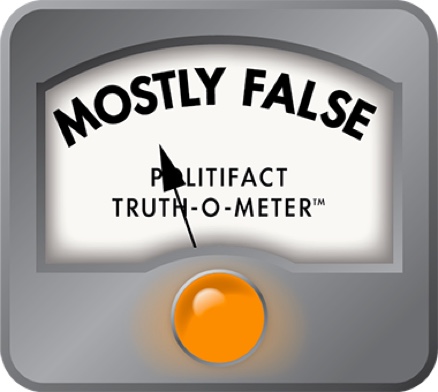
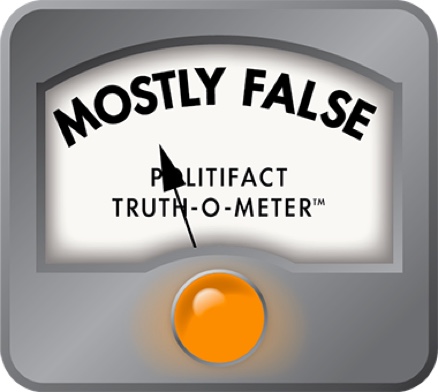
We rate the statement Mostly False.
West Virginians For Health Freedom, billboard in Morgantown, W.Va., Aug. 29, 2025
Justia Law, "Bruesewitz v. Wyeth LLC, 562 U.S. 223 (2011)"
HRSA, "Data & Statistics," accessed on Oct. 14, 2025.
HRSA, "Covered Vaccines," accessed Oct. 10, 2025
HRSA, "Frequently Asked Questions," accessed Oct. 10, 2025
Congress.gov, "National Childhood Vaccine Injury Act of 1986"
Congress.gov, "The PREP Act and COVID-19, Part 2: The PREP Act Declaration for COVID-19 Countermeasures," accessed Oct. 10, 2025
Francis X Shen. "Where Calls for Overturning Bruesewitz v. Wyeth Go Wrong" (Petrie-Flom Center at Harvard Law School) April 11, 2019/. Accessed 28 Sept. 2025.
Justice Department, "Vaccine Injury Compensation Program," accessed Oct. 10, 2025
West Virginians for Health Freedom, website
Email Interview with Renee Gentry, director of the Vaccine Injury Litigation Clinic at George Washington University Law School, Sept, 2, 2025
Email Interview with Dorit Reiss, law professor at the University of California Law San Francisco, Sept. 2, 2025
Email Interview with Alvin Moss, professor of nephrology and medicine at West Virginia University, Sept, 12, 2025











In a world of wild talk and fake news, help us stand up for the facts.