Stand up for the facts!
Our only agenda is to publish the truth so you can be an informed participant in democracy.
We need your help.
I would like to contribute

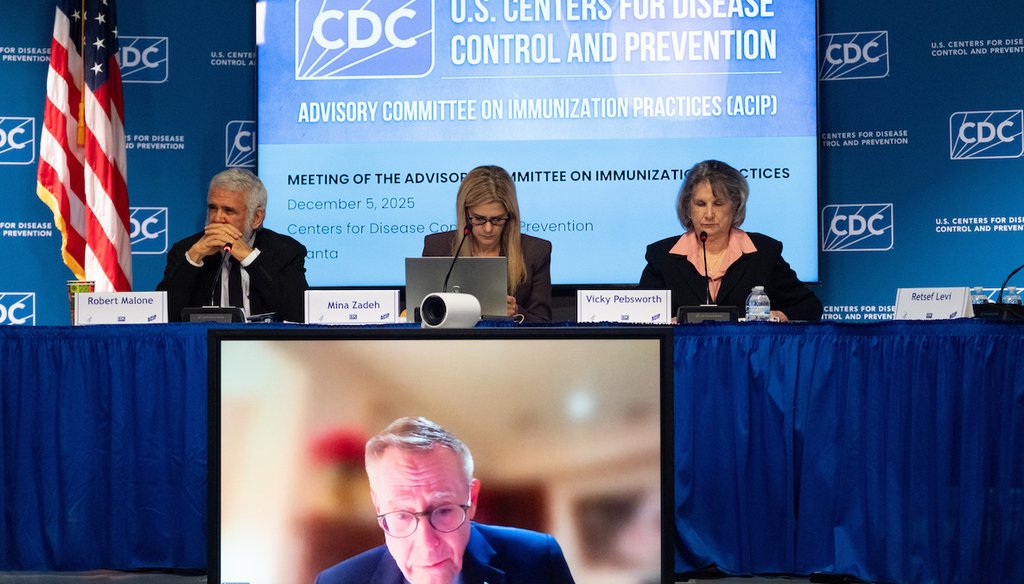
The CDC Advisory Committee on Immunization Practices meets in Atlanta on Friday, Dec. 5, 2025 to consider changes in hepatitis B vaccine recommendations for infants. (AP)


Since roughly 1991, the U.S. Centers for Disease Control and Prevention has recommended all babies get a dose of the hepatitis B vaccine at birth. The CDC committee that helps set vaccine policy voted Dec. 5 to overturn that decadeslong policy.
The Advisory Committee on Immunization Practices’ new recommendations say mothers who tested negative for hepatitis B should discuss the need for the vaccine with their doctors. For babies who do not receive a birth dose, the committee suggested the initial vaccine dose be given "no earlier than 2 months of age."
The committee is composed of members hand-picked by Health and Human Services Secretary Robert F. Kennedy, Jr., an anti-vaccine advocate who in June fired all 17 of the prior panel’s members.
Here are four fact-checkable moments that stood out from ACIP’s Dec. 4 and 5 discussion leading up to the vote:
Many people are unaware they have hepatitis B
Several ACIP committee members and health administrators questioned the need for vaccination among certain children who they described as "low-risk" for hepatitis B exposure.
But it can be hard to know a child’s exposure risk.
Hepatitis B is transmitted through bodily fluids like blood, semen and vaginal fluids. But it is a highly infectious and tough virus that can live on surfaces for up to a week. Small amounts of dried blood on innocuous household items like nail clippers, razors or toothbrushes could be enough.
Hepatitis B infection is stealthy. It can be asymptomatic, sometimes for years. The CDC estimates about 640,000 adults have a chronic infection, but about half of them do not know they are infected and contagious.
Even if a pregnant mother tests negative for the hepatitis B virus, her newborn can come in contact with it in other ways and through other people. Before the vaccine became recommended universally at birth, only around half of children under 10 who were infected with hepatitis B contracted it from their mothers during birth.
Since many people are entirely unaware of their infections, it can be hard to know if a person is at elevated risk or resides in a community with infected individuals.
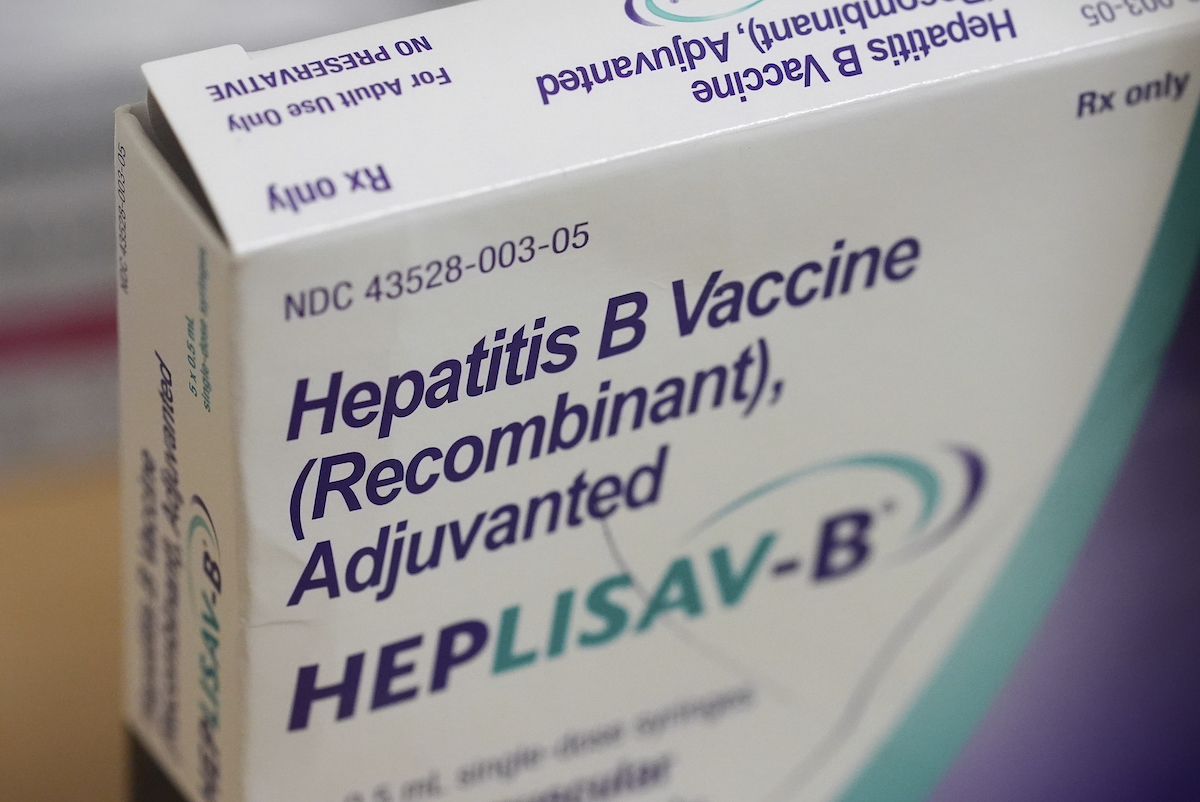
A box of hepatitis B vaccine is displayed at a CVS Pharmacy, Sept. 9, 2025, in Miami. (AP)
Vaccinations are to protect babies, who are most vulnerable to hepatitis B
Some ACIP members said that vaccinating all babies against hepatitis B at birth mainly protected other, higher risk people.
That’s misleading. Vaccination at birth aims primarily to protect newborns, who are particularly vulnerable to hepatitis B.
The hepatitis B virus attacks the liver. Infected infants have a 90% chance of developing the disease’s more dangerous chronic form. A quarter of those babies will go on to die prematurely from the disease when they become adults.
Untreated, chronic hepatitis B infections can cause cirrhosis and death. It is also one of the leading causes of liver cancer. Patients can seek treatments to reduce the virus’ worst effects. But there is no cure.
"We used to have 18,000 or 20,000 kids a year being born with this, a quarter of them going on to have liver cancer," said Dr. James Campbell, pediatric infectious disease doctor at the University of Maryland. "We now have almost none."
Infection rates are low because the decades-old hep B vaccination strategy was working
"This disease has become a victim of the vaccine," said Dr. H. Cody Meissner, a committee member who voted against changing the recommendations. "We’re seeing disease rates go down because of the effectiveness of the vaccine."
Meissner is right that hepatitis B cases dropped dramatically following the introduction of birth-dose vaccination.
The hepatitis B vaccine uses proteins from the surface of the hepatitis B virus to provoke an immune response that gives the body a defense against future infection.
Before the vaccine, around 200,000 to 300,000 people were infected with hepatitis B each year, including about 20,000 children.
Since hepatitis B vaccines began being universally administered to babies, overall cases are down to around 14,000 annually. The change is especially dramatic among young people. In 2022, the CDC reported 252 new chronic hepatitis B infections among people up to age 19, or 0.4 out of every 100,000 kids.
"It’s a mistake to say that because we’re not seeing much disease, we can alter the roots or the frequency or the schedule for administration," Meissner said. "Because we will see hepatitis B infections come back."
Many countries vaccinate for hepatitis B at birth; the U.S. is not an outlier
Committee members repeatedly compared the United States’ guidance with other countries, including Denmark, as part of the rationale for walking back the universal recommendation to provide a hepatitis B vaccine dose at birth.
The U.S. is not a global outlier in recommending hepatitis B vaccines for newborns. In September 2025, the CDC reported that "of the 194 WHO member states, 116 countries recommend universal hepatitis B birth dose vaccination to all newborns."
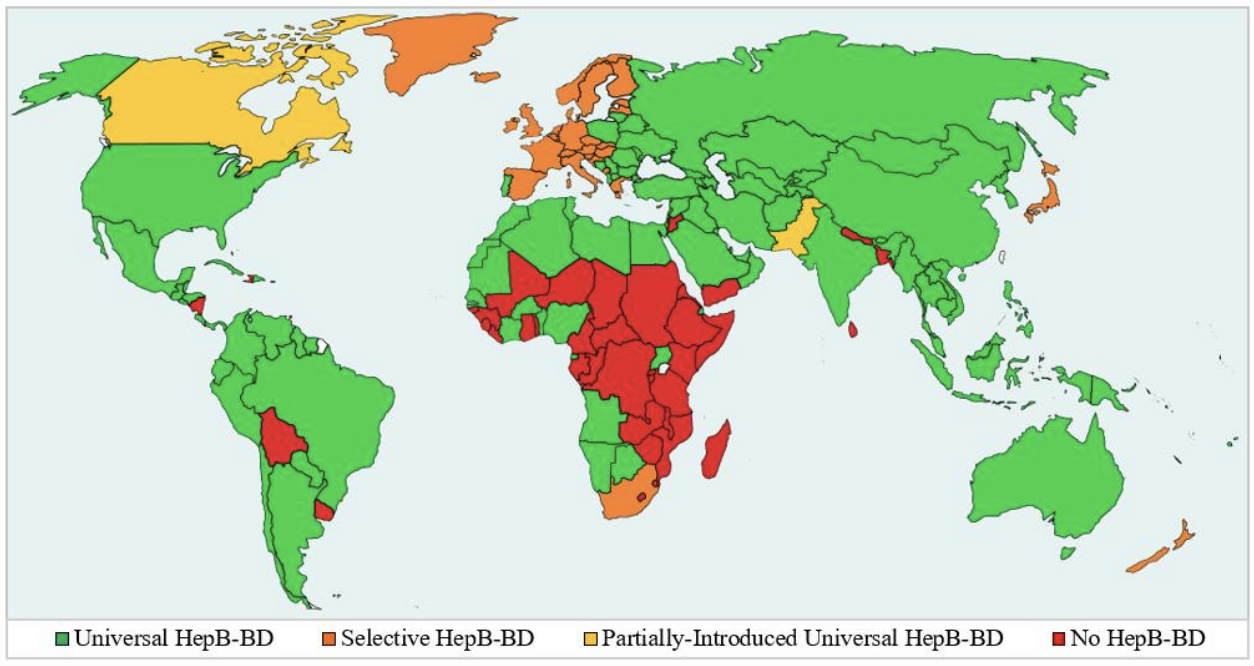
Hepatitis B vaccine birth dose vaccination policy by county as of September 2025. (U.S. Centers for Disease Control and Prevention)
Denmark’s standard vaccination schedule includes vaccines protecting against 10 diseases, but hepatitis B is not one of them. Denmark recommends hepatitis B vaccines only for babies whose mothers are infected with the virus, said the European Centre for Disease Prevention and Control.
Unlike Denmark, the U.S. does not have a national health care system, making it harder for Americans to access regular prenatal care and track patient records across doctors. The U.S. also has lower rates of prenatal screening for hepatitis B.
RELATED: Hepatitis B vaccine Q&A: Why do babies need the shot?
RELATED: RFK Jr. wants to delay the hepatitis B vaccine. Here’s what parents need to know.
Our Sources
See sources linked in story.
Browse the Truth-O-Meter
More by Grace Abels