Stand up for the facts!
Our only agenda is to publish the truth so you can be an informed participant in democracy.
We need your help.
I would like to contribute

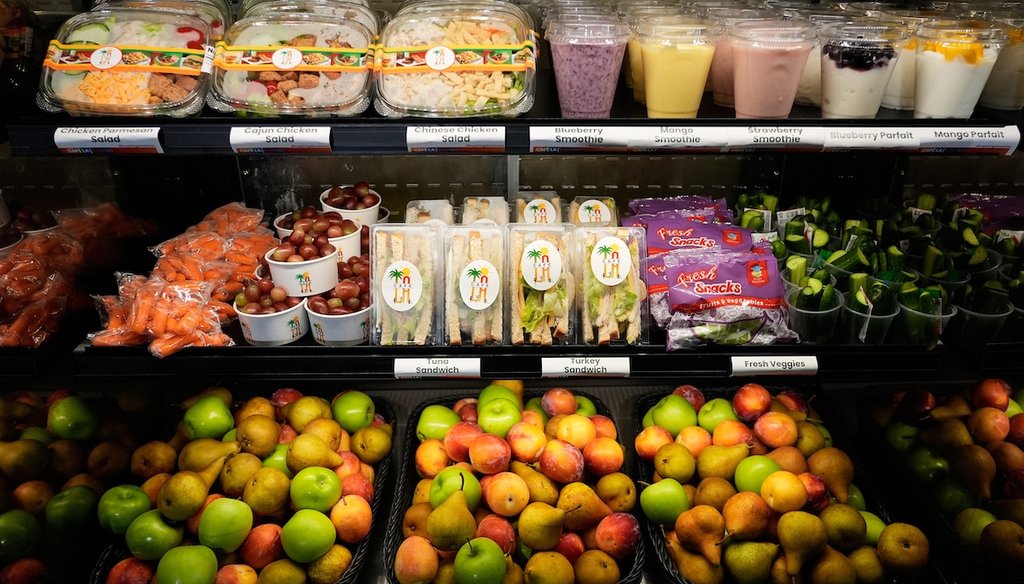
A selection of produce from California farmers and other food offered on the Belvedere Middle School menu, Oct. 8, 2025, in Los Angeles. (AP)

If Your Time is short
-
Despite its widespread use, "ultra-processed" food does not have a universal definition. U.S. Health and Human Services Secretary Robert F. Kennedy Jr. said he’d like to define it by April.
-
So far, the most popular definition comes from Brazil. It sorts food into four groups, not based on nutritional content, but on how much a food is processed.
-
Experts disagree about whether "processing" should be how we think about healthy food, or if the focus should be on nutrient levels.
Researchers have been studying the health effects of "ultra-processed foods" for over 15 years, yet doctors, food scientists, nutritionists and U.S. policy experts still haven’t agreed on a single definition for the term.
Not that the U.S. isn’t trying. In a Feb. 27 interview with podcaster Joe Rogan, Health and Human Services Secretary Robert F. Kennedy Jr. said the U.S. has a definition on the way.
"By April, we will have a federal definition of ultra-processed foods — first time in history," he said.
We don’t know what the nation’s health leaders will adopt, but the strongest contender for a definition comes from Brazil, where restrictions on ultra-processed foods are already making their way into government regulations.
The term "ultra-processed foods" may conjure thoughts of certain junk foods: potato chips, sugary cereals, candies, sodas. But it includes a lot more groceries than you think.
That’s because the category isn’t based on how healthy or nutritious a food is, but rather how it is made. Some whole wheat breads, store-bought hummus and flavored yogurts could all be ultra-processed by some definitions.
It only takes one ingredient to make something "ultra-processed."
Kennedy said once the U.S. establishes a definition, front-of-package food labels could provide more consumer guidance. "So every food in your grocery store will have a label on it. It'll have maybe a green light, a red light or yellow light telling you whether or not it's going to be good for you," he said.
Here’s a glimpse at how defining "ultra-processed" played out in Brazil, why Kennedy’s regulatory vision may be a challenge, and why experts still can’t agree on whether regulating "ultra-processed" foods is the right approach.
Brazil’s system sorts food into four groups, including ultra-processed
In 2009, University of São Paulo researchers arrived at what would become the most popular food processing classification system used in health research — and introduced the term "ultra-processed," into the mainstream.
The Brazilian "Nova" system divides food into four groups according to the "extent and purpose of industrial processing." The technical definitions are complicated, but here’s the gist:
-
Group 1 foods are "unprocessed" or "minimally processed," meaning they are straight from nature (fresh fruits, veggies, meats, dairy and eggs, oats, etc.), or slightly changed to make them safer or last longer (freezing, drying, pasteurizing, grinding, etc.).
-
Group 2 foods are "processed culinary ingredients," things like butter, olive oil, honey, sugar, and salt that you’d have in your kitchen.
-
Group 3 foods are "processed." It’s what you get when you combine the first two groups — salted nuts, cured meats, sugared fruits, canned veggies, pickles — or use fermentation, so fresh breads and cheeses count.
-
Group 4 foods are "ultra-processed," defined as "formulations of ingredients, mostly of exclusive industrial use, that result from a series of industrial processes … many requiring sophisticated equipment and technology." This group includes sodas, packaged snacks, candies, mass-produced breads, cereals, fruit yogurts, chicken nuggets and hot dogs.
If you can make it in your kitchen, it’s likely one of the first three groups. If you’d need a factory and a chemistry degree, it's probably Group 4, or "ultra-processed."
When trying to identify Group 4 foods, the Brazilian researchers advise looking for at least one ingredient that is "never or rarely used in kitchens" or "classes of additives designed to make the final product more palatable or appealing," such as flavors, colors, emulsifiers, sweeteners, thickeners, carbonation or glazing agents.
Until recently, most countries, largely in Latin America, that have introduced regulations around unhealthy foods have focused on nutritional content — taxing, labeling, or restricting the marketing of foods high in fats, sugars, or sodium.
But Brazil has taken a new step.
In 2014, Brazil incorporated the Nova definitions in its national dietary guidelines and advised Brazilians to avoid ultra-processed foods. In 2020, Brazilian school regulators limited spending on processed or ultraprocessed foods for the nation's school meal program to 20%. By 2026, it dropped to 10%.
Regulations also prohibit any money from being spent on certain ultra-processed products including soft drinks, cereals or cereal bars with additives or sweeteners, mayonnaise, cakes, candies and cookies.
Prior to the 2020 ultra-processed food policy, around 40% of Brazilian municipalities were already spending below 20% of funds on ultra-processed foods.
A few Latin American countries have started to follow Brazil’s lead — regulating food not just based on nutrition but on the extent of processing. Mexico and Argentina have expanded package warning labels to include specific non-sugar sweeteners and caffeine, and in 2023, Colombia introduced a tax on ultra-processed foods that were also nutritionally poor.
Defining is one thing, regulating is another
Can a classification like Nova really be translated into American policy? Experts said that would be a challenge.
"Research definitions (like Nova) were designed to classify foods for epidemiological studies, not to create legally enforceable, product-by-product regulatory boundaries," said Kantha Shelke, a food scientist and Johns Hopkins University senior lecturer.
The definitions in Brazil’s Nova groups are descriptive, and when tested, even food experts disagree on which foods belong in which category.
Since food manufacturers aren’t required to publicly disclose how food is made, ultra-processed foods typically have to be identified by the ingredients listed on the packaging — colors, flavorings, other additives — that are considered "markers of processing."
This is an imperfect system. Not all "processing" is reflected on the ingredient label (extrusion cooking, for example), and the purpose of an additive — whether it is used as a preservative or thickener — can change whether a food is considered "ultra-processed."
"Just the fact that there might be rare exceptions to the rule makes the Nova system and the definition of ultra-processed food, not surprisingly, a hot topic in policymaking," said Maria Gombi Vaca, an assistant professor at the University of Connecticut’s Center for Food Policy and Health.
Barry Popkin, a University of North Carolina, Chapel Hill, nutrition professor, said regulations would not be that difficult, specifically if regulators didn’t go after all ultra-processed ingredients, just the color and flavor additives that are legally tracked by the U.S. Food and Drug Administration. That would capture most ultra-processed foods on the market, he said.
Several experts said new U.S. regulations would be subject to fierce litigation from the food industry and should account how policies affect food access and affordability.
Is ‘processing’ how we should think about healthy eating?
Experts are still debating whether the focus on ultra-processed food is the path to healthier food or a red herring.
A growing body of research has established an association between ultra-processed food consumption and negative health effects, including obesity, heart disease, diabetes and cancer.
Most studies, however, are observational, a 2025 Lancet research paper noted, and don’t necessarily prove that the processing of the food is the cause. Studies that measure causation have been short-term, lasting one to two weeks, and small, involving nine to 20 people.
Skeptics of the "processing-is-the-problem" camp warn that variables such as a person’s economic status, educational level, exercise habits and location can shape diet quality and health outcomes.
Experts disagree on what is making these foods so unhealthy. Are potato chips, for example, bad for you because of what’s in them or because of how they are made?
Popkin said processing itself matters. By breaking down the food before it gets to our bodies, "we digest it really quickly, and we're hungry really quickly."
Sugar from a glass of orange juice, for example, is absorbed much faster than a whole orange.
This is true for some food groups, notably fruit and carbohydrates, but not all, said Dr. David Ludwig, a Harvard University professor and pediatric endocrinologist. Fats and proteins are both digested more slowly, and processing them doesn’t really change how our body reacts. Eating a minimally processed steak is not much different than eating a hamburger patty.
Definitions of "ultra-processed foods" get the most heat for leaving nutrition out of the equation.
With a focus on processing, nutritionally rich foods such as whole grain breads, yogurts and plant-based meat alternatives can be categorized as "ultra-processed," while foods that aren’t as healthy, but use sugar, salt, and butter, can skirt the label.
Marion Nestle, New York University professor of food, nutrition, and public health professor emerita, said there are "remarkably few" nutritious examples of ultra-processed foods. "The concept works pretty well in research and most people get it pretty easily."
In the end, health experts said an awareness of both processing and nutritional content was important for a healthy diet.
PolitiFact Researcher Caryn Baird and Staff Writer Zoe Weyand contributed to this report.
Editor’s Note: Minimal use of Google Translate was used in the research of this story to translate websites and documents into English. We corroborated our understanding of translated documents with additional sources.
Our Sources
Interview with Barry Popkin, professor of nutrition at the University of North Carolina at Chapel Hill, March 10, 2026
Statement from a spokesperson at the Academy of Nutrition and Dietetics, March 11, 2026
Interview with Dr. David Ludwig, professor and pediatric endocrinologist at Harvard University, March 11, 2026
Email Interview with Maria Gombi Vaca, an assistant professor at the University of Connecticut’s Center for Food Policy and Health, March 11, 2026
Email interview with Kantha Shelke, a food scientist and Johns Hopkins University senior lecturer, March 11, 2026
Email interview with Dariush Mozaffarian, director of the Food is Medicine Institute at the Friedman School of Nutrition Science and Policy at Tufts University, March 11, 2026
Stanford Medicine, Ultra-processed food: Five things to know, July 15, 2025
BMJ, Consumption of ultra-processed foods and cancer risk: results from NutriNet-Santé prospective cohort, Feb 2018
Current Obesity Reports, Food Classification Systems Based on Food Processing: Significance and Implications for Policies and Actions, 2014
Harvard School of Public Health, Rio’s Schools Say No to Ultra-processed Foods, Sept. 19, 2025
Observatório da alimentação escolar, Os municípios brasileiros estão prontos para cumprir com as metas de redução de compras de alimentos processados e ultraprocessados para a alimentação escolar?, 2023
Ministry of Health Brazil, Dietary Guidelines for the Brazilian population, 2014
World Obesity, Brazil - Policies, Interventions and Actions, Nov. 21, 2025
FULL Global Food Laws, Resolution on National School Meals Program and the Direct Financial Resources in School Program, Dec. 5, 2020
Diabetes, Obesity and Metabolism, Ultra‐processed foods cause weight gain and increased energy intake associated with reduced chewing frequency, Sept. 12, 2024
Eastern Carolina University, "The NOVA Food Classification System," 2018
Food Compliance, Consumption Tax on Ultra-Processed Foods and Sugar Beverages Confirmed, Nov. 9, 2023
Harvard School of Public Health, Op-ed: Ultra-processed foods should not be focus of U.S. nutrition policy | Harvard T.H. Chan School of Public Health, Oct. 9, 2025
Nutrition Journal, Consumption of ultra-processed foods and health outcomes: a systematic review of epidemiological studies, Aug. 2020
Obesity Science & Practice, A Pilot Study of a Novel Dietary Intervention Targeting Ultra‐Processed Food Intake, Dec. 8, 2024
The Lancet Regional Health - Americas, A policy approach to identifying food and beverage products that are ultra-processed and high in added salt, sugar and saturated fat in the United States: a cross-sectional analysis of packaged foods, Aug. 25, 2025
Public Health Nutrition, The UN Decade of Nutrition, the NOVA food classification and the trouble with ultra-processing, March 2017
Public Health Nutrition, Evaluation of food purchasing in the Brazilian School Feeding Programme: feasibility of the requirements and recommendations, Oct 2023
Public Health Nutrition, Effects of front-of-package caffeine and sweetener disclaimers in Mexico: cross-sectional results from the 2020 International Food Policy Study, Oct. 2023
PLoS Med, "The NOVA system can be used to address harmful foods and harmful food systems, Nov. 2024
BMC Med, Reformulation of ultra-processed products in Colombia after the introduction of public health regulations, July 2025
Nutrients, Food Processing: Comparison of Different Food Classification Systems, Feb. 9, 2022
Johns Hopkins University, "Most of the Foods We Eat Are Ultra-Processed. Are They All Unhealthy?, Nov. 10, 2025
Preventative Medicine, Consumption of ultra-processed foods and obesity in Brazilian adolescents and adults, Dec. 2015
Nutrients, The Role of Diet Quality in Mediating the Association between Ultra-Processed Food Intake, Obesity and Health-Related Outcomes, Dec. 2021
European Journal of Clinical Nutrition, Ultra-processed foods: how functional is the NOVA system?, Sept. 2022
Food and Nutrition Research, "Definitions of ultra-processed foods beyond NOVA: a systematic review and evaluation," June 2025
Global Health Advocacy Incubator, Brazilian Courts Protect Vulnerable Children and Youth in Decision Against Nestlé Brazil, July 13, 2022
Global Health Advocacy Incubator, A Landmark Decree Ushers in a New Era for School Food in Brazil, Dec. 21, 2023
Global Health Advocacy Incubator, How is Brazil’s Food Industry Undermining Healthy School Meals Policy?, July 24, 2025
Global Health Advocacy Incubator, Colombia’s Health Taxes Are Working, Feb. 26, 2026
Public Health Nutrition, Ultra-processed foods: what they are and how to identify them, Feb. 2019
https://www.fao.org/gsfaonline/reference/techfuncs.html
Food and Drug Administration, Ultra-Processed Foods, Sept. 18, 2025
NUPENS, Food classification Nova, accessed March 13, 2026
Global Food Research Program, Colombia's ultra-processed product taxes, accessed March 13, 2026
Global Food Research Program, National School Meals Program / Programa Nacional de Alimentação Escolar (PNAE) accessed March 13, 2026
Global Food Research Program, Ultra-processed foods A global threat to public health, Nov. 20, 2023
Government of Brazil, Resolução CD/FNDE nº 3, de 4 de fevereiro de 2025 — Fundo Nacional de Desenvolvimento da Educação, Feb, 4, 2025
Harvard School of Public Health, What are ultra-processed foods and are they bad for our health?, Jan. 9, 2020
Government of Brazil, Decree no. 11, 821, Dec. 12, 2023
MD Anderson Cancer Center, 7 examples of processed food, Sept. 29, 2023
MDPI, Robustness of Food Processing Classification Systems, 2019
Nature Communications, Machine learning prediction of the degree of food processing, April 21, 2023
New England Journal of Medicine, Ultraprocessed Food on an Ultrafast Track, Sept. 3, 2025
Pan American Health Organization, PAHO/WHO celebrates the regulation of the law to promote healthy eating in Argentina, March 29, 2022
Cell Metabolism, Ultra-Processed Diets Cause Excess Calorie Intake and Weight Gain: An Inpatient Randomized Controlled Trial of Ad Libitum Food Intake, July 2019
The Guardian, Colombia passes ambitious ‘junk food law’ to tackle lifestyle diseases | Global development, Nov. 10, 2023
The Lancet, Ultra-processed foods and human health: the main thesis and the evidence , Dec. 2025
The Lancet, Policies to halt and reverse the rise in ultra-processed food production, marketing, and consumption, Dec. 2025
The Lancet, Ultra-processed foods in research and policy, March 2026
The Washington Post, Dietary fat was a scapegoat. Now MAHA is naming a new one, Oct. 6, 2025
YouTube, Joe Rogan Experience #2461 - Robert F. Kennedy, Jr., Feb. 27, 2025
YouTube, CigiTV - Cooking Extrusion, June 3, 2013
Nature Food, Nutrition research challenges for processed food and health, Feb. 2022
Current Developments in Nutrition, Ultra-Processed Foods: Definitions and Policy Issues, Sept. 2018
Pubic Health Nutrition, Nutrition and health. The issue is not food, nor nutrients, so much as processing, May 2009
Browse the Truth-O-Meter
More by Grace Abels