
50,000 started war without body armor
In the Democratic debate in Los Angeles on Jan. 31, 2008, Sen. Hillary Clinton criticized the Bush administration for failing to give American soldiers in Iraq the resources they require. She leveled this accusation:
“We had to fight to get body armor. You know, George Bush sent people to war without body armor.”
The issue of body armor — who gets it and whether it’s the right kind — has been a source of intense scrutiny nearly from the start of the war in Iraq.
A March 7, 2005, story in the
New York Times
by reporter Michael Moss detailed a deadly miscalculation by the military near the start of the war in April 2003. Army Gen. Richard A. Cody decided to stop buying bulletproof vests after a determination that some 50,000 soldiers not on the front lines could do without them. In the following weeks, Moss wrote, “Iraqi snipers and suicide bombers stepped up deadly attacks, often directed at those very soldiers behind the front lines.” Cody quickly ordered bulletproof vests for every soldier. But it took 167 days to start getting those vests to soldiers due to production and paperwork delays. Some soldiers waited months more.
Many soldiers heading to Iraq bought their own body armor despite assurances from the military that it would be provided.
In April 2005, the Government Accountability Office reported on shortages of critical force protection items, including individual body armor. The problems were caused, the report concluded, due to materials shortages, production limitations and distribution problems.
But by and large, everyone eventually got body armor.
In ensuing years, the issue became whether the military was using the right kind.
In January 2006, the
New York Times
cited a secret Pentagon study that found that as many as 80 percent of the Marines killed in Iraq from wounds to the upper body could have survived if they had body armor that reached a soldier’s shoulders, sides and torso.
In March 2007, Clinton and fellow Democratic Sen. Jim Webb of Virginia sent a letter to the Comptroller of the United States, calling on him to initiate a GAO investigation to reassess the body armor systems used by the military.
The following month, the GAO issued a report, which concluded that “Army and Marine Corps body armor is currently meeting theater ballistic requirements and the required amount needed for personnel in theater, including the amounts needed for the surge of troops in Iraq.”
Nevertheless, with emerging technology and debate over the best type of body armor, the GAO is reassessing body armor, said Roger Charles, vice chairman of the nonpartisan Soldiers for the Truth Foundation, which has been at the forefront of the body armor debate.
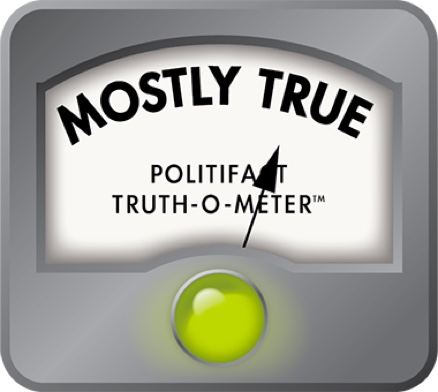
Clinton’s comment about troops heading into war without body armor, while it wasn’t true for all, was true for some soldiers at the beginning of the war. So we rate Clinton’s comment Mostly True.
Our Sources
Democratic debate, Transcript, Jan. 31 2008
New York Times, "Pentagon Study Links Fatalities to Body Armor," by Michael Moss, Jan. 7, 2006
Defense Department Office of Inspector General, "Equipment Status of Deployed Forces within the U.S. Central Command," Jan. 25, 2007
U.S. Government Accountability Office, "Defense Logistics: Army and Marine Corps' Individual Body Armor System Issues," April 26, 2007
Sen. Hillary Clinton, "Senators Clinton & Webb Call for Investigation Into the Effectiveness of Body Armor Issued to Our Troops," news release, May 18, 2007
New York Times, "Many Missteps Tied to Delay of Armor to Protect Soldiers," by Michael Moss, March 7, 2005
Associated Press, "Soldiers in Iraq still buying their own body armor," March 26, 2004
Interview with retired Marine Corps Lt. Col. Roger Charles, president of Soldiers for the Truth Foundation, Feb. 1, 2008