Stand up for the facts!
Our only agenda is to publish the truth so you can be an informed participant in democracy.
We need your help.
I would like to contribute

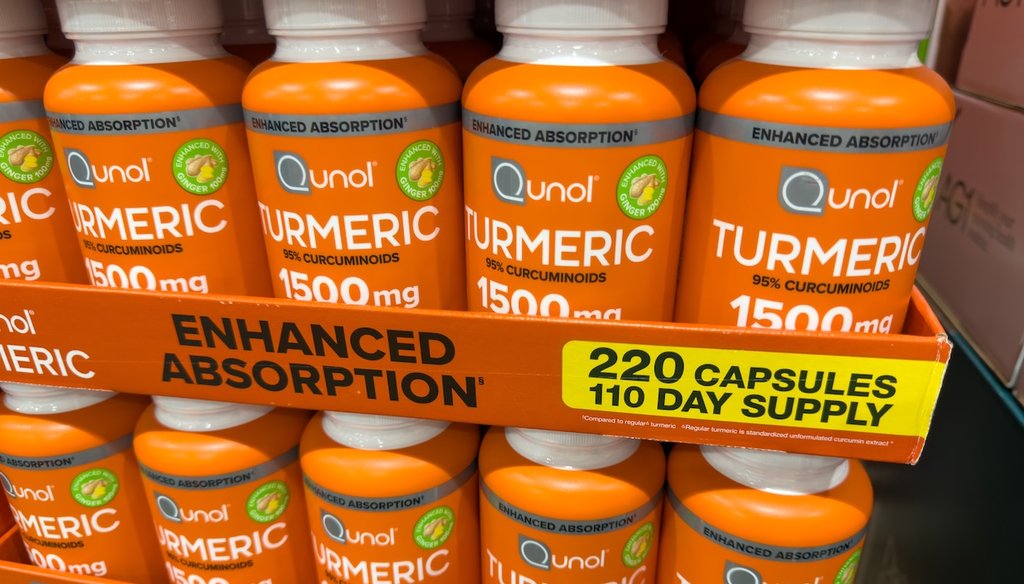
Turmeric supplement bottles on display in Los Angeles, California. (Shutterstock)

If Your Time is short
-
It’s rare, but many popular herbal supplements like turmeric, green tea extract, and ashwagandha can cause acute liver injury — which can be life-threatening.
-
Many products marketed as being "natural" are highly processed and include concentrated versions of their active ingredients. Consult with a doctor about a safe dose rather than just trusting what the bottle says.
-
The first symptoms of acute liver injury are loss of appetite, nausea, vomiting, and upper abdominal pain. Jaundice, dark urine or pale stools are signs your liver is in serious danger.
On a recent episode of "The Pitt," a jaundiced patient learned her liver problems were likely caused by what she’d assumed was a healthy habit — taking a turmeric supplement five times a day.
"With doses that large of turmeric, there have been cases of liver failure," medical resident Trinity Santos told her.
"From eating a spice?" the yellow-skinned patient exclaimed.
Behind this fictional exchange is a factual concern: The cooking spice turmeric has become a popular anti-inflammatory supplement, but in some cases, it can cause liver injury. It’s a risk posed by a number of supplements marketed as being "natural" or "herbal."
According to the Drug Induced Liver Injury Network, around 20% of drug-induced liver injury cases are caused by dietary or herbal supplements.
Besides turmeric, some of the biggest "herbal" culprits include green tea extract; the shrub ashwagandha, sometimes referred to as Indian ginseng; the fruit Garcinia Cambogia, from Southeast Asia; and the North American woodland herb known as black cohosh.
Fortunately, cases of liver toxicity from these supplements are rare. People who take them at high doses or who possess certain genetic factors are at greater risk of becoming seriously sick.
Why are these "natural" supplements toxic to the liver?
Unlike over-the-counter and prescription medications, supplements can be sold without any formal government testing for safety and efficacy. A supplement bottle may say its contents are "all-natural," but the human body can’t tell the difference; the liver metabolizes a supplement just as it would a pharmaceutical.
Store-bought supplements are rarely just ground-up roots and herbs.
"Most are purified concentrates of the herbal extract of the suspected active ingredient," said Dr. Jay Hoofnagle, National Institutes of Health director of liver disease research. "They are sold in concentrations far higher than can be achieved by ingestion of the unaltered herb."
Turmeric used in curry, for example, is different from what is sold in supplements. Such over-the-counter wellness products often contain high concentrations of the active ingredient curcumin, known for its anti-inflammatory and antioxidative properties. Other ingredients, such as black pepper, help accelerate its absorption, making it even more potent.
This version of turmeric is more intense than what people have been using in food and medicinally for centuries. In recent years, it has become one of the most common herbal causes of acute liver injury in the U.S., Hoofnagle said.
Similarly, green tea extract capsules contain about three to eight times more green tea than is in a cup of green tea, Hoofnagle said.
These supplements are frequently mislabeled as well. A 2019 study found that of 272 different herbal and dietary supplements suspected to have caused acute liver injury, more than half either contained ingredients that weren’t listed or lacked ingredients that were.
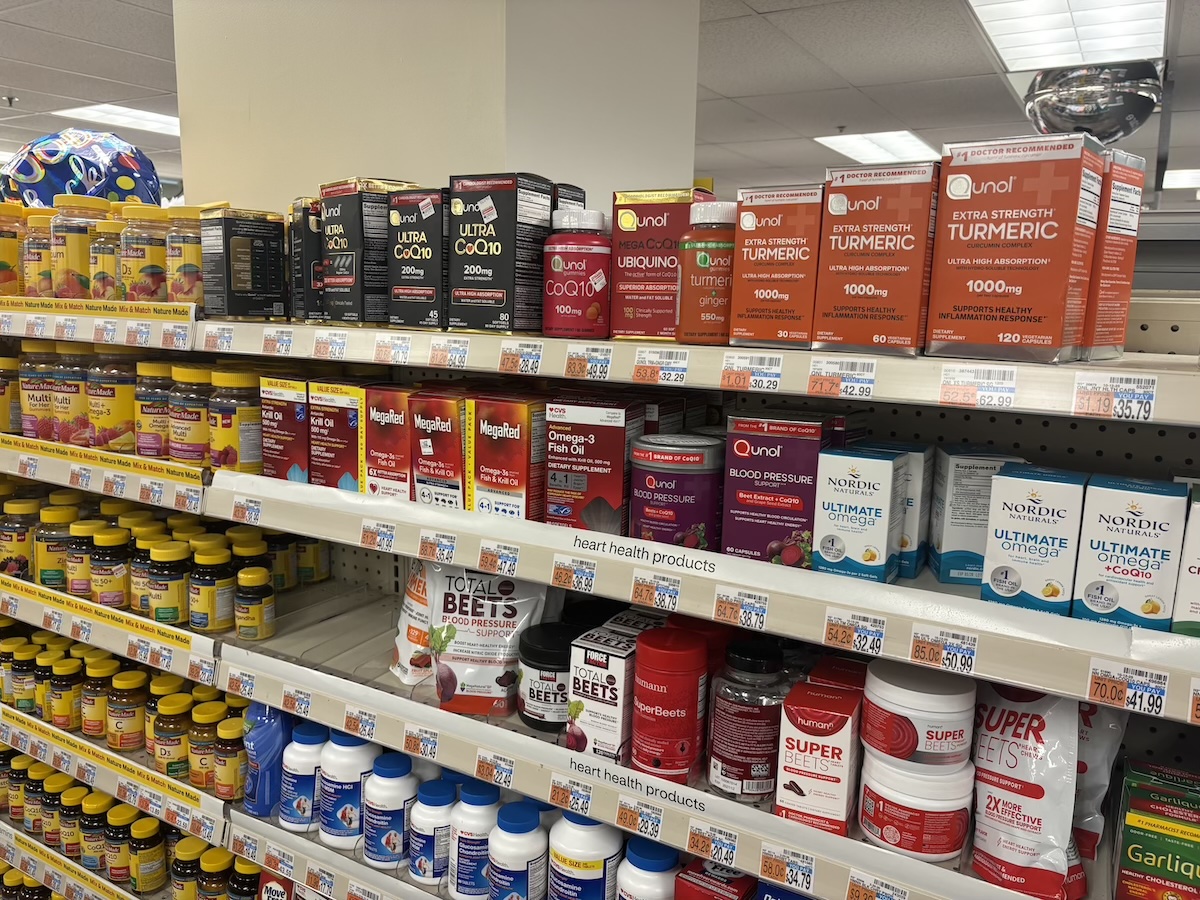
Supplement aisle in CVS store in Washington, D.C. (Grace Abels)
How can you know if a supplement has been linked to liver problems?
A National Institutes of Health searchable database called LiverTox collects information about the toxicity of various medications and supplements.
It shows that chamomile extract and oregano, for example, have not been linked to liver injury, but other herbs like kava, ashwagandha and black cohosh have.
Don’t stop at this online search, though. It’s important to consult your doctor about any supplement before you take it.
Be mindful of the dose
Supplements can be harmful in large doses.
That was the case on "The Pitt." The World Health Organization recommends no more than 1.4 mg of curcumin per pound daily — around 200 milligrams for a 150-pound person. But the patient was taking 2,500 milligrams a day.
That sounds excessive, but it’s not far from the daily doses some manufacturers sell to U.S. customers. Just because a supplement advertises a pill as "daily dose," that doesn’t mean it’s been scientifically determined to be a safe or advisable dose.
Figuring out a safe amount isn’t so simple. Because herbal supplements don’t require safety testing, dosing recommendations can vary widely without clear upper limits.
Online recommendations for ashwagandha, taken for sleep and anxiety, range from 60 to 600 milligrams a day, for example.
Talk to your doctor about what a safe dose entails, and to ensure the supplement won’t interact with other medications.
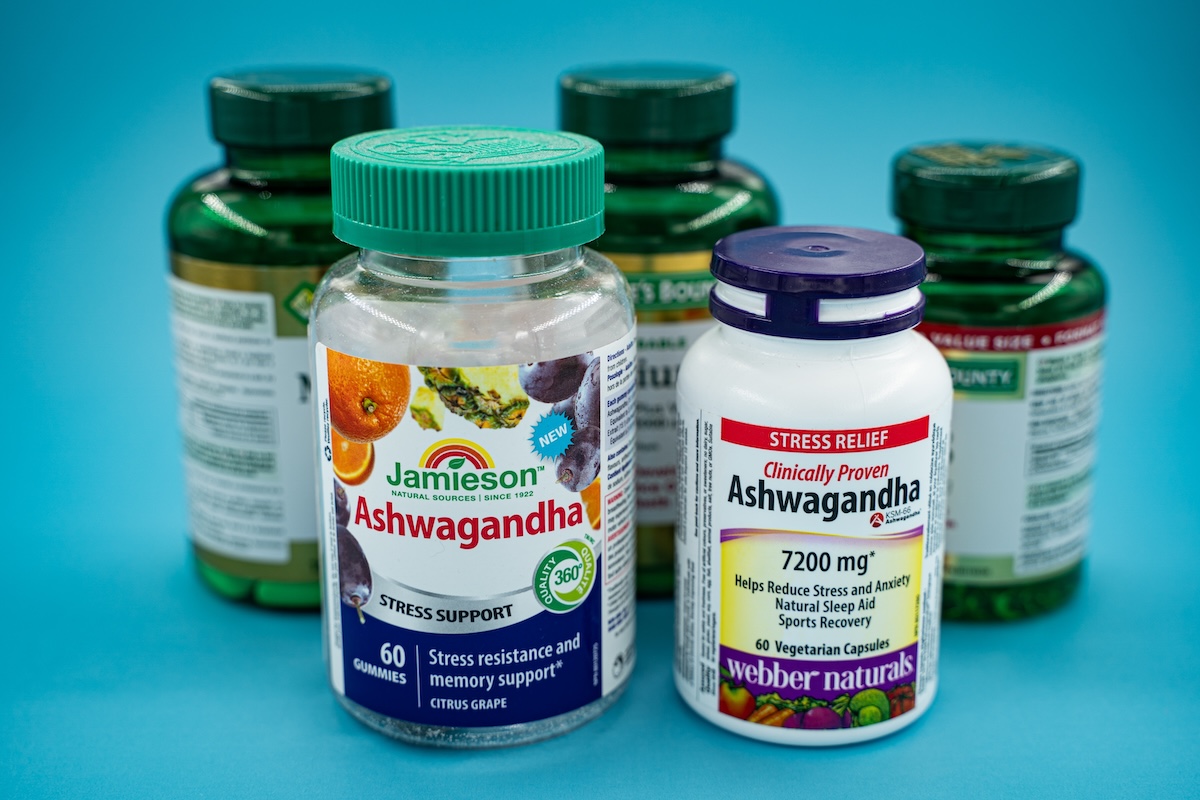
Assorted ashwagandha supplement bottles in Toronto, Canada. (Shutterstock)
Certain people may be more susceptible
Even when taking a reasonable dose, an unlucky few may have dangerous reactions to certain supplements.
Recent research hints that specific genes could predispose some people who take herbal supplements to experience extreme reactions — almost like allergies.
What are the symptoms?
Routine bloodwork from your doctor may be the first sign that your liver is inflamed, as symptoms can take months to show up.
The first symptoms of acute liver injury are loss of appetite, nausea, vomiting, fatigue, and upper abdominal pain. If this is happening, see a doctor right away.
More severe symptoms are jaundice — yellowing of the skin and eyes — dark urine, pale stools, and whole body itching. At this stage, your liver is in dire trouble.
"People with acute liver injury due to drugs or supplements who become jaundiced have about a 10% risk of dying or needing liver transplant," said Dr. Herbert Bonkovsky, Wake Forest University hepatologist and professor.
In most cases, the liver injury is short-term and the body recovers once a person stops taking the supplement.
Our Sources
Email interview with Dr. Joseph Lim, director of clinical hepatology at Yale University, April 8, 2026
Email interview with Dr. Jay Hoofnagle, director of liver disease research at the National Institutes of Health, April 8, 2026
Interview with Dr. Herbert Bonkovsky, hepatologist and professor at Wake Forest University, April 8, 2026
AARP, 6 Popular Supplements That Can Damage Your Liver, April 3, 2025
Amazon, Turmeric Curcumin with Black Pepper Extract 1500mg, accessed April 9, 2026
Clinical Liver Disease, A comprehensive update in herbal and dietary supplement–induced liver injury, June 2024
Columbia University, Guide to Acute Liver Failure, Jan. 2024
Current Opinion in Gastroeneterology, Newly identified genetic variants associated with idiosyncratic drug-induced liver injury, May 2022
EFSA Journal, Scientific opinion on the safety of green tea catechins, April 2018
Gastroenterology, Herbal Products and the Liver: A Review of Adverse Effects and Mechanisms, March 2015
Gastro Hep Advances, Identification of Genetic Risk Factors Associated With Herbal and Dietary Supplement–Induced Acute Liver Failure Using Whole Exome Sequencing Analysis, 2025
Healthline, 10 Benefits of Green Tea Extract, May 31, 2023
Healthline, Ashwagandha Dosage: How Much to Take per Day, Feb. 14, 2025
Henry Ford Health, Do Supplements Cause Liver Damage?, Oct. 30, 2025
Hepatology, AASLD practice guidance on drug, herbal, and dietary supplement–induced liver injury, March 2023
Hepatology, HLA-B*35:01 and Green Tea Induced Liver Injury, June 2021
Hepatology, Liver Injury from Herbal and Dietary Supplements, July 10, 2017
Hepatology, Liver injury from herbals and dietary supplements in the U.S. Drug‐Induced Liver Injury Network, July 12, 2014
Hepatology Communications, The Contents of Herbal and Dietary Supplements Implicated in Liver Injury in the United States Are Frequently Mislabeled, April 2019
International Journal of Molecular Sciences, Hepatotoxicity by Dietary Supplements: A Tabular Listing and Clinical Characteristics, April 9, 2016
JAMA, Estimated Exposure to 6 Potentially Hepatotoxic Botanicals in US Adults | Complementary and Alternative Medicine, Aug. 5, 2024
Jefferson Health, The Trouble With Turmeric: Associated Liver Injuries, Dec. 19, 2025
Johns Hopkins Medicine, Turmeric Benefits, accessed April 9, 2026
Kaiser Permanente, New Research on the Potential Dangers of Turmeric Supplements, Nov. 21, 2023
LiverTox, Acute Liver Failure, Dec. 11, 2019
LiverTox, Garcinia Cambogia, Feb. 13, 2019
LiverTox, Turmeric, June. 16, 2025
LiverTox, Herbal and Dietary Supplements, July 1, 2025
LiverTox, Kratom, April 3, 2020
Michigan Medicine, 15 million Americans take supplements that may be toxic to the liver, Aug. 6, 2024
National Institutes of Health, Ashwagandha: Is it helpful for stress, anxiety, or sleep?, May 2, 2025
National Institutes of Health, Garcinia Cambogia: Usefulness and Safety, Feb. 2025
National Institutes of Health,Black Cohosh: Usefulness and Safety, Nov. 2024
National Library of Medicine, Herbal and Dietary Supplements, July 1, 2025
National Library of Medicine, LiverTox, accessed April 9, 2026
NBC News, Rates of liver injuries rise in the U.S. as supplements grow in popularity, May 27, 2025
New York Presbyterian, Can Supplements Damage Your Liver?, Aug. 1, 2025
Qunol, Turmeric + Ginger Capsules 2400mg, accessed April 9, 2026
University of Colorado Anschutz, Ashwagandha is Popular for Boosting Health — But Could it Hurt Your Liver?, May 12, 2025
Weill Cornell Medicine, Liver Damage Caused by Supplements Is Becoming More Common, June 25, 2025
World Health Organization, KURKUM, 2003
Yale New Haven Health, Turmeric and 10 other popular supplements that can damage your liver, Sept. 11, 2025
Browse the Truth-O-Meter
More by Grace Abels