Is Florida’s mid-decade redistricting plan ‘illegal,’ as some Democrats say?


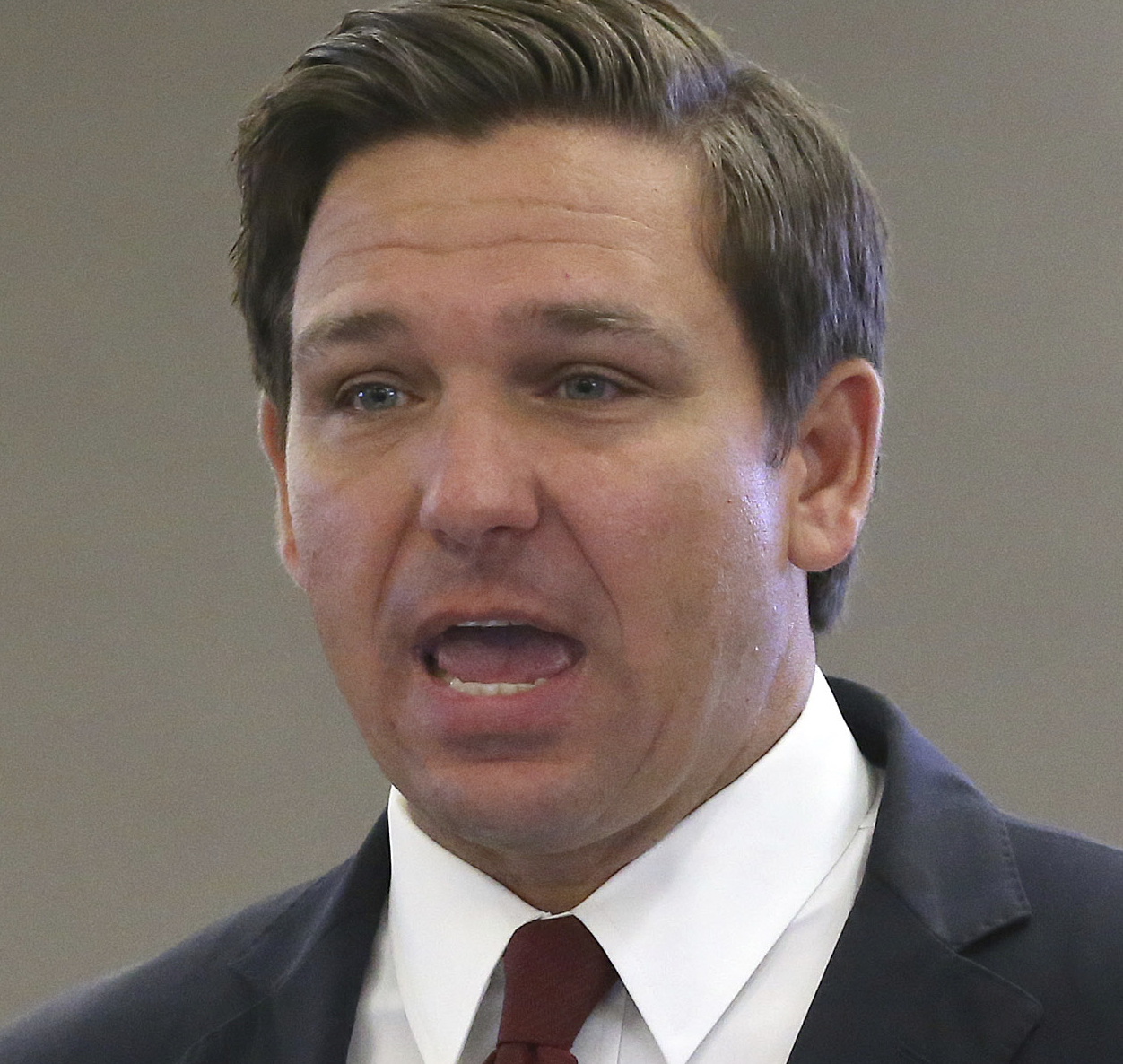
Florida Republican Gov. Ron DeSantis wants the Legislature to hold a special session to redraw the state’s congressional districts. But this move would be illegal, some state Democrats say.
“They are willing to do an illegal unconstitutional act by doing mid-decade redistricting,” Rep. Ashley Gantt, D-Miami, said during an April 8 conference call reported by the Florida Phoenix. “That is literally nullifying a section of the constitution that is unambiguous.”
“This is illegal,” Orlando Democratic Rep. RaShon Young said. “It is against the constitution to redraw maps in favor of a party.”
Is it?
Mid-decade redistricting wouldn’t be illegal, but doing it to intentionally benefit one political party would be, law professors told PolitiFact.
Gantt’s and Young’s comments reference the Florida Constitution’s Fair Districts amendment that voters approved in 2010. The amendment prohibits establishing congressional or state legislative districts with the intent of benefiting one political party. Republicans hold 20 of Florida’s 28 congressional seats.
“If the Legislature adopts new districts, it will have to be able to demonstrate that it did so for reasons other than increasing the number of Republican seats in the U.S. House or offsetting other states’ creation of new Democratic seats,” said Michael Morley, a law professor and faculty director of Florida State University’s Election Law Center. “A court would assess the totality of the circumstances in determining legislative intent.”
DeSantis on April 14 hinted that he may postpone a special session as no proposed maps have been filed yet. Still, he said lawmakers would pass a new map in the “coming weeks.”
Florida Senate President Ben Albritton cautioned lawmakers against speaking about the process, the Miami Herald reported, because they could be forced to provide evidence of conversations “with outside parties who may attempt to persuade the Legislature to pass maps that favor or disfavor a political party or incumbent.”
DeSantis has given different reasons for the mid-decade redistricting push, including to regain a congressional seat that he says Florida unfairly lost in the 2020 Census. He has also pointed to the influx of new residents since then. In 2020, Republicans had less registered voters than Democrats in the state. Today, they have nearly 1.5 million more.
DeSantis has also cited a forthcoming U.S. Supreme Court decision regarding the Voting Rights Act. Redistricting needs to be addressed, he says, because the Legislature will be “forced” to do it after the court decides whether certain race-based districts are unconstitutional. The court issues all its decisions by late June or early July.
What does the Florida Constitution say on redistricting?
Florida’s Fair Districts amendment prohibits redistricting plans “with the intent to favor or disfavor a political party or an incumbent.” The amendment also says districts shouldn’t be drawn with the intent or result of “denying or abridging the equal opportunity of racial or language minorities to participate in the political process,” nor should they diminish their ability to choose representatives.
It also says districts “shall be as nearly equal in population as is practicable,” compact and, where feasible, “utilize existing political and geographical boundaries.”
The Florida Constitution directs the Legislature to redraw district boundaries at its regular session, in the second year following each decennial census. (It doesn’t prohibit redistricting outside this window.) Florida’s last redistricting happened in 2022, using 2020 Census data.
States redraw their legislative districts to adjust for population changes, which could result in a state gaining or losing a seat.
How have courts ruled on partisan or mid-decade redistricting?
Florida’s Supreme Court last ruled on the Fair Districts amendment in July 2025. That case was about the amendment’s clause prohibiting drawing districts that “diminish” minorities’ ability to elect representatives.
In a 5-1 decision, justices rejected a challenge by voting rights groups that argued part of the state’s 2022 redistricting plan violated the clause. The justices said the alternative — a Black-majority North Florida district — would violate the U.S. Constitution’s Equal Protection Clause, because it would involve racial gerrymandering.
“That decision was about the racial aspect of the Fair Districts Amendment, not the partisan aspect,” said Ciara Torres-Spelliscy, a Stetson University law professor. “Thus, there is no way to predict for sure how the Florida Supreme Court will react to a new map if it is blatantly drawn solely to aid the Republican Party.” DeSantis has appointed six of the seven justices to Florida’s Supreme Court.
State Democratic Rep. Bruce Antone, ranking member of the House Redistricting Committee, told Florida Politics that Democrats unanimously oppose drafting new maps without prompting by the courts.
“The Florida Constitution says we should draw once every 10 years. I do not know any instances where the Legislature has drawn maps without being prompted by a court decision,” Antone told Florida Politics. “I think we have done that three times, when required to redraw maps, but just coming up on our own and redrawing maps? I don’t think it’s legal.”
The U.S. Supreme Court ruled in 2006 that mid-decade redistricting is allowed, giving states the go ahead to draw new maps at any time. Specific rules for maps vary by state.
For example, California, Texas and Virginia don’t have state laws directly prohibiting partisan gerrymandering as Florida does.
Texas redrew its congressional districts following pressure from President Donald Trump to carve out more Republican seats ahead of the midterm elections. Some Democratic-led states are also making changes. California has redrawn its map and Virginia is attempting to do so.
Our Sources
Florida Phoenix, Democrats blast coming congressional redistricting session: ‘This is illegal’, April 9, 2026
X.com, Rep. Byron Donalds press conference, April 13, 2026
Florida Department of State, STANDARDS FOR LEGISLATURE TO FOLLOW IN CONGRESSIONAL REDISTRICTING, Accessed April 13, 2026
Florida Senate, CONSTITUTION OF THE STATE OF FLORIDA, Accessed April 14, 2026
Florida Senate, 2022-2032 Florida Congressional Districts, Accessed April 14, 2026
The Miami Herald, Donalds says FL should counter Democrats by redistricting. That’s illegal here, April 13, 2026
NBC News, Ron DeSantis says Florida's special session on redistricting could be delayed, April 14, 2026
Politico, Florida's planned special session on redistricting just got a bit murkier, April 14, 2026
Florida Senate, Redistricting, Accessed April 14, 2026
Florida Politics, Fentrice Driskell, Bruce Antone call out mid-decade redistricting effort as ‘foolish,’ ‘unconstitutional’, Jan. 7, 2026
Justia, League of United Latin American Citizens v. Perry, 548 U.S. 399, 2006
Justia, Black Voters Matter Capacity Building Institute, Inc. v. Secretary, Florida Department of State, July 17, 2025
Congress.gov, Fourteenth Amendment Equal Protection and Other Rights, Accessed April 14, 2026
SCOTUS Blog, The gerrymandering mess, Feb. 11, 2026
SCOTUS Blog, Louisiana v. Callais, Accessed April 14, 2026
Associated Press, In 2 states, 1 in 20 residents missed during US head count, May 19, 2022
WLRN, DeSantis links redistricting to Supreme Court ruling, but that may not come down by April 20, March 2, 2026
Email interview, Michael Morley, law professor and faculty director of the Election Law Center at Florida State University, April 13-14, 2026
Email interview, Ciara Torres-Spelliscy, law professor at Stetson University College of Law, April 13-14, 2026