
“Florida is the only state in the nation kicking children off their affordable health coverage.”

Our only agenda is to publish the truth so you can be an informed participant in democracy.
We need your help.

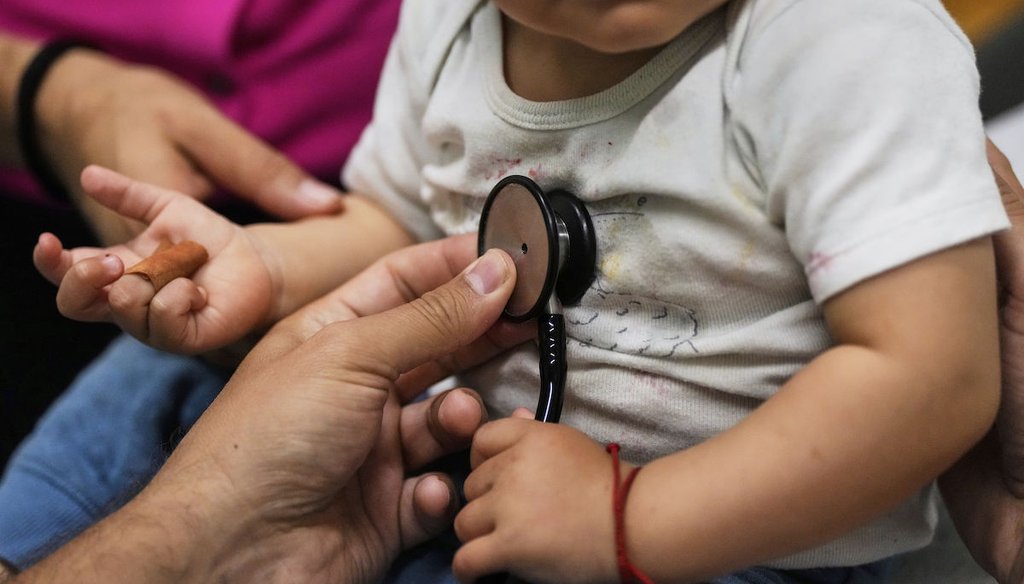
Pediatrician Irving Phillips examines a 16-month-old boy at a clinic on June 26, 2025, in Davis, Calif. (AP)

Florida is the only state in the nation removing children from its low-cost health insurance program, KidCare, because of missed payments. It removed about 43,000 children from December 2024 to November 2025.
Florida has filed multiple lawsuits challenging a federal rule that requires states to provide 12 months of continuous health care coverage in the program, even if parents miss a monthly premium payment.
The state also has delayed implementing a KidCare expansion that lawmakers approved in 2023, keeping another estimated 42,000 children from accessing health insurance through the program.
The way Florida treats kids enrolled in its low-income children's health insurance program is an outlier in the United States, a Democratic congresswoman said.
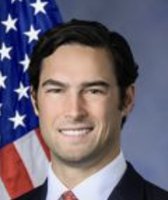
"Governor (Ron) DeSantis is breaking the law," U.S. Rep. Kathy Castor, D-Fla., wrote April 29 on X. "Florida is the only state in the nation kicking children off their affordable health coverage and preventing over 40,000 children from getting KidCare coverage."
KidCare is Florida’s subsidized health insurance for children from low-income families — the state’s version of the federal Children’s Health Insurance Program, or CHIP.
Florida officials challenged a federal rule that requires keeping children enrolled in affordable health insurance — and Florida is the only state taking children off its program because of missed payments. State officials removed about 43,000 children from December 2024 to November 2025.
The DeSantis administration has filed lawsuits against both the Biden and Trump administrations to exempt Florida or reverse the rule. The rule requires states to keep children continuously enrolled in subsidized health insurance plans for 12 months even if parents miss a payment.
Two of Florida’s lawsuits have been unsuccessful; one is pending.
"There are no other states doing this," said Joan Alker, director of Georgetown University’s Center for Children and Families. "Florida is removing thousands of children, violating federal law, and saying they aren’t going to expand their program because of this federal rule."
In her post, Castor shared an article by KFF, a health policy think tank, that described Florida’s yearslong delay of a KidCare program expansion, which state lawmakers approved in 2023.
When asked for comment, Jay Rhoden, a Castor spokesperson, referenced the KFF article and said other states, such as Texas, have asked the federal government to rescind the rule requiring continuous coverage but haven’t defied the law.
DeSantis’ office directed PolitiFact’s questions to the state's Agency for Health Care Administration, which helps oversee KidCare and has been involved in the litigation. The agency did not respond to our email seeking comment.
Florida’s KidCare is a Medicaid expansion program for children whose families earn too much money to qualify for traditional Medicaid but do not earn enough money to buy private or marketplace insurance.
The federal government pays about 69 cents of every dollar spent on KidCare, with the rest funded through state funds and monthly premiums of about $15 to $20, depending on household income.
Florida is among the states with the highest number of uninsured children, with more than 400,000, or 8.5%, lacking insurance, according to 2024 federal data.
In May 2023, the Florida Legislature unanimously approved expanding KidCare’s eligibility threshold from 200% to 300% of the federal poverty level. That means children in a family of four qualify for coverage if the annual household income is $93,600 or less, up from about $66,000. DeSantis signed it into law in June 2023.
A 2023 House analysis estimated the expansion would cover 42,000 more Florida children. Studies have found that subsidized healthcare coverage improves children’s lives by increasing access to care and improving long-term health outcomes.
Also in 2023, the federal government approved the "continuous eligibility" rule that required states to provide 12 months of healthcare coverage for children enrolled in subsidized programs. The rule ensures children’s coverage wouldn’t lapse in cases of nonpayment or administrative issues. Alker said children sometimes lose coverage because of a bureaucratic mistake, such as missing a notice when they move.
The DeSantis administration sued the federal government in an attempt to nix the rule, and also submitted a waiver to the U.S. Centers for Medicare and Medicaid Services to seek approval of the KidCare expansion and to ask the agency to let the state continue removing children from the program for missed premiums.
The Centers for Medicare and Medicaid Services approved Florida’s waiver to expand KidCare in December 2024 but said the state must comply with the federal rule.
From December 2024 through November 2025, Florida removed about 43,000 children from the program for premium payment lapses, according to data obtained by KFF.
"Florida is an extreme outlier. Thousands of children are losing their health insurance," said Holly Bullard, chief strategy and development officer at the Florida Policy Institute, a left-leaning nonprofit advocating for the state to implement the expansion. "Not only is it the only state suing, but it's also the only one not complying with both state and federal law."
A federal judge dismissed Florida’s first lawsuit over the rule, and the state withdrew its second lawsuit in February.
Florida is now suing the federal government for a third time, accusing it of Freedom of Information Act violations related to the expansion waiver and asking the court to strike the condition that Florida must abide by the continuous enrollment requirement.
Florida officials have pointed to ongoing litigation for the delay in expanding the program.
"You can sue over federal policy you don’t like, but you're supposed to comply with the law at the same time," Bullard said.
The Trump administration has not enforced the continuous enrollment rule in Florida, or issued any warnings to the state.
Florida Health Justice Project, a nonprofit legal aid group, and the National Health Law Program sued Florida’s Medicaid and KidCare agencies in March to implement the approved expansion.
Castor said, "Florida is the only state in the nation kicking children off their affordable health coverage."
The state is the only one in the country not complying with a federal rule requiring states to keep children enrolled in subsidized healthcare for 12 months regardless of missed premium payments. Florida has removed at least 43,000 children from KidCare for nonpayment since December 2024.
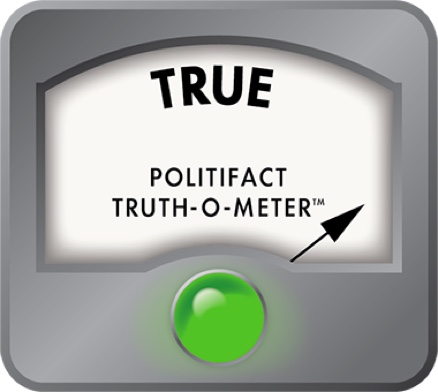
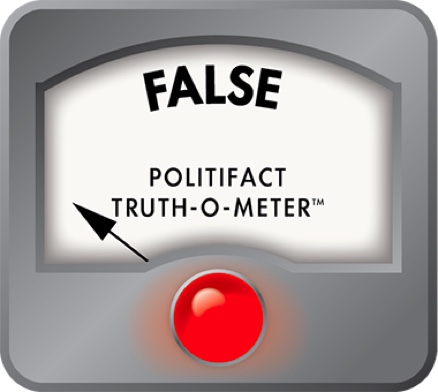
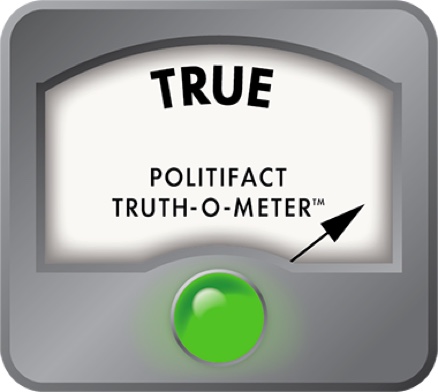
We rate Castor’s statement True.
X.com, Rep. Kathy Castor post, April 29, 2026
Florida KidCare, Accessed May 11, 2026
Florida Senate, CS/CS/HB 121: Florida Kidcare Program Eligibility, 2023
Florida Senate, CS/CS/HB 121 Florida Kidcare Program Eligibility. House of Representatives Final Bill Analysis, June 23, 2023
Congress.gov, Consolidated Appropriations Act, 2023 (P.L. 117-328): Medicaid and CHIP Provisions, Oct. 24, 2023
Medicaid.gov, Continuous Eligibility, Jan. 1, 2024
Medicaid.gov, Florida Children’s Health Insurance Program Eligibility Extension, Dec. 2, 2024
CourtListener, State of Florida v. Centers for Medicare and Medicaid Services (8:24-cv-00317), Feb. 1, 2024
CourtListener, STATE OF FLORIDA v. CENTERS FOR MEDICARE AND MEDICAID SERVICES (3:26-cv-00915), Feb. 9, 2026
Florida Phoenix, Federal judge dismisses FL lawsuit against feds over children’s health insurance, May 31, 2024
Georgetown University, U.S. and State-by-State Child Health Coverage Trends, Sept. 12, 2025
KFF, Florida Delays Children’s Health Insurance Expansion as Uninsured Rate Rises, April 27, 2026
Florida Phoenix, DeSantis administration gets pushback for its child health policies, April 17, 2026
Central Florida Public Media, Florida stalls as 42,000 Kids wait for affordable healthcare, April 14, 2026
Florida Phoenix, State report: More than 43K children dropped from program for nonpayment, Oct. 8, 2025
National Health Law Program, Florida Health Justice Project and National Health Law Program Sue to Enforce Children’s Health Coverage Expansion, March 9, 2026
Email interview, Jay Rhoden, spokesperson for Rep. Kathy Castor, May 11, 2026
Phone interview, Holly Bullard, chief strategy and development officer at Florida Policy Institute, May 11, 2026
Phone interview, Joan Alker, director of the Center for Children and Families at Georgetown University, May 12, 2026
Email interview, Molly Best, spokesperson for Gov. Ron DeSantis, May 11, 2026













In a world of wild talk and fake news, help us stand up for the facts.