Get PolitiFact in your inbox.

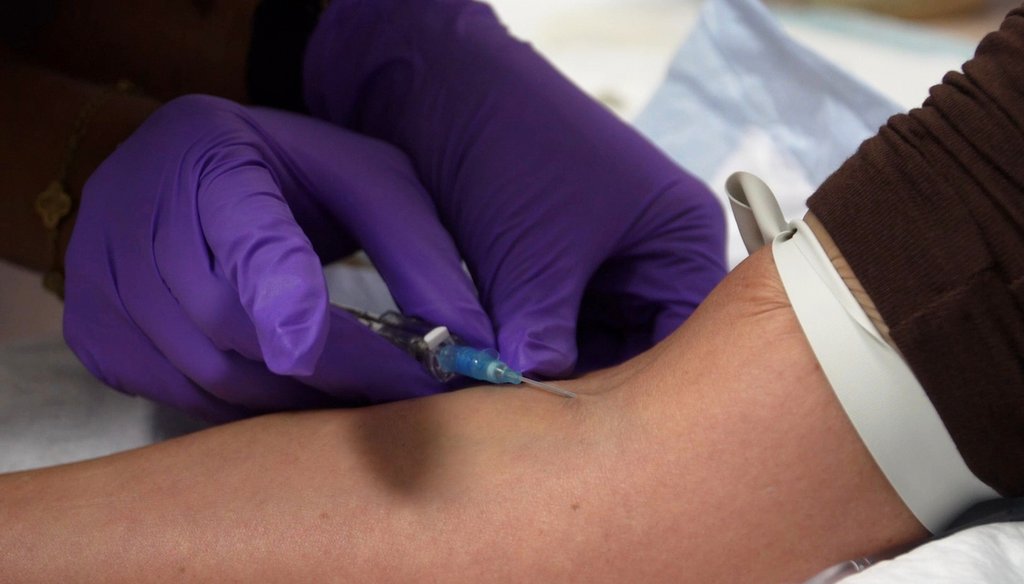
In this image taken from video, an IV infusion is administered at Pure Alchemy Wellness, Nov. 11, 2025, in Chula Vista, Calif. (AP)

If Your Time is short
-
Peptides are short chains of amino acids — mini-proteins — that occur naturally in the human body. They can also be used in medications, several of which are approved by the U.S. Food and Drug Administration, such as insulin and GLP-1 weight-loss drugs.
-
Numerous non-FDA-approved peptides have gained popularity for a wide range of purported benefits. Most evidence of these unapproved peptides’ safety and efficacy comes from animal studies because they have not been widely tested in humans.
-
Following FDA regulations in 2023 that limited how pharmacies could make certain peptides, these popular peptides are now sold online with "research use only" disclaimers, even though they are often marketed for their personal health benefits.
You may have heard about peptides lately from a wellness influencer, your gym friend, or our secretary of Health and Human Services.
The purported benefits of taking peptides are wide-ranging: more muscle, less fat, better memory, quicker wound healing and healthier skin. But what are they? And are they safe? Can they really do what their promoters claim?
Here’s what we know about peptides, and how the U.S. Food and Drug Administration might act to make them more accessible.
What are peptides?
Peptides are short chains of amino acids — basically fragments of proteins. They occur naturally in the body, and we also get them through the food we eat.
They help digestion, trigger ovulation, regulate blood pressure, and more. Insulin, the hormone that helps the body process sugar in the blood, is a peptide.
Like scientists have done with insulin, some peptides have been synthesized outside the body and turned into medications.
There are several FDA-approved peptide medications with wide-ranging applications. Among them: increasing certain hormone production (tesamorelin), treating a light-exposure disorder (afamelanotide) and improving libido (bremelanotide).
The latest class of diabetes and weight-loss drugs, GLP-1s such as Ozempic and Zepbound, are peptides.
Other peptides, like collagen peptides, can be taken orally and sold over the counter like other vitamins and dietary supplements.
Non-FDA-approved peptides
FDA-approved peptide medications were approved to treat specific conditions, but physicians can prescribe them off-label to treat other conditions. Even if they are being used off-label, FDA-approved peptides have been tested for safety in clinical trials.
The same is not true for numerous non-FDA-approved peptides being used by athletes and people in the wellness space. A vast majority of these peptides are injected.
These injectable peptides, many of which have Star Wars droid-like names, have a wide range of purported benefits.
CJC-1295 and Ipamorelin, for example, are said to improve muscle mass, cognition, and sleep by stimulating the production of human growth hormone. Peptides like BPC-157 and TB-500 are promoted for muscle and tissue healing. Some people recommend taking them together, a peptide cocktail they call the "Wolverine stack." There are even peptides like Melanotan that purport to improve tanning. These are just a few of the growing peptide options on the market — several of which are banned for professional athletes by the World Anti-Doping Agency.
Most of the safety and efficacy evidence for these peptides comes from studies in animals — not humans. The lack of clinical data in humans can make it challenging to figure out proper dosing, and long-term safety risks are unknown.
"Each of the ten or so most popular peptides remain somewhat of a mystery in terms of their impacts when used in people," said Paul Knoepfler, a cell and molecular biologist at the University of California Davis School of Medicine.
Like GLP-1s, some of these medications may one day be approved therapeutics, but currently, evidence is limited. Doctors caution against using peptides without physician oversight.
Current regulatory landscape
Before 2024, many pharmacists were permitted to compound peptides when prescribed by a doctor. But in late 2023, because of safety concerns, the FDA recategorized more than a dozen peptides, making them ineligible for compounding pharmacies to make them.
A gray market emerged with online retailers marketing the peptides for their health benefits while also adding disclaimers that they should only be used as "research chemicals" or for "research use only" or not for human consumption.
That hasn’t stopped online shoppers from buying and self-administering the medication.
"No one really knows what dose to use, whether combining different peptides together adds more risks like toxicity, whether the peptides could increase cancer risk such as through stimulating new blood vessel growth, and the list goes on," Knoepfler said.
Beyond peptides’ unknown safety risks, getting injectable medications online comes with additional uncertainty. Finnrick, a Texas lab that provides free testing of online peptide retailers, has found that what is being advertised isn’t always what’s then sold to buyers.
Health and Human Services Secretary Robert. F. Kennedy Jr. rose to prominence as an attorney who questioned the safety of common childhood vaccines, calling for what he terms "gold-standard" placebo-controlled clinical trials.
When it comes to peptides, which he said he uses, Kennedy said he’s poised to make them more accessible. He promised to end the "war on peptides" and, in a Feb. 27 interview with podcaster Joe Rogan, said his agency would take action within weeks.
He did not mention that most peptides do not have the randomized placebo-controlled clinical trials that he demands of other pharmaceuticals.
Our Sources
Email interview with Paul Knoepfler, PhD cell and molecular biologist at the University of California Davis School of Medicine, March 5, 2026
U.S. Food and Drug Administration, "Certain Bulk Drug Substances for Use in Compounding that May Present Significant Safety Risks,"
Safe Harbor, FDA’s Overreach on Compounded Peptides, accessed March 2, 2026
BBC, Wellness peptide craze: Why people are injecting drugs 'not for human consumption', Feb. 28, 2026
The Musculoskeletal Journal of Hospital for Special Surgery, Emerging Use of BPC-157 in Orthopaedic Sports Medicine: A Systematic Review, Jul 31, 2025
HoneHealth, Everything You Need to Know About the FDA Peptide Ban, Aug. 20, 2024
NPR, Influencers are promoting peptides for better health. What does the science say?, Feb. 23, 2026
YouTube, The Emerging Science and Clinical Application of Peptide Therapy, Feb. 19, 2026
WebMD, Peptides: Types, Uses, and Benefits, Feb. 1, 2026
HoltLaw, The Unregulated World of Peptides: What You Need to Know Before You Inject, Aug. 26, 2025
International Journal of Molecular Sciences, Bioactive Peptides in Human Health and Disease, March 2023
Biomolecules, Exploring FDA-Approved Frontiers: Insights into Natural and Engineered Peptide Analogues in the GLP-1, GIP, GHRH, CCK, ACTH, and α-MSH Realms, Feb. 22, 2024
The Journal of Clinical Endocrinology and Metabolism, Prolonged stimulation of growth hormone (GH) and insulin-like growth factor I secretion by CJC-1295, a long-acting analog of GH-releasing hormone, in healthy adults, March 2006
Scenesse, Homepage, accessed March 5, 2026
Molecules, Thymosin α1 and Its Role in Viral Infectious Diseases: The Mechanism and Clinical Application, April 17, 2023
World Anti-Doping Agency, The Prohibited List, accessed March 5, 2026
WebMD, Collagen Peptides: Overview, Uses, Side Effects, Precautions, Interactions, Dosing and Reviews, accessed March 5, 2025
Cleveland Clinic, Peptides for Skin Care, July 21, 2024
Ground Truths Substack, The Peptide Craze, July 20, 2026
YouTube, What Science ACTUALLY Says About TB 500 Benefits
YouTube, What Science ACTUALLY Says About BPC 157 Benefits, Dec. 9, 2023
National Cancer Institute, Ipamorelin - NCI Drug Dictionary, accessed March 5, 2026
Baton Rouge General, Peptides: Hype, Hope, and a Few Hard Truths, Dec. 12, 2025
AP News, A closer look at the unapproved peptide injections promoted by influencers and celebrities, Nov. 14, 2025
CNN, The trend of unproven peptides is spreading through influencers and RFK Jr. allies, Nov. 15, 2025
Food and Drug Administration, Questions and Answers on Dietary Supplements, Feb. 21, 2024
Advisory Board, Peptides are the latest wellness trend. But do they work?, Feb. 26, 2026
Time Magazine, What to Know About the ‘Anti-Aging’ Peptide Shots Flooding Social Media
Verywell Health, Understanding Peptides: Different Types, and What They Do, Oct. 19, 2025
Washington Post, Some celebrities swear by peptides, but doctors warn of serious risks, Nov. 26, 2025
Finnrick, Vendors, accessed March 5, 2026
ProPublica, A Las Vegas Festival Promised Ways to Cheat Death. Two Attendees Left Fighting for Their Lives, July 29, 2025
The New York Times, ‘Chinese Peptides’ Are the Latest Biohacking Trend in the Tech World, July 29, 2025
Medline Plus, Bremelanotide Injection: MedlinePlus Drug Information, Nov. 11, 2019
Medline Plus, Tesamorelin Injection: MedlinePlus Drug Information, July, 15, 2025
Peptual, GHK-CU+ 50mg 10mL vial (archived), archived March 5, 2026
BiolongevityLabs, BPC-157 TB-500 Blend (10mg) (archived), archived March 5, 2026
LIVVNatural, CJC-1295 & Ipamorelin 5mg (archived), archived March 5, 2026
InstantPeptides, Thymosin-alpha-1 (archived), archived March 5, 2026
YouTube, Robert F. Kennedy Jr.: How to Fix America’s Health Crisis as HHS Secretary, May 27, 2025
YouTube, Joe Rogan Experience #2461 - Robert F. Kennedy, Jr., Feb. 27, 2026
PolitiFact, "Robert F. Kennedy Jr.’s campaign of conspiracy theories: PolitiFact’s 2023 Lie of the Year, Dec. 21, 2023
Browse the Truth-O-Meter
More by Grace Abels