Stand up for the facts!
Our only agenda is to publish the truth so you can be an informed participant in democracy.
We need your help.
I would like to contribute

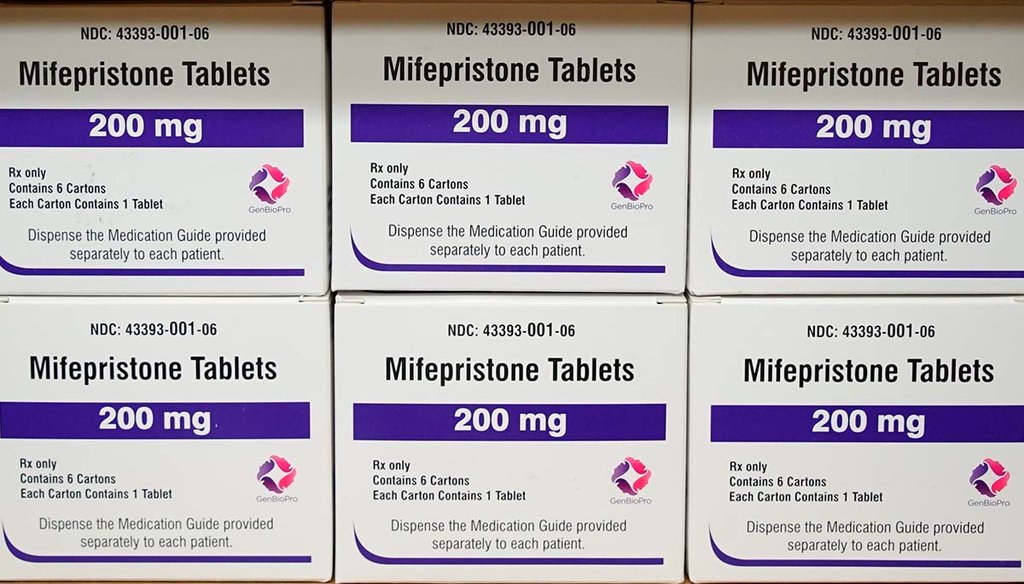
Boxes of the abortion drug mifepristone sit on a shelf March 16, 2022, at the West Alabama Women's Center in Tuscaloosa, Ala. (AP)

Legal challenges to mifepristone, the first of two pills used in medication abortions, have some Republican politicians questioning the drug’s safety.
In 2023, the Food and Drug Administration stopped requiring doctors to dispense mifepristone in person, allowing it to be prescribed via telehealth appointments and delivered by mail. That remains the situation, even in states where abortion is banned — although that could change. Some states have filed legal challenges arguing mifepristone access undermines their abortion restrictions.
As the lawsuits move through the courts, Republican U.S. senators have exaggerated mifepristone’s health risks, sometimes saying 1 in 10 women experience serious complications or must go to the emergency room after taking it. The figure comes from a report by a conservative nonprofit that opposes abortion; it wasn’t published in a peer-reviewed medical journal, and over 250 reproductive health researchers criticized it for methodological issues and its failure to disclose its data source.
The Trump administration’s top health officials, including Health and Human Services Secretary Robert F. Kennedy Jr., promised to again review mifepristone’s safety last year, though health agencies have so far released no new review.
We examined existing research about the medication’s risks and safety profile. The bottom line: In general, it is safe.
Decades of data show mifepristone’s safety and effectiveness
More than 100 studies spanning over 30 years have found medication abortion, which includes using mifepristone, to be safe and effective. Medication abortions successfully end pregnancies about 95% of the time.
The FDA approved Mifeprex — the brand name for mifepristone — after a comprehensive review of its scientific evidence. The agency has monitored the safety data on mifepristone since it approved the drug in September 2000 to terminate pregnancies.
A quarter of a century later, the FDA has "not identified any new safety concerns" with Mifeprex or the approved generic mifepristone to terminate pregnancies through 70 days gestation, the agency said in an online Q&A last reviewed in April 2026.
"We’ve been using mifepristone in the U.S. for over two decades and we aren’t seeing legitimate studies that are documenting any medical fallout or medical complications from this drug," Rachel Jones, a Guttmacher Institute principal research scientist, told PolitiFact in November. The institute is a research organization that supports reproductive rights.
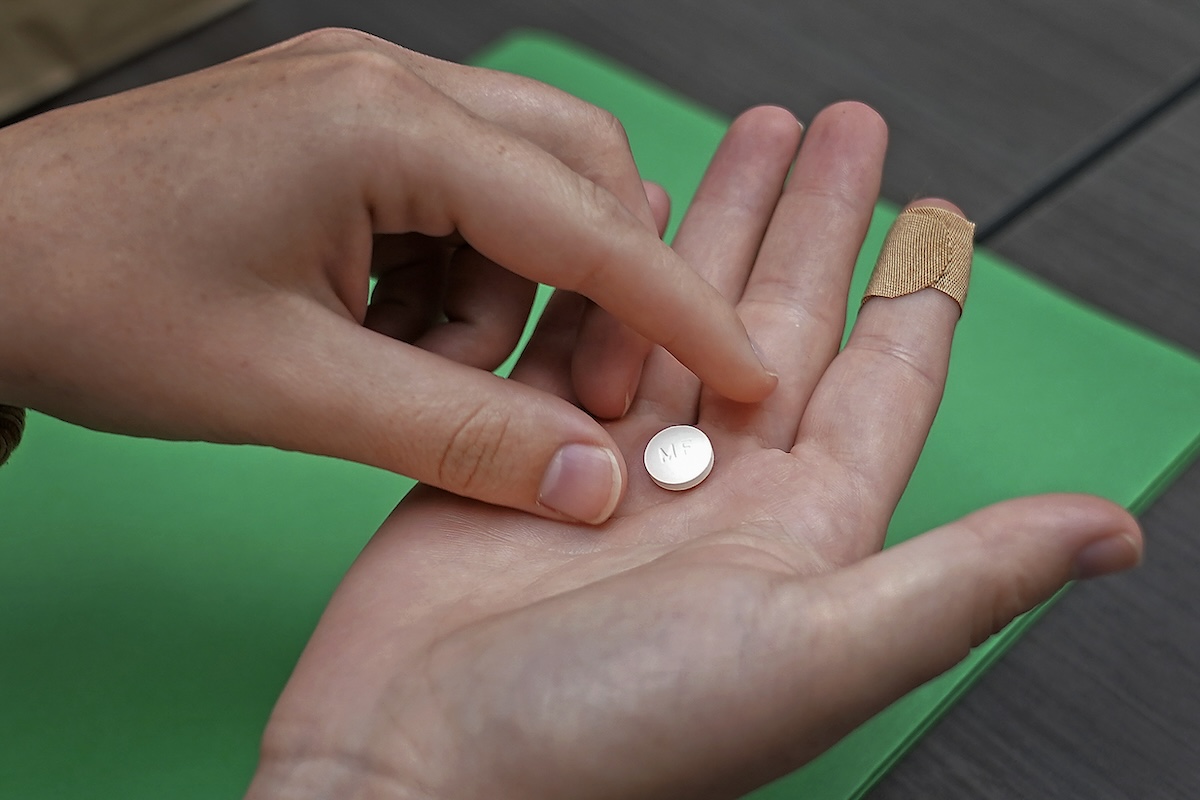
A patient prepares to take the first of two combination pills, mifepristone, for a medication abortion during a visit to a clinic in Kansas City, Kan., on, Oct. 12, 2022. (AP)
Serious complications from medication abortions are rare, research shows
Most people who use medication, including mifepristone, to terminate a pregnancy do not experience serious complications.
When The New York Times analyzed 101 studies on medication abortion, it found the vast majority showed that over 99% of patients who took the pills had no serious complications, which might include hospitalization, blood transfusion or a major surgery.
A 2013 study by researchers at Princeton, University of California, Davis, and University of Hull in the United Kingdom examined 233,805 medication abortions by Planned Parenthood in 2009 and 2010. It found that 99.34% of those abortions "were completed with no known complications."
In 0.1% of cases in the study, patients needed emergency department treatment following a medication abortion, and 0.6% of cases required hospital admission.
A 2015 study published in the journal Obstetrics & Gynecology examined emergency room visits and complications and found that out of nearly 55,000 abortions — medication and in-clinic procedures — the complication rate was about 2.1%, and most were minor.
Out of about 11,000 medication abortion cases examined in that study, 5.2% had complications, and most were "minor and expected," it said. Major complications occurred in 35 cases, or 0.3%.
RELATED: Fact-checking Florida Attorney General James Uthmeier on abortion pill hospitalizations
Our Sources
Reuters, US court blocks mail-order access to abortion drugs, for now | Reuters, May 1, 2026
Harvard Kennedy School, Explainer: What’s happening with the Supreme Court and abortion pills?, May 6, 2026
NBC News, Supreme Court allows abortion pill to remain available by mail nationwide, May 14, 2026
Vox, Mifepristone survives another Supreme Court scare — for now, May 14, 2026
The New York Times, Are Abortion Pills Safe? Here’s the Evidence., March 25, 2024
PolitiFact, Fact-checking Florida Attorney General James Uthmeier on abortion pill hospitalizations, May 20, 2026
If When How, Here’s what you need to know about Mife, May 4, 2026
Plan C, PLAN C, accessed May 20, 2026
PubMed, Efficacy and safety of medical abortion using mifepristone and buccal misoprostol through 63 days, April 2015
Advancing New Standards in Reproductive Health, Safety and effectiveness of first-trimester medication abortion in the United States, June 2021
Contraception, First-trimester medical abortion with mifepristone 200 mg and misoprostol: a systematic review, January 2013
Obstetrics & Gynecology, Significant Adverse Events and Outcomes After Medical Abortion, January 2013
Obstetrics & Gynecology, Incidence of Emergency Department Visits and Complications After Abortion, January 2015
Sen. Josh Hawley’s X post, June 2, 2022
Secretary Robert F. Kennedy Jr.’s X post, Oct. 2, 2025
Ushma Upadhyay’s X post, March 15, 2023
Sen. Josh Hawley’s X post, May 15, 2026
Supreme Court of the United States, 25A1207 Danco Laboratories, LLC v. Louisiana (05/14/2026), May 14, 2026
Ethics and Public Policy Center, The Abortion Pill Harms Women: Insurance Data Reveals One in Ten Patients Experiences a Serious Adverse Event, April 28, 2025
U.S. Food and Drug Administration, Questions and Answers on Mifepristone for Medical Termination of Pregnancy Through Ten Weeks Gestation, accessed May 26, 2026 (Archived here.)
KFF, Litigation Involving Reproductive Health and Rights in the Federal Courts, accessed May 26, 2026
The Washington Post, Digging into the math of a study attacking the safety of the abortion pill, May 12, 2025
The UCLA Law Center for Reproductive Health, Law, and Policy, Reproductive Health Researchers’ Comment, Aug. 27, 2025