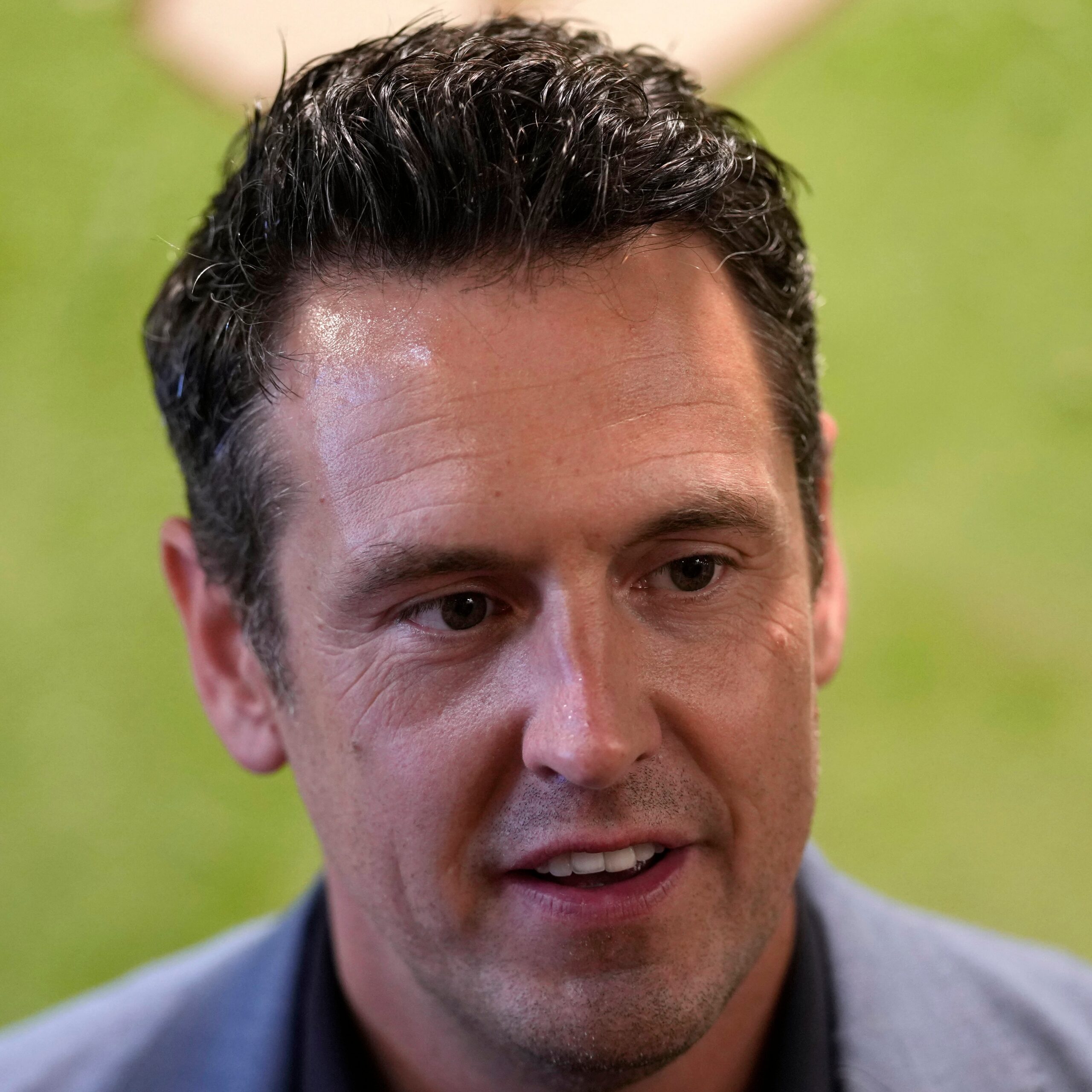
Says his cognitive test results showed he has “extreme intelligence.”


Cognitive test Trump took screens for signs of dementia, not intelligence levels
If your time is short
-
Medical experts have said they believe that President Donald Trump recently took the Montreal Cognitive Assessment. It is designed to detect cognitive impairment, not intelligence.
-
Trump said he scored 30 out of 30. That shows that a patient has normal cognitive function.
President Donald Trump recently celebrated what he called an “extremely good” medical examination.
In a May 31 Truth Social post, Trump wrote:
“The results of my Physical Examination, taken at Walter Reed Military Medical Center, and just released, were extremely good. Unlike other U.S. Presidents, none of whom have ever taken an approved, high difficulty, Cognitive Test, I scored a perfect 30 out of 30, considered ‘extreme intelligence.’ Are the Dumocrats really surprised? In fact, this is my fourth such test, all PERFECT or, 120 correct answers out of 120 questions asked! It is very rare that anyone gets a Perfect Score, especially when achieved four times in a row. All people running for President and Vice President should be forced to take high difficulty Cognitive Tests. Congress, and the Dumocrats, should demand it! President DONALD J. TRUMP”
We’ll have to take Trump’s word for it that he scored a 30 out of 30 on the test, which medical experts believe — based on Trump’s own descriptions — is the Montreal Cognitive Assessment. (When we asked the White House whether that was the test Trump took, a spokesperson did not dispute it.) Trump reportedly also took the test in 2018 and twice in 2025.
But medical experts said Trump inaccurately described the test as measuring intelligence. Instead, it aims to detect signs of cognitive impairment; if the score is low enough, then further testing is recommended.
“The test measures cognition,” including attention, concentration, language, memory, abstract thinking and calculation skills, said Ziad Nasreddine, a Quebec-based neurologist who created the 10-minute Montreal Cognitive Assessment in 2005. “Cognitive function is correlated with IQ. But the test was not designed to detect the genius level of cognitive performance. It’s meant to reassure that cognitive functions are normal.”
Patients might have to read a list of words and recall them; repeat a list of numbers forward and backward; subtract a one-digit number repeatedly starting from 100; repeat a sentence; draw comparisons between two objects; and know the time of day and their location.
Trump garnered attention in 2020 when he told Fox News, “It’s like you’ll go: Person, woman, man, camera, TV. So they say, ‘Could you repeat that?’ So I said, ‘Yeah. So it’s person, woman, man, camera, TV.’ ‘Okay, that’s very good. If you get it in order, you get extra points.’” (Nasreddine has said that the test has never included that series of words, nor another example Trump has cited involving a giraffe, tiger and whale.)
Scores from 26 to 30 are considered normal. Scores below 26 are considered to reflect some form of cognitive impairment, with the degree of impairment increasing as the score drops.
This is not the first time Trump has boasted about having high scores on the test. He mentioned it in several speeches and interviews earlier this year. In December 2025, after he said he took the test for the third time, Trump posted, “I have been told that few people have been able to ‘ace’ this Examination and, in fact, most do very poorly, which is why many other Presidents have decided not to take it at all.”
Neither Nasreddine nor Ishani Ganguli, a Harvard Medical School associate professor of medicine and a primary care physician at Brigham and Women’s Hospital, said they would describe the test as “high difficulty,” as Trump did.
“A 30/30 score would suggest normal cognitive function, meaning no evidence of cognitive impairment or dementia,” Ganguli said.
Neither expert offered specific data on whether a 30 out of 30 is “very rare,” but from their own experience, the frequency of a 30-point score is somewhere between “relatively uncommon,” as Nasreddine estimated, and “somewhat common,” as Ganguli said.
“It has to be sufficiently hard to detect early-stage cognitive disorders, and not too hard to decrease the risk of false positives,” Nasreddine said.
Our ruling
Trump said his cognitive test results showed he has “extreme intelligence.”
Medical experts have said Trump is describing the Montreal Cognitive Assessment, which is designed to detect cognitive impairment, not intelligence. A 30 out of 30 score shows that a patient has normal cognitive function, not high intelligence.
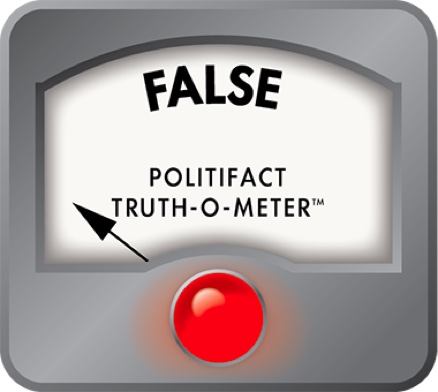
We rate the statement False.
Our Sources
Donald Trump, Truth Social post, May 31, 2026
Donald Trump, Truth Social post, Dec. 9, 2025
Cleveland Clinic, "Cognitive test," accessed June 2, 2026
Medpage Today, "What Trump’s Cognitive Tests Can — and Can’t — Reveal," Dec. 12, 2025
NBC News, "Trump cognitive test: What is the Montreal Cognitive Assessment exam?," July 23, 2020
NBC News, "'I'm cognitively there': Trump again brags about his cognitive test performance," July 23, 2020
New York Times, "‘Person. Woman. Man. Camera. TV.’ Didn’t Mean What Trump Hoped It Did," July 23, 2020
Washington Post, "A ‘whale’ of a tale: Trump continues to distort cognitive test he took," Jan. 19, 2024
Email interview with Ishani Ganguli, associate professor of medicine at Harvard Medical School and practicing primary care physician at Brigham and Women’s Hospital, June 2, 2026
Email interview with Ziad Nasreddine, neurologist and creator of the Montreal Cognitive Assessment, June 2, 2026
White House, statement to PolitiFact, June 2, 2026