“As a condition for ending the Democrat shutdown, Democrats want hospitals (to be) paid MORE to treat illegal aliens than American citizens.”

Our only agenda is to publish the truth so you can be an informed participant in democracy.
We need your help.

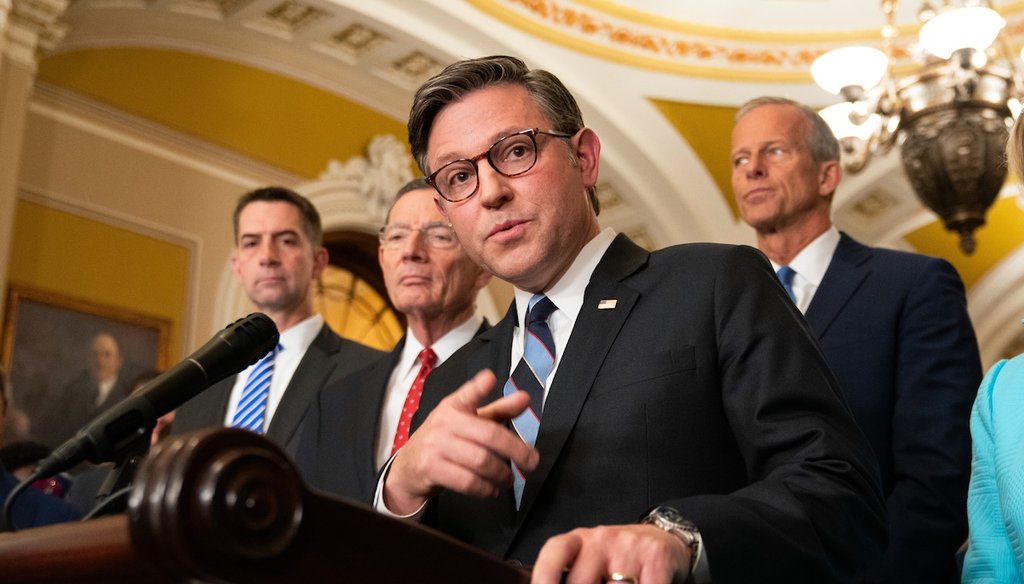
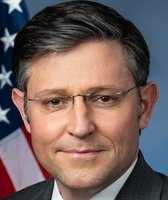
House Speaker Mike Johnson, R-La., speaks to reporters following the weekly Senate policy luncheon that he attended on Capitol Hill in Washington, Oct. 7, 2025. (AP

Federal law requires hospitals to provide emergency care to everyone, regardless of insurance or immigration status.
Federal and state governments reimburse hospitals for emergency care provided to immigrants who meet all Medicaid requirements except for their immigration status. Immigrants in the country illegally are not eligible to receive Medicaid.
A provision in the Republicans’ 2025 spending law reduced the federal government’s reimbursements for emergency care for certain noncitizens. Democrats are seeking to reverse that.
House Speaker Mike Johnson, R-La., escalated his blame of Democrats for the federal government’s ongoing shutdown.
"As a condition for ending the Democrat shutdown, Democrats want hospitals paid MORE to treat illegal aliens than American citizens — including young pregnant women," Johnson said in an Oct. 5 X post.
He pointed to the Democrats’ proposal to reverse Republican spending bill health care provisions signed into law this summer.
"Republicans made it illegal for Medicaid to reimburse care for illegal aliens at higher rates than for U.S. citizens. Democrats are now demanding to reverse that," Johnson said in the X post.
He made a similar statement in an interview on NBC’s "Meet the Press" the same day.
A spokesperson for Johnson pointed to Section 71117 in the Republican law that Democrats want to repeal. The provision limits the way states can use taxes levied on health care providers to finance Medicaid costs. States share Medicaid costs with the federal government.
But health care experts said the section doesn’t address hospital reimbursement for providing services to immigrants illegally in the U.S.
It "affects state financing mechanics, not coverage for undocumented patients," University of California, Los Angeles health policy professor Arturo Bustamante said. "Reversing it wouldn’t suddenly increase payments for care to undocumented patients; it would just give states more flexibility in how they finance their Medicaid programs."
Democrats also want to reverse another section of the GOP bill, 71110, that affects hospital reimbursements for emergency care provided to immigrants. This can include immigrants illegally in the U.S. but is not limited to them. It also includes other noncitizens with legal status, such as permanent residents who have a waiting period before they qualify for Medicaid.
The 1986 Emergency Medical Treatment & Labor Act requires hospitals to provide emergency services to stabilize patients regardless of their ability to pay or immigration status. States and the federal government reimburse hospitals for care provided to immigrants who meet all Medicaid requirements except for their immigration status; immigrants in the country illegally are not eligible to receive Medicaid. Those reimbursements are called Emergency Medicaid.
The Republican law didn’t end hospitals’ obligation to provide emergency care. Starting in 2026, it will reduce federal government reimbursements to hospitals for certain noncitizens’ emergency care, leaving states to cover a larger portion. The Democrats’ budget proposal restores reimbursements to previous levels.
Importantly, the Democratic proposal would not require that hospitals be paid extra to treat immigrants illegally in the U.S. It calls for states to receive the same amount of federal funding to cover Emergency Medicaid that they had received before the Republican law, health care experts said.
"I’m not aware of hospitals getting paid more for emergency care for undocumented immigrants," Larry Levitt, executive vice president for health policy at KFF, a health think tank, said. By lowering how much the federal government covers, he added, Republicans are "just shifting costs to states."
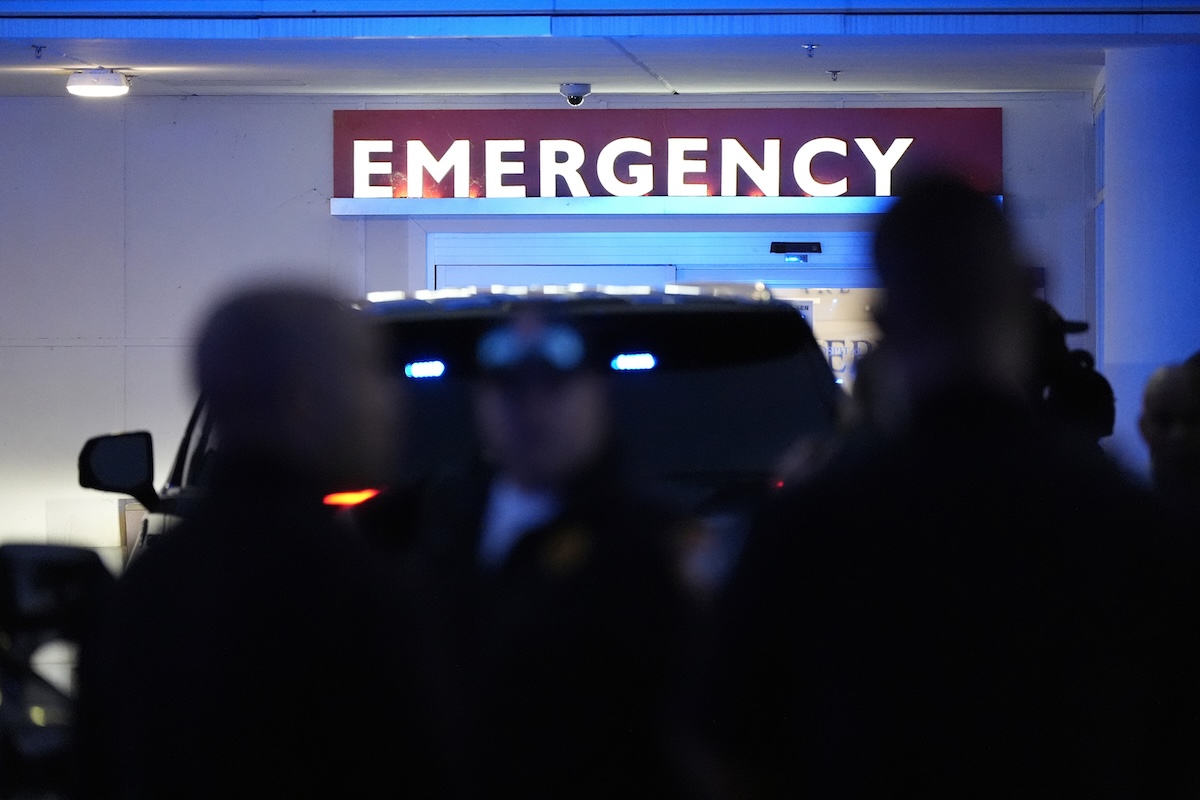
Law enforcements stand outside the hospital emergency after a shooting near the adjoining campuses of the U.S. Centers for Disease Control and Prevention of Emory University in Atlanta on, Aug. 8, 2025. (AP )
Most Emergency Medicaid spending is for childbirth. In all, spending on Emergency Medicaid represented less than 1% of total Medicaid spending in fiscal year 2023, according to KFF.
The Republican law’s changes to Emergency Medicaid reimbursements are focused on states that expanded Medicaid to cover a larger pool of people.
Forty states and Washington, D.C., expanded Medicaid under the Affordable Care Act, making adults ages 19 to 64, without dependent children and with incomes up to 138% of the federal poverty level, eligible. The federal government covers 90% of Medicaid costs for people included under the expansion, and states cover the rest.
For patients covered under regular Medicaid, and in states without the expansion, the federal government generally covers 50% to 77% of Medicaid costs.
The Republican law limits the amount the federal government reimburses hospitals for emergency care provided to patients who would be eligible for expanded Medicaid if not for their immigration status. Rather than cover 90% of costs, starting in 2026, the federal government will cover the rate it covers for non-Medicaid expansion care.
"Reducing the match rate for this care does not change the reimbursement for hospitals but instead shifts more of the costs to states," said Jennifer Tolbert, deputy director of KFF’s Program on Medicaid and the Uninsured.
Johnson wrote on X, "As a condition for ending the Democrat shutdown, Democrats want hospitals paid MORE to treat illegal aliens than American citizens."
Federal law requires that emergency care be provided to anyone who needs it, regardless of insurance or immigration status. The federal and state governments reimburse hospitals for emergency care provided to immigrants who meet all Medicaid requirements except for their immigration status.
Republicans’ new spending law calls for the federal government to cover a smaller portion of hospital reimbursements for emergency care to noncitizens who would be eligible for expanded Medicaid if not for their immigration status.
The GOP law doesn’t change hospital reimbursements. It shifts costs to states. Democrats want to reverse that.
Health care experts said a reversal wouldn’t mean hospitals would be reimbursed more for emergency care provided to immigrants illegally in the U.S. The federal government would cover the same share of care provided to anyone requiring emergency care, regardless of immigration or citizenship status.
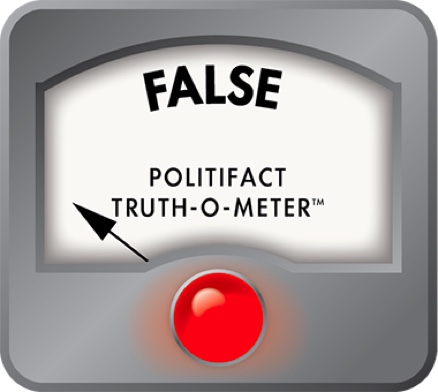
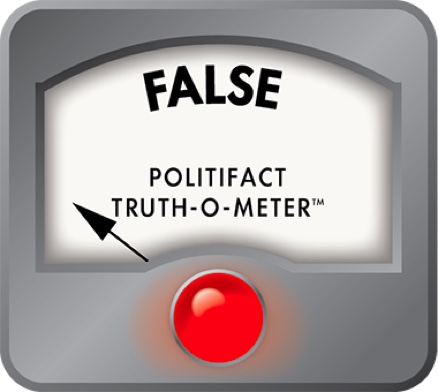
We rate the statement False.
Speaker Mike Johnson, X post, Oct. 5, 2025
U.S. Congress, Title II of H. Con. Res. 14., July 4, 2025
U.S. Centers for Medicare & Medicaid Services, Emergency Medical Treatment & Labor Act (EMTALA), accessed Oct. 9, 2025
U.S. Congress, Continuing Appropriations and Extensions and Other Matters Act, 2026, accessed Oct. 9, 2025
KFF, Key Facts on Health Coverage of Immigrants, Jan. 15, 2025
Healthinsurance.org, Medicaid expansion, accessed Oct. 9, 2025
Healthcare.gov, Federal poverty level (FPL), accessed Oct. 9, 2025
KFF, Medicaid Financing: The Basics, Jan. 29, 2025
Phone and email interviews, Edwin Park, Georgetown University research professor, Oct. 6, 2025
Email interview, Arturo Bustamante, Professor at the UCLA Fielding School of Public Health in the Department of Health Policy & Management, Oct. 8, 2025
Email interview, Drishti Pillai, director of immigrant health policy at KFF, Oct. 6, 2025
Email interview, Jennifer Tolbert, deputy director of KFF’s Program on Medicaid and the Uninsured, Oct. 6, 2025
Larry Levitt, KFF’s executive vice president for health policy, Oct. 6, 2025
Robin Rudowitz, KFF vice president and director of the Program on Medicaid and the Uninsured, Oct. 8, 2025
Email exchange, Rep. Mike Johnson spokesperson, Oct. 7, 2025







In a world of wild talk and fake news, help us stand up for the facts.