Stand up for the facts!
Our only agenda is to publish the truth so you can be an informed participant in democracy.
We need your help.
I would like to contribute


The Eli Lilly and Co corporate headquarters is pictured April 26, 2017, in Indianapolis. (AP)

If Your Time is short
-
Retatrutide is a weekly injection being studied as a treatment for obesity, type 2 diabetes, knee osteoarthritis pain, obstructive sleep apnea, chronic low back pain and liver disease. It has not been approved by the Food and Drug Administration.
-
Patients with life-threatening diseases can sometimes receive experimental drugs if they are ineligible for or cannot access clinical trials and have no other comparable treatments available to them.
-
We found no evidence that retatrutide is being researched as a unique treatment for any life-threatening diseases or conditions.
Eli Lilly's experimental weight loss drug retatrutide is in the news after an unidentified 79-year-old got early access.
Although the U.S Food and Drug Administration has not approved the drug, the agency and drugmaker Eli Lilly allowed one patient to get the drug early through a method commonly called "compassionate use," the health news outlet STAT reported.
The June 23 report said the request came from someone "well connected," but STAT could not determine the patient’s identity. Because of the unusual circumstances surrounding the request, STAT said it asked the White House multiple times if the patient was President Donald Trump, who was 79 at the time of the request.
White House spokesperson Kush Desai said the request was not for Trump.
We sought answers: How could someone get a drug primarily known for weight loss through "compassionate use," which is typically for patients with life-threatening diseases? And who might be eligible for expanded use of the drug?
What is retatrutide?
The drug is an experimental, weekly injection.
Retatrutide is in Phase 3 clinical trials — traditionally one of the final steps before the FDA reviews and potentially approves a drug. Eli Lilly says it is studying retatrutide as a treatment for obesity, type 2 diabetes, knee osteoarthritis pain, obstructive sleep apnea, chronic low back pain and liver disease.
Like many popular weight loss medications, retatrutide works by acting on hormone receptors in tissues throughout the body.
Wegovy, for example, mimics the naturally occurring glucagon-like peptide-1, or GLP-1, and binds to the body’s GLP-1 receptors. That helps regulate blood sugar and reduce appetite, which can lead to weight loss. Zepbound, an FDA-approved Eli Lilly weight loss medication, targets the body’s GLP-1 receptors and an additional hormone’s receptors.
Retatrutide goes a step further, adding a third target: glucagon receptors on the liver.
Research shows retatrutide may produce even more significant weight loss than existing medications that act on one or two hormone receptors — with some people losing about 28% of their body weight over two years, according to early trial data. Studies of the GLP-1 drugs currently on the market show patients’ average weight loss ranges from 5% to 20% of their body weight.
Eli Lilly plans to apply for FDA approval for retatrutide later this year, STAT reported.
Dr. Ranganath Muniyappa, a senior National Institutes of Health clinician, requested the expanded access to retatrutide for a 79-year-old patient with refractory obesity, obstructive sleep apnea and pulmonary hypertension (high blood pressure in the vessels of the lungs), STAT reported.
Untreated pulmonary hypertension can be serious and potentially fatal, but it can also be mild.
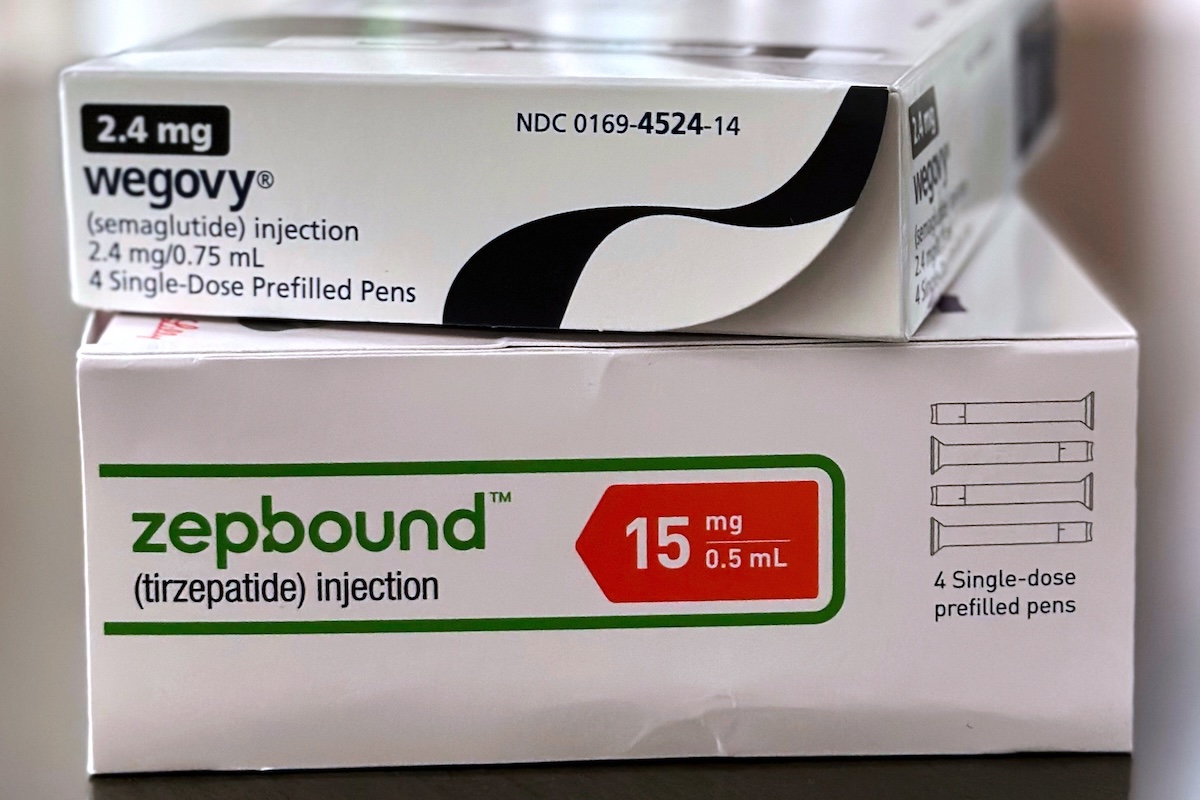
Boxes for the medications Wegovy and Zepbound are arranged for a photograph in California, May 8, 2025. (AP)
What is compassionate use?
Compassionate use, or expanded access, is typically a way for patients with life-threatening diseases to get investigational drugs if they are ineligible for — or cannot access — clinical trials and have no other comparable treatments available.
It’s primarily used for patients with cancer or rare genetic diseases, experts said. One recent example: Patients with pancreatic cancer have requested access to a promising experimental pill through an expanded access program.
Sean Turbeville, a biotechnology consultant who created a global guide to compassionate use programs, said it is most common in the U.S. for doctors to make requests for expanded access on behalf of one patient.
The doctor, the FDA and the drugmaker have to cooperate, he said.
"The FDA evaluates whether the patient has a serious or life-threatening disease, whether the potential benefits outweigh the risks, and whether providing the investigational therapy will interfere with its clinical development," Turbeville said. The patient’s doctor determines whether an investigational drug is medically appropriate "and the manufacturer decides whether it is willing and able to provide the investigational drug."
Who is eligible for expanded access to retatrutide?
It’s unclear who is eligible for expanded access to retatrutide.
Eli Lilly's explanation about who it will consider for expanded access broadly follows the widely held understanding of the term, including the stipulation that eligible patients must have "a serious or life-threatening illness with no comparable or satisfactory alternative therapies."
That’s partly why the decision to grant expanded access for a medication primarily known for weight loss raised so many questions.
Two of the three hormones retatrutide mimics are already available in FDA-approved weight loss medications, so the patient who was granted early access likely sought benefits primarily stemming from the third hormone, which activates the liver’s glucagon receptors.
Kirk Habegger, a University of Alabama at Birmingham professor of endocrinology, diabetes and metabolism, said he is unaware of any terminal illnesses that could be treated specifically with glucagon receptor activation. We found no evidence retatrutide is being researched as a unique treatment for any life-threatening diseases or conditions.
Historically, drug companies have not granted expanded access for weight loss medications.
Caplan said he would have expected a drugmaker to deny the request, citing already available options.
The 79-year-old patient approved to receive retatrutide had previously been treated for a year with tirzepatide, the generic name for Eli Lilly’s Zepbound, STAT reported.
Turbeville said expanded access hasn’t been common for obesity drugs, but the request might stem from research on the research on the medication's other effects on obesity-related conditions. For example, researchers are studying its effect on cardiovascular and kidney outcomes for patients with obesity. Turbeville expects more expanded access requests for weight loss drugs going forward.
In most cases, when someone requests a drug to treat a terminal illness through compassionate use, the reason they’re asking is clear, Caplan said. The treatment might be pending FDA approval or showing promise in clinical trials, and people with the disease — and their doctors — are watching and expecting these developments.
"I can’t think of a case where that wasn’t true until this one," Caplan said.
PolitiFact Staff Researcher Caryn Baird contributed to this report.
RELATED: Realities of life on GLP-1s for weight loss: What doctors say you can expect
Our Sources
Interview with Kirk Habegger, a professor of endocrinology, diabetes and metabolism at The University of Alabama at Birmingham, June 29, 2026
Interview with Arthur Caplan, a retired professor in the Division of Medical Ethics at the NYU Grossman School of Medicine, June 29, 2026
Interview with Sean Turbeville, a biotechnology executive and creator of the regulatory resource the Global Guide to Compassionate Use Programs, June 29, 2026
Eli Lilly, What to know about retatrutide: An investigational triple hormone receptor agonist, June 6, 2026
STAT, Eli Lilly gave extraordinary obesity drug access to a 79-year-old patient. Who was it? June 23, 2026
STAT, What is pulmonary hypertension and why would a new GLP-1 help?, June 26, 2026
ClinicalTrials.gov, Provide Pre-approval Expanded Access of LY3437943, accessed June 29, 2026
National Cancer Institute, Definition of phase III clinical trial - NCI Dictionary of Cancer Terms, accessed June 26, 2026
https://www.uchealth.org/today/retatrutide-for-weight-loss/
ClinicalTrials.gov, NCT06859268 | A Study of Retatrutide (LY3437943) in the Maintenance of Weight Reduction in Individuals With Obesity, accessed June 26, 2026
ClinicalTrials.gov, NCT06383390 The Effect of Retatrutide Once Weekly on Cardiovascular Outcomes and Kidney Outcomes in Adults Living With Obesity (TRIUMPH-Outcomes), accessed June 28, 2026
ClinicalTrials.gov, A Study of Retatrutide (LY3437943) in Participants With Obesity or Overweight (TRIUMPH-8), accessed June 29, 2026
U.S. Food and Drug Administration, Understanding Investigational Drugs, April 2, 2019
GoodRx, Retatrutide for Weight Loss: Availability, Dosage, and More, June 25, 2026
Food and Drug Administration, Expanded Access, accessed June 29, 2026
Eli Lilly, Expanded Access | Compassionate Use | Clinical Trials, accessed June 29, 2026
WBUR | Here & Now, An extraordinary new obesity drug is still awaiting FDA approval. Why is one man allowed access? June 24, 2026
Cleveland Clinic, Pulmonary Hypertension: Symptoms & Treatment, accessed June 29, 2026
Mayo Clinic, Pulmonary hypertension - Diagnosis and treatment, accessed June 30, 2026
ClinicalTrials.gov, Study Details | NCT06354660 | Effect of Retatrutide Compared With Placebo in Adult Participants With Type 2 Diabetes and Inadequate Glycemic Control With Diet and Exercise Alone (TRANSCEND-T2D-1), accessed June 26, 2026
The University of Alabama at Birmingham, The GLP-1 revolution: What UAB researchers are discovering about how these drugs work, June 30, 2026
Journal of Diabetes Investigation via PubMed, GIP and GLP‐1, the two incretin hormones: Similarities and differences, April 2010
Cleveland Clinic, GLP-1 Agonists, accessed June 29, 2026
Eli Lilly, Lilly's triple agonist, retatrutide, delivered powerful weight loss in pivotal Phase 3 obesity trial, May 21, 2026
The New York Times, Experimental Drug Yields Dramatic Weight Loss, May 21, 2026
National Institutes of Health, agonist, accessed June 26, 2026
GoodRx, Zepbound vs. Wegovy: Differences Between Weight-Loss Medications, April 9, 2025
Zepbound, What is Zepbound?, accessed June 29, 2026
ScienceDirect, Fatty acid oxidation, accessed June 26, 2026
White House spokesperson Kush Desai’s X post, June 23, 2026
PolitiFact, Realities of life on GLP-1s for weight loss: What doctors say you can expect, May 11, 2026
National Institutes of Diabetes and Digestive and Kidney Diseases, Long-term Study of Bariatric Surgery for Obesity: LABS - NIDDK, accessed July 1, 2026