Stand up for the facts!
Our only agenda is to publish the truth so you can be an informed participant in democracy.
We need your help.
I would like to contribute

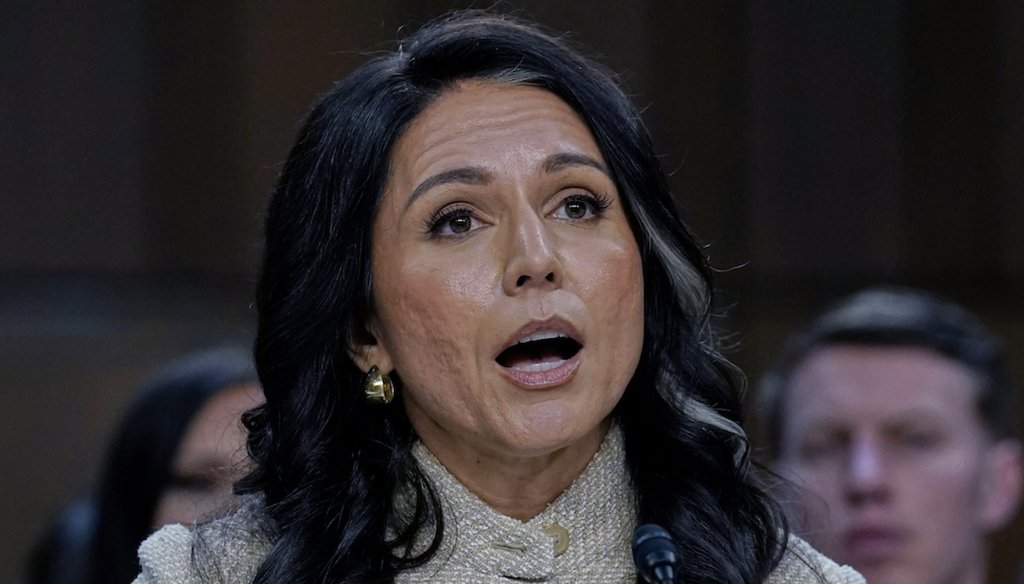
Director of National Intelligence Tulsi Gabbard testifies during a Senate Intelligence Committee hearing about worldwide threats on March 18, 2026. (AP)

Director of National Intelligence Tulsi Gabbard sent eyebrows raising during a recent exchange with Sen. Jon Ossoff, D-Ga., when she said it is the president’s responsibility — and not that of the intelligence community — to determine imminent threats against the U.S.
At a March 18 Senate Intelligence Committee oversight hearing on national security threats, Ossoff asked Gabbard about the Trump administration’s assertions that Iran posed an imminent threat to the U.S., a determination that helped prompt the start of U.S. attacks on Iran Feb. 28.
Ossoff: "Was it the assessment of the intelligence community that there was a — quote — imminent nuclear threat posed by the Iranian regime? Yes or no."
Gabbard: "Senator, the only person who can determine what is and is not an imminent threat is the president."
Ossoff: "False. This is the worldwide threats hearing where you present to Congress national intelligence, timely, objective and independent of political considerations. … Was it the intelligence community's assessment that … there was a — quote — imminent nuclear threat posed by the Iranian regime? Yes or no."
Gabbard: "It is not the intelligence community's responsibility to determine what is and is not an imminent threat."
There can be a fine line between analysis and determination, but national security specialists said determining whether threats are imminent is core to Gabbard’s job.
"Responding to requirements set by the policymakers, the intelligence community collects and analyzes intelligence in order to enhance U.S. government understanding, to protect security and advance interests," said Stephen Marrin, director of the Intelligence Analysis Program at James Madison University. "Part of protecting security is assessing threats to U.S. national interests and warning if the threat is deemed to be imminent."
When we asked the White House to elaborate on Gabbard’s remarks, a spokesperson referred us to an X post by Press Secretary Karoline Leavitt.
Leavitt wrote, "As President Trump has clearly and explicitly stated, he had strong and compelling evidence that Iran was going to attack the United States first. This evidence was compiled from many sources and factors. President Trump would never make the decision to deploy military assets against a foreign adversary in a vacuum."
Leavitt continued, "The Commander-in-Chief determines what does and does not constitute a threat, because he is the one constitutionally empowered to do so — and because the American people went to the ballot box and entrusted him and him alone to make such final judgments."
Intelligence community presents information, then the president decides
The intelligence community comprises 18 federal entities, including the Central Intelligence Agency and the National Security Agency. As director of national intelligence, Gabbard oversees and coordinates with these intelligence agencies and offices.
Experts say there’s a longstanding division of labor between the president and the intelligence community. At root, the intelligence community collects the most accurate information it can and tells the president its best assessment of potential outcomes if certain policies are pursued. But it’s the president who ultimately decides what to do with that information.
"The intelligence community never dictates, nor should it suggest, policy," said Mark S. Chandler, a lecturer in the department of intelligence and security studies at Coastal Carolina University.
The president can also ignore what the intelligence community says. However, the intelligence community always has a "duty to warn," Chandler said. If intelligence agencies see something that could hurt U.S. national security, they will share that information as quickly as possible, he said.
In Iran’s case, the intelligence community would have used "subject-matter expertise to provide the president with interpretations regarding key factual issues," said Robert F. Turner, a retired fellow at the University of Virginia’s Center for National Security Law. That includes information on whether Iran is seeking to develop nuclear weapons, when it might be ready, whether it would use them in a non-defensive setting and against whom.
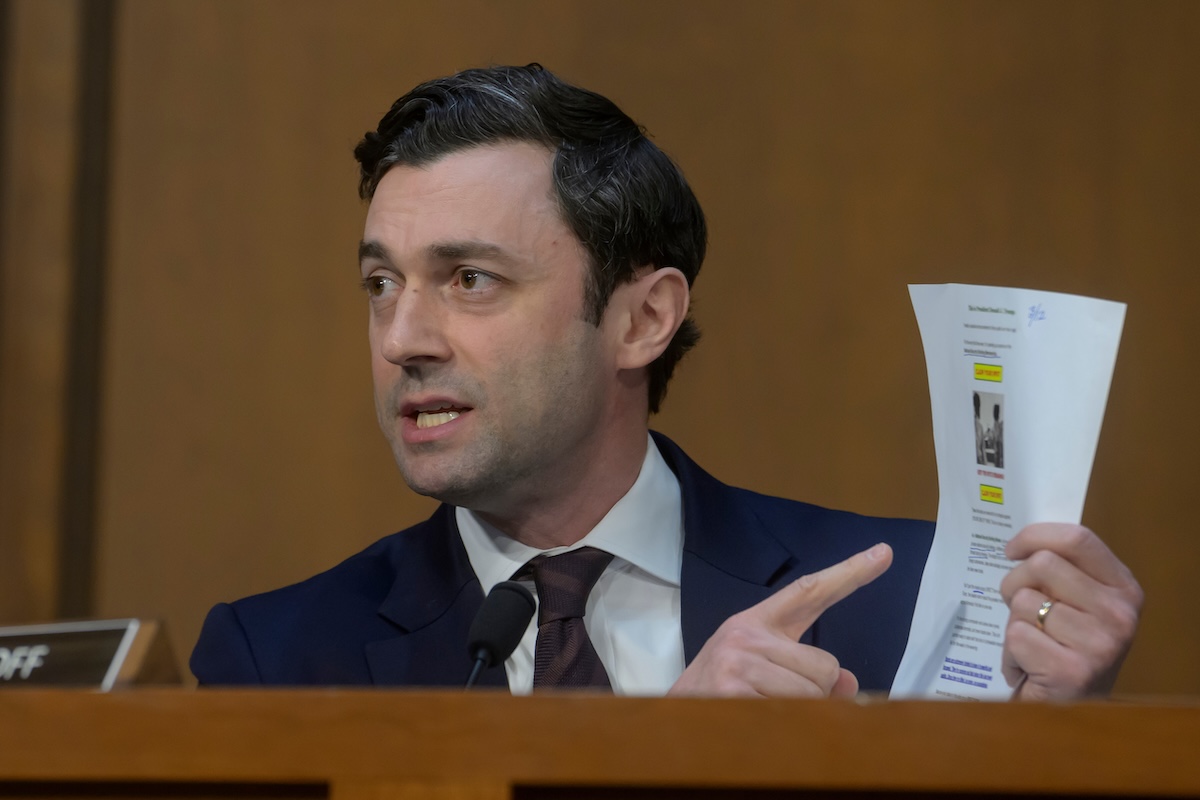
Sen. Jon Ossoff, D-Ga., questions witnesses at a Senate Intelligence Committee hearing on March 18, 2026. (AP)
Complications within the presidential-intelligence community relationship
While there are clear lines that define the responsibilities of the intelligence community and the president, there are still some areas in which friction can arise.
One is that it’s not always clear what constitutes a national interest, Marrin said. One gray area could be determining the point at which economic competition rises to a "threat" to U.S. interests, he said.
"Things can be very difficult for the intelligence community when there are factions in government, or in the executive branch, actively debating and competing over what is in the national interest," Marrin said.
Iran has been widely considered a threat to U.S. interests for decades, Marrin said, so Iran’s status as a threat was not in question. Rather, the debate centered on "how much of a threat, how imminent, and with what consequences," he said. "And in that case, it’s absolutely the U.S. intelligence community's responsibility to make that kind of determination."
Another recurring tension involves the desire for intelligence officials to work with an open mind and not feel obligated to meet the preferences of the president or his top advisers.
It’s the intelligence community’s job "to ensure that the policymaking process incorporates the inconvenient facts," Marrin said. This has been an ongoing battle since the birth of the modern intelligence community in the 1950s, he said.
In decades of interacting with top intelligence officials, Turner said he found that "none of them were foolish enough to see their job as coming up with intelligence to provide cover for preconceived policy decisions."
Chandler said it’s not unusual for presidents to disagree with or ignore intelligence community findings, citing Bill Clinton, George W. Bush, Barack Obama and Joe Biden, at least on occasion.
Ultimately, Turner said, any president would be ill-served if an honest, independent intelligence community didn’t exist.
Our Sources
Tulsi Gabbard, testimony to the Senate Intelligence Committee, March 18, 2026
Associated Press, "Read Trump's full statement on Iran attacks," Feb. 28, 2026
Marco Rubio, remarks to reporters, March 2, 2026
Karoline Leavitt, X post, March 17, 2026
Office of the Director of National Intelligence, members of the intelligence community, accessed March 20, 2026
Email interview with Stephen Marrin, director of the Intelligence Analysis Program at James Madison University, March 19, 2026
Email interview with Mark S. Chandler, lecturer in the department of intelligence and security studies at Coastal Carolina University, March 19, 2026
Email interview with Robert F. Turner, retired fellow at the University of Virginia’s Center for National Security Law, March 20, 2026
White House, statement to PolitiFact, March 19, 2026
Browse the Truth-O-Meter
More by Louis Jacobson