Get PolitiFact in your inbox.


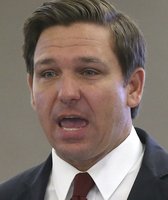
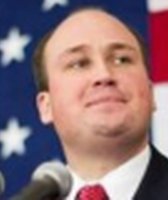
Vice President JD Vance addresses the Trump administration's efforts to combat fraud in a speech in Bangor, Maine, on May 14, 2026. (Tierney L. Cross/The New York Times via AP, Pool)


Visiting Maine weeks before the state’s primary election, Vice President JD Vance accused Democrats of capitulating to fraudsters.
Calling Maine the "bronze medalist" in fraud after California and Minnesota, Vance predicted that federal officials will find "hundreds of millions of dollars every single month" because Maine "is not a state that takes it seriously."
Vance, tasked by President Donald Trump to uncover fraud in federal programs, said May 14 in Bangor that states that don’t go after fraud "care more about illegal aliens than the people they represent."
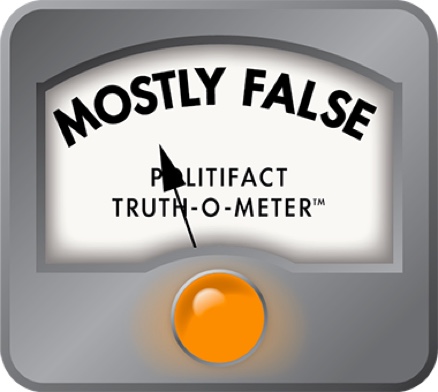
Maine has experienced some fraud in Medicaid and autism coverage in recent years, but some of the things Vance said exaggerated how much fault lies with Democratic officials, and he left out that, by some metrics, Maine experiences less fraud than other states.
U.S. Sentencing Commission data shows in fiscal year 2025 that New Jersey and the Southern District of Florida were tied for the most health care fraud sentencings. Nationwide, 91% of people sentenced were United States citizens.
Maine has about 10,000 immigrants who are in the U.S. illegally, just under 1% of the state’s population and one of the smallest unauthorized immigrant populations in the U.S.
The largest cases of fraud over a decade in MaineCare, the state’s Medicaid healthcare program for low-income people, have involved pharmaceutical manufacturers and pharmacies, including companies with offices in the U.S., WMTW, PolitiFact’s Maine partner, reported.
Neither the White House nor the vice president’s office responded to an inquiry for this article.
Democratic Gov. Janet Mills rejected Vance's portrayal after his speech, resending a March statement that said she cracked down on fraud as a district attorney, attorney general and governor, "often by working hand-in-hand with the federal government."
Vance campaigned with former Republican Gov. Paul LePage, who is running in an open-seat race for Maine's 2nd Congressional District, an area that Trump won three times. Republican Sen. Susan Collins did not attend the event, but Vance had a kind word for the senator, who voted to convict Trump in 2021 and is in a competitive Senate race.
"I almost wish that she was more partisan, but the thing I love about Susan is she is independent," Vance said.
Graham Platner, the Democrats’ expected Senate candidate nominee, shared video of Vance’s comment within hours, seeking to reinforce Collins’ ties to the administration.
We fact-checked some of Vance’s comments.
Vance: "The government wasn't going after fraud. And ladies and gentlemen, that changed the moment, Donald J. Trump became the President of the United States."
That’s incorrect. The federal government and state governments, including Maine’s, have long pursued fraud cases.
Trump has torn down governmental fraud-finding tools. He fired more than a dozen inspectors general whose jobs were to ferret out fraud and inefficiencies and appointed his own. He paused enforcement of the Foreign Corrupt Practices Act, which prohibits businesses from taking bribes from foreign officials. He has also granted clemency to some people convicted of Medicare or Medicaid fraud.
Congress passed the Inspector General Act of 1978 in response to anti-corruption efforts that started after the 1972 Watergate break-in and cover-up that led to President Richard Nixon’s resignation. Another federal entity, the Government Accountability Office, conducts audits.
WMTW reported in January that since 2015, the Maine Attorney General’s Medicaid Fraud Control Unit recovered more than $17 million in 162 cases, sometimes involving repeat offenders. That is a small percentage of the billions of dollars spent annually on MaineCare.
Maine's improper payment rate of 2.4% is lower than the national average of 3.2%, data show.
Vance: "Fraud has festered in Maine" because LePage is no longer the governor.
That’s wrong. Fraud existed under both LePage and Mills, and both administrations carried out investigations and conducted routine audits.
WMTW found that there were dozens of fraud investigations every year between 2015 and 2025. That includes the final four years of LePage’s tenure and most of Mills’ governorship.
Assigning credit for investigations and prosecutions is tricky, because convictions can represent cases in which investigations were launched years earlier.
For example, two Lewiston men who defrauded MaineCare from 2015 to 2018 were sentenced for health care fraud in 2021. This prosecution was the result of a three-year investigation by federal and state officials during the Trump, Biden, LePage and Mills administrations.
As governor, LePage’s antifraud actions included pursuing more than 1,000 cases of fraud within the Temporary Assistance for Needy Families program for low-income households and hiring additional welfare fraud investigators.
Under Mills, the state health department in December stopped payments for MaineCare to Gateway Community Services, a nonprofit that works with Somali immigrants, because of allegations of fraud. A few employees were later charged with tax fraud.
Vance mentioned the case of Rakiya Mohamed, an Auburn, Maine, resident and owner of a language interpretation business. Mohamed in March pleaded guilty in federal court to filing a false tax return and interfering with the administration of federal tax laws.
Mohamed reported the income and expenses for the business, Reliable Language Resources, on her individual income tax returns and reported false and fraudulent expenses for contract labor and office expenses. A court document said she is not a foreign national. Mohamed faces a maximum term of imprisonment of three years and a $250,000 fine.
Vance: "In Maine, we've seen people go out there and say that they're providing services to autistic children, when, in reality, they maybe don't have any children at all, or they certainly don't have autistic children."
There is evidence of payment problems within Maine’s autism-related Medicaid coverage, but the auditor cited incomplete paperwork and did not say anyone had fabricated autistic children.
In January, the U.S. Department of Health and Human Services inspector general released an audit that said Maine made at least $45.6 million in improper Medicaid payments for children with autism.
An "improper" payment in a government program refers to erroneous payments made to beneficiaries and their providers or without sufficient documentation.
The Maine audit deemed some Medicaid payments improper if children did not receive all the required assessments or if filed assessments lacked required signatures of staff, parents or guardians. Others were considered improper because the notes from patient evaluation sessions were not fully documented or lacked a provider’s credentials.
The agency said Maine should return $28.7 million, which was the federal share of the payments. The inspector general examined the program because of rising costs; it had grown from $52.2 million in 2019 to $80.6 million in 2023.
Dr. Mehmet Oz, who heads the Center for Medicare and Medicaid Services, asked Mills in February what the state was doing to prevent fraud and recoup stolen payments. The letter came weeks after the federal government deployed immigration agents to Maine in a targeted crackdown.
Mills’ response cited initiatives from her tenure, including requiring all group homes and personal care agencies in Maine to be licensed and enhancing licensing requirements for home and community rehabilitation support services.
Staff Researcher Caryn Baird contributed to this report.
RELATED: Fact-checking the midterms including in Maine
RELATED: Donald Trump said ending fraud could balance the federal budget. But the math doesn’t add up
Our Sources
JD Vance, remarks in Bangor, Maine, May 14, 2026
WMTW, Owner of Maine interpreter services company cited in fraud investigation pleads guilty to filing false tax returns, March 5, 2026
WMTW, 8 Investigates: How often does Maine crack down on MaineCare fraud, Jan. 22, 2026
WMTW, 'Maine is facing a political attack:' Gov. Mills responds to Dr. Oz video, CMS letter, Feb. 10, 2026
U.S. Attorney’s Office District of Maine, Auburn Woman Pleads Guilty to Filing False Tax Return, March 5, 2026
U.S. District Court, ,Rakiya Mohamed synopsis, Feb. 26, 2026
U.S. Attorney’s Office District of Maine, Lewiston Men Sentenced for Million-Dollar Health Care Fraud, July 16, 2021
U.S. Department of Health and Human Services Office of the Inspector General, Maine Made at Least $45.6 Million in Improper Fee-for-Service Medicaid Payments for Rehabilitative and Community Support Services Provided to Children Diagnosed With Autism, Jan. 22, 2026
Gov. Janet Mills, State of Maine Responds to CMS Medicaid Letter, Highlights Steps Taken under Mills Administration to Fight Fraud, March 6, 2026
Gov. Paul LePage, Press release about EBT and welfare reform
Maine Center for Economic Policy, 7 things to know about the political attacks on MaineCare, May 14, 2026
Graham Platner, X post, May 14, 2026
NBC News, Health care fraudster Philip Esformes is latest Trump clemency recipient to be arrested, Oct. 16, 2024
U.S. Attorney’s Office Southern District of Florida, National Health Care Fraud Takedown Results in 324 Defendants Charged in Connection with Over $14.6 Billion in Alleged Fraud, June 30, 2025
Dr. Mehmet Oz, X post, Feb. 6, 2026
The Maine Monitor, Quiet criminal case focuses on immigrant health provider that billed millions to MaineCare, Jan. 9, 2026
U.S. Sentencing Commission, Quick facts health care fraud, federal fiscal year 2025
PolitiFact, What’s an ‘improper’ Medicaid payment, and is it as high as a Trump official said? June 4, 2025
PolitiFact, Fact-checking Mike Johnson: Do Dems want hospitals paid extra for immigrants versus US citizens? Oct. 9, 2025
PolitiFact, Republicans falsely tie shutdown to Democrats wanting health care for immigrants illegally in the US, Oct. 1, 2025
PolitiFact, Trump, Musk claim government 'fraud' without showing proof. How common is federal fraud, abuse? Jan. 13, 2025
Email interview, Jeffrey Passel, Pew Research Center senior demographer, May 14, 2026