Stand up for the facts!
Our only agenda is to publish the truth so you can be an informed participant in democracy.
We need your help.
I would like to contribute

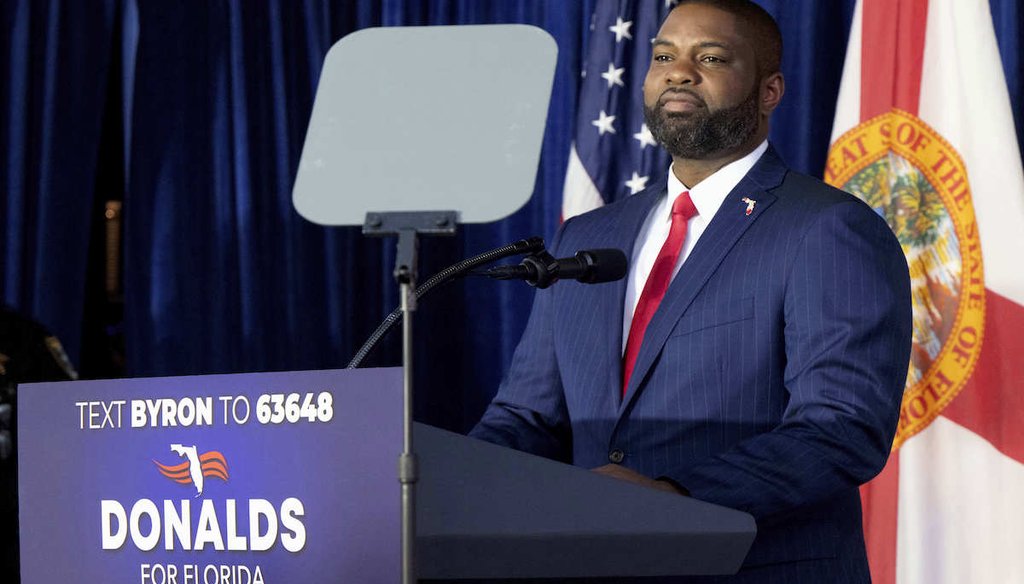
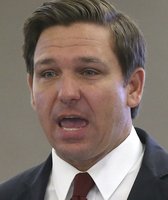
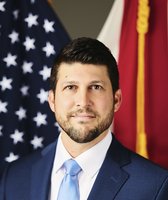
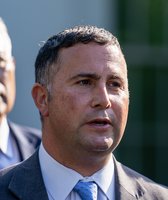
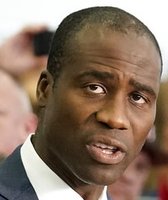
Gubernatorial candidate U.S. Rep. Byron Donalds speaks during his kickoff campaign on March 28, 2025, in Bonita Springs, Fla. (AP)

If Your Time is short
-
Washington, D.C.’s, Youth Rehabilitation Act allows sealing criminal records for some people ages 24 and younger and to receive more flexible sentencing options, per a judge’s discretion. U.S. Rep. Byron Donalds, R-Fla., proposed legislation seeking to cap the law’s eligibility at 18.
-
In 2019, Donalds co-sponsored a comprehensive, bipartisan criminal justice package in Florida that raised the eligibility age for a similar youth program.
-
Donalds benefited from a pretrial diversion program after he was arrested at 18 for marijuana possession. The charge was dismissed. At 21, he served probation on a bribery charge, which was later expunged.
U.S. Rep. Byron Donalds, R-Fla., wants to lower the age of eligibility for a Washington, D.C., youth rehabilitation law, saying that anyone 18 or older should face the full weight of the law as an adult.
"In DC, 18-24 y/o criminals are eligible to be charged & tried as juveniles," Donalds wrote Aug. 20 on X. "This is wrong. My bill, HR 4922 – ‘The DC CRIMES Act’ ensures if you’re 18 or older, you’re charged (as) an adult."
Donalds’ renewed focus on the legislation, which he first introduced in 2024, follows President Donald Trump’s federal takeover of the district’s police force. Trump administration officials have specifically called out the district’s youthful offender law.
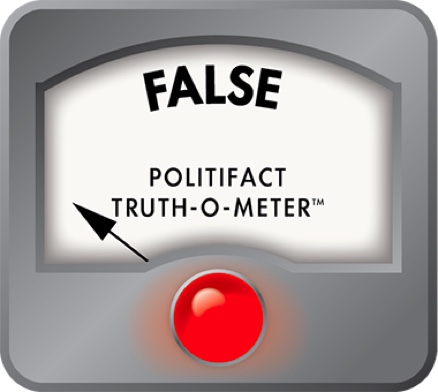
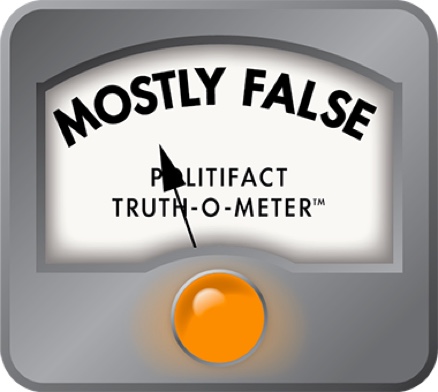
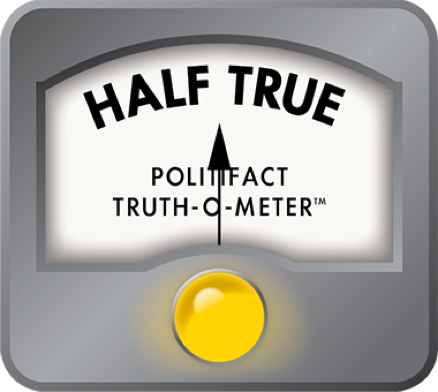
Donalds isn’t describing the district’s law correctly — it doesn’t allow 18- to 24-year-olds to be tried as juveniles, experts told us. It allows people in that age range, in certain cases, to have their convictions sealed and receive more flexible sentencing options, at a judge’s discretion.
He also has some related history. As a young adult, Donalds benefited from flexible sentencing when he faced drug and bribery charges.
As a Florida legislator, he supported an expansive and bipartisan criminal justice law that slightly expanded who could qualify for youthful offender status. Like Washington, D.C.’s law, the Florida law allows for alternative sentencing options for certain young offenders to improve their chances of successful reentry to society.
Daniel First, a spokesperson for Donalds’ congressional office, said Congress has a responsibility to end violence in the district and that the Florida law Donalds supported in 2019 made several updates to the criminal justice system and received unanimous support. (Seven members did not vote).
"These bills serve vastly different jurisdictions for vastly different reasons and any side-by-side comparison without proper context is a gross mischaracterization of facts," First said.
Ashley Nellis, an American University professor in the justice, law and criminology department, said youth offender laws are based on what psychologists have documented for years: that people’s brains are not fully developed until their mid-20s.
"This underdevelopment pertains to key areas for criminal conduct," Nellis said. "Specifically, until the pre-frontal cortex is fully developed around one’s mid-20s, people are prone to more risk, impetuosity, less appreciation/understanding of consequences, and are especially prone to peer pressure."
Here’s an overview of Donalds’ history on the topic — and a fact-check of what he said his new bill would do.
Donalds’ personal and professional past on youth crime, criminal justice reform
Donalds, raised in Brooklyn, New York, moved to Tallahassee in the 1990s to attend Florida A&M University and Florida State University.
Donalds was arrested on a misdemeanor marijuana possession charge in 1997, when he was 18. The charge was dismissed as part of a pretrial diversion program, Leon County court records show. He was fined $150.
In 2000, at age 21, he was arrested on a second-degree felony charge of bribery. Donalds has said it was theft, not a bribe. In a 2014 interview, Donalds said an acquaintance convinced him he could make $1,000 by depositing a bad check. Donalds said he had to pay restitution to the bank for about seven times the original amount. He pleaded no contest and served one year of probation. The charge was later expunged.
Donalds has been open about his past criminal charges and characterized his past as a redemption story. "These were the actions of a young kid, I can’t undo that," he said in 2014. "I can't undo my mistakes, but the only thing I can do is to show and become the man that I am today for my family and for the community that I love."
As a Florida House member in 2019, Donalds co-sponsored HB 7125, which, among other measures, expanded who could qualify for Florida’s youthful offender sentencing provision.
Before the legislation, people had to be under 21 at sentencing in order to qualify for youthful offender status and more flexible penalty options. The legislation Donalds supported changed that to allow anyone who was under 21 at the time of their offense to qualify.
The law also expanded inmate reentry programming; raised felony thresholds for some offenses, including grand theft and retail theft; and expanded what criminal records were eligible to be sealed from public view. Gov. Ron DeSantis signed the criminal justice package into law in June 2019.
That year, Donalds also sponsored HB 705, known as the Florida First Step Act, modeled after a federal crime law Trump signed in 2018. Donalds’ wide-ranging Florida version, which attracted some law enforcement opposition, would have required inmates to receive community reentry resources, authorized a prison entrepreneurship program and recommended sentences below the statutory minimum for certain drug trafficking offenses. The bill died in committee, but some provisions were rolled into HB 7125.
At the time, Donalds said people needed options to help integrate back into society. "We are just warehousing people," he said, according to the Tallahassee Democrat. "So, if you are actually going to help people to correct their lives … we have to reshape the system in a way that they can be full citizens when they come back."
What is Washington, D.C.’s youth rehabilitation law?
Donalds said the district’s law allows 18- to 24-year-olds to be charged and tried as juveniles. Experts say that’s not the case. The district’s Youth Rehabilitation Act, first passed in 1985, allowed people under 22 who were sentenced for a crime other than homicide to be eligible to have their convictions sealed once they completed their sentences.
A 2018 update raised the eligibility age to 24 and adjusted a provision that allowed people to apply for their convictions to be sealed after the end of their sentence, rather than at conviction.
Donalds’ proposed legislation would lower the eligibility age for youth offenders to 18 and younger and would strip the D.C. Council, the district’s legislative branch of government, of its ability to change mandatory-minimum sentences and sentencing guidelines.
In the district, the law defines a juvenile as someone under 18. People eligible for its youth rehabilitation law are tried in adult criminal court but can be considered for flexible sentencing, such as probation instead of detention, or sentences below mandatory-minimums.
"In certain limited cases, people under 18 are transferred to adult court," said Nellis, who wrote a book about rethinking juvenile justice system approaches. "Not the reverse."
Judges are not required to apply the law and some crimes are ineligible, including murder and some sex crimes. Judges are also required to consider several factors when applying the law, including the person’s age at the time of the offense and the nature of the crime. The court also considers the person’s family circumstances, as well as their capacity for rehabilitation.
Jodi Lane, a University of Florida criminology professor, said youthful offender laws are special programs within the adult justice system. "Some states, like Florida, have had separate youthful offender facilities in the adult system for years," she said.
PolitiFact Staff Researcher Caryn Baird contributed to this report.
RELATED: Ask PolitiFact: What does the data show on deadly shootings by 18-to-20-year-olds?
RELATED: Trump exaggerates Washington, DC, crime while ordering police takeover and National Guard deployment
RELATED: How does Washington, D.C.’s homicide rate compare with other countries?
Our Sources
X, Byron Donalds post, Aug. 13, 2025
X, Byron Donalds post, Aug. 20, 2025
Donalds.house.gov, WHAT THEY'RE SAYING: Donalds Leads Congressional Effort To Make Our Nation's Capital Safe Again, Aug. 11, 2025
Congress.gov, H.R.4922 - DC CRIMES Act, introduced Aug. 8, 2025
Truth Social, Donald Trump post, Aug. 5, 2025
Juvenile Law Center, JUVENILE RECORDS A National Review of State Laws on Confidentiality, Sealing and Expungement, Accessed Aug. 21, 2025
DC Department of Youth Rehabilitation Services, DC JUVENILE JUSTICE SYSTEM, Accessed Aug. 21, 2025
Justice Policy Institute, What is the YRA?, Accessed Aug. 20, 2025
Council of the District of Columbia, D.C. Law 22-197. Youth Rehabilitation Amendment Act of 2018, Dec. 13, 2018
The Florida Legislature, HB 705: Sentencing and Incarceration, filed Feb. 7, 2019
The Florida Legislature CS/HB 7125: Administration of Justice, filed April 11, 2019
Florida Department of Juvenile Justice, Criminal Justice/Public Safety Bills, 2019 legislative wrap-up report
Tallahassee Democrat, Sheriffs oppose lawmakers attempt to toss mandatory sentencing from the books, April 20, 2019
Florida Senate, CS/HB 7125 vote tally, May 3, 2019
The Florida Statues, 958.04 Judicial disposition of youthful offenders, Accessed Aug. 21, 2025
Sammis Law Firm, Florida Youthful Offender Act, Updated Oct. 24, 2022
The Florida-Times Union, Which Florida First Step Act will pass, one that cuts incarceration or one that doesn't?, April 19, 2019
The News-Press, Candidate Byron Donalds and his accuser each calls the other a liar; ethics commission won't weigh in until at least next month, Aug. 10, 2020
The News-Press, 'Almost an oxymoron': Rising star Byron Donalds is a Black conservative aiming for national office, Sept. 25, 2020
Yahoo, Byron Donalds: 10 things to know about the US congressman running for Florida governor, March 4, 2025
Yahoo, Who is Byron Donalds? Florida congressman announces bid for governor after DeSantis, Feb. 26, 2025
Florida Phoenix, Byron Donalds hits the campaign trail, May 13, 2025
YouTube, Tea Party star answers to charges of a criminal past, April 28, 2014
The Tampa Bay Times, Byron Donalds is Trump’s pick to lead Florida. Is he a good choice?, Aug. 14, 2025
The Washington Post, A congressman spared prison as a teen tells D.C. to be tough on youth, May 16, 2024
Email interview, Ashley Nellis, professor in the justice, law and criminology department at American University, Aug. 21, 2025
Email interview, David Muhammed, executive director of the National Institute for Criminal Justice Reform, Aug. 21, 2025
Email interview, Jodi Lane, professor and associate chair of sociology and criminology & law at the University of Florida, Aug. 21, 2025
Email interview, Daniel First, spokesperson for Rep. Byron Donalds, Aug. 24-25, 2025