Obama’s baseball game with Raúl Castro hot topic as Trump supporters compare Cuba policies
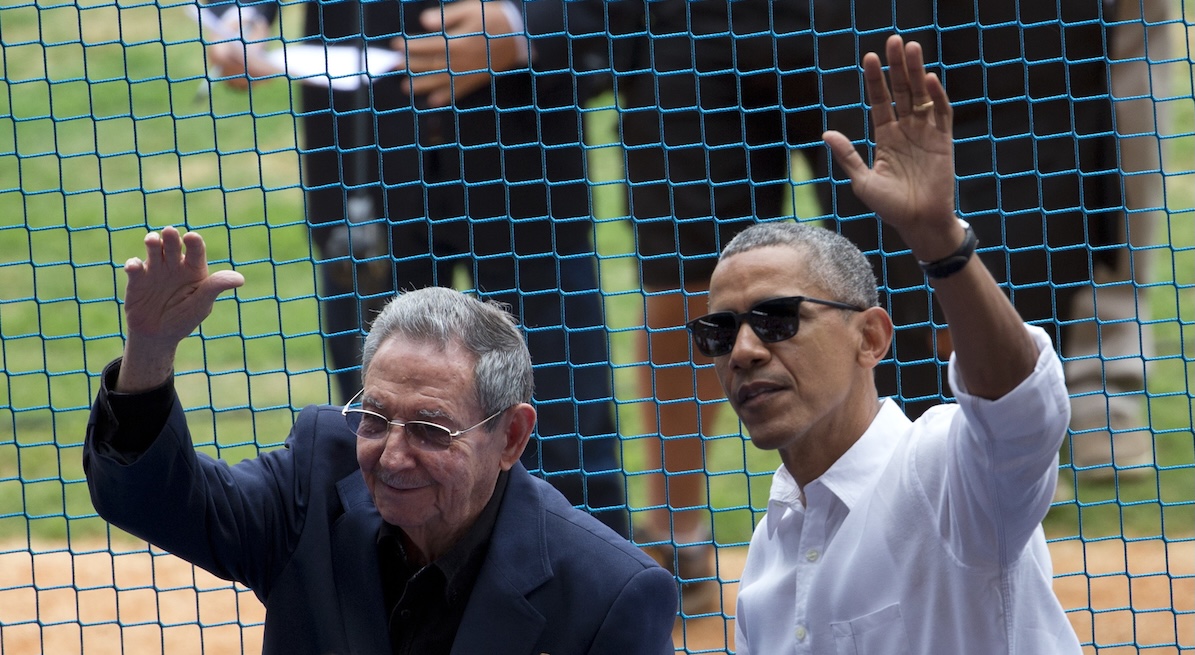

A photo of a sunglasses-clad President Barack Obama casually chatting up then-Cuban President Raúl Castro at a 2016 baseball game resurfaced on social media after the U.S. indicted Castro on May 20.
Acting Attorney General Todd Blanche announced the indictment of the 94-year-old Castro for the 1996 shootdown of two civilian planes just north of Cuba’s airspace that killed four people, including three U.S. citizens, from the Cuban exile humanitarian group Brothers to the Rescue.
Castro was defense minister at the time of the shootdown, and the indictment said he “authorized the use of deadly force.” The current Cuban government denounced the indictment, saying in a statement on X that the group had repeatedly violated its airspace.
At the news conference announcing the indictment, two speakers brought up the baseball game without mentioning Obama by name.
Sen. Ashley Moody, R-Fla., compared Obama’s and President Donald Trump’s approaches to the 1996 incident, saying, “Previous administrations would release the one person we convicted related to it, maybe even go down there to go to a baseball game.”
Moody was referring to Gerardo Hernández, who was convicted of conspiracy to commit murder in the shootdown case. He was released from prison in 2014 by Obama as part of a prisoner swap with Cuba.
Florida Attorney General James Uthmeier also mentioned the baseball game, saying, “For too long leaders in Washington looked the other way. They sat by idly. They even attended baseball games with the very man that directed the murders.”
Social media users, including Sen. Ted Cruz, R-Texas, later posted photos of Obama, comparing his approach to Cuba with Trump’s.
Obama during his two terms in office sought to normalize relations with Cuba, while Trump reversed many Obama-era policies.
“The strategic intentions behind the Cuba policies of the Obama and Trump administrations differed fundamentally in their core theories of change, shifting from a philosophy of constructive engagement to one of maximum pressure,” said Daniel Pedreira, a Florida International University visiting assistant teaching professor in politics and international relations.
Obama’s approach to Cuba
Obama took steps to soften relations with Cuba after several decades of tension, beginning in the 1960s with the failed U.S.-backed Bay of Pigs invasion and the Cuban Missile Crisis.
In his first term, early in 2009, Obama announced steps to let Americans travel as much as they wished to visit family members in Cuba and to lift restrictions on sending money to them.
And in 2014, Obama announced plans to reopen a U.S. embassy in Havana. Diplomatic relations officially resumed on July 20, 2015, and then-Secretary of State John Kerry later visited Havana to mark the embassy’s opening.
Obama visited Havana in March 2016, the first time a sitting U.S. president had set foot on the island since Calvin Coolidge in 1928. While there, he attended a historic exhibition baseball game between the Cuban national team and the Tampa Bay Rays. Obama and his family sat next to Castro during the game, even doing the wave with the Cuban leader at one point, an image social media critics have criticized in recent days.
Pedreira said Obama decided isolation wasn’t achieving U.S. policy goals, and thought opening diplomatic and economic channels in Cuba would undermine government control and empower the Cuban people, Pedreira said.
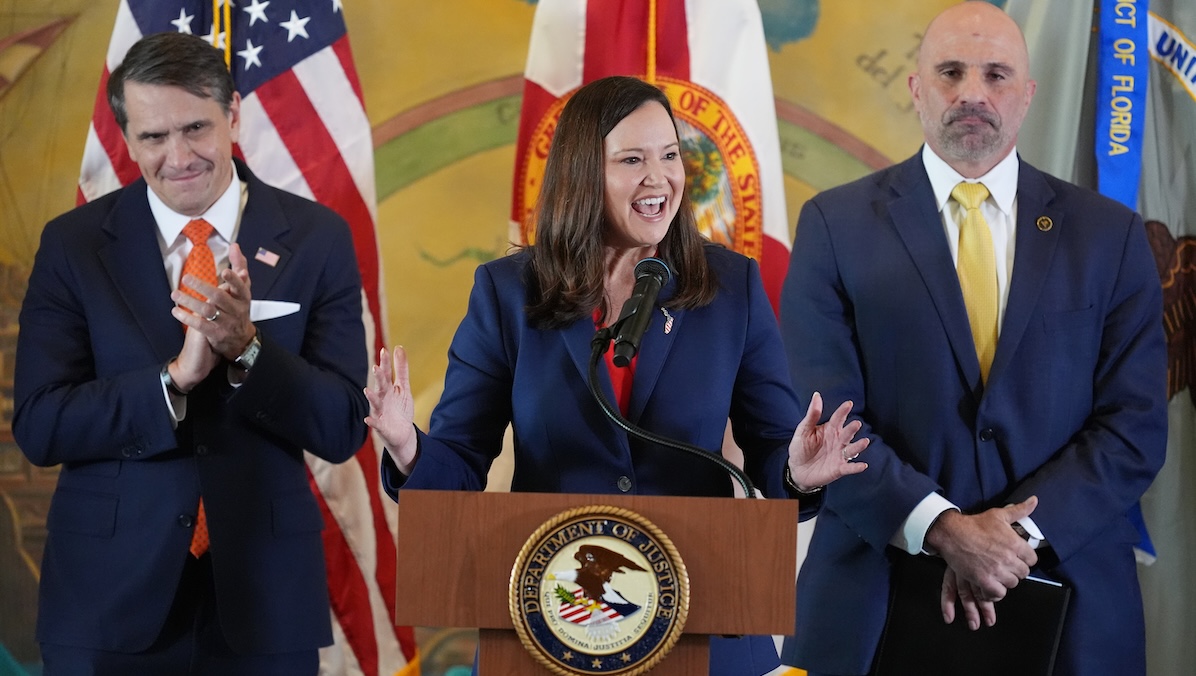
Sen. Ashley Moody, R-Fla., speaks in Miami May 20, 2026, flanked by Acting Attorney General Todd Blanche, left, and FBI Deputy Director Christopher Raia, after federal prosecutors announced charges against former Cuban President Raul Castro. (AP)
Trump’s rollback of Obama’s policies and current approach
Trump, during his campaign before winning his first term in office, criticized Obama’s approach as a “one-sided deal” for Cuba and pledged to reverse his policies.
In July 2020, near the end of his first term, PolitiFact wrote that Trump had largely kept his promise to roll back Obama’s policies. Trump added travel restrictions making it harder for Americans to visit the island and imposed financial and banking restrictions on the regime.
“Both in spirit and in practice, all of Obama’s opening and engagement policies have been reversed,” with the exception of immigration rules and the U.S. embassy, which remains open, said Baruch College Professor Theodore Henken, an expert on Cuban studies.
Pedreira said Trump chose “to target specific economic sectors while leaving several structural diplomatic and legal frameworks intact.”
Trump is aiming to “choke off revenue to the Cuban government,” Pedreria said, by targeting the economy and travel sector.
Former President Joe Biden did little to reverse Trump’s moves or reinstate Obama policies during his term.
In his second term, Trump has launched an economic pressure campaign against Cuba. He signed an executive order threatening tariffs on countries that sell oil to the nation. The Associated Press reported that a U.S. energy blockade has caused widespread power outages in the country. In June 2025 he reimposed strict travel and financial restrictions on Cuba.
A day after Castro’s indictment, on May 21, both Trump and Secretary of State Marco Rubio hinted at possible military intervention in Cuba.
Which approach has been more successful?
Pedreria said Trump’s policies are still developing but negotiating with the Castro regime using economic, political and legal pressure may force Cuba’s hand on a number of issues.
Henken said “Obama’s carrot of engagement” was a more realistic policy than “Trump’s stick of threats and punishment.”
“That said, Trump and Rubio may prove me wrong since there are many Cubans and Cuban-Americans who are so desperate that they would accept or happily support any solution that ended the dictatorship and misery,” Henken said.
PolitiFact Staff Writer Maria Briceño contributed to this report.
Our Sources
Baruch College Professor Theodore Henken, email interview, May 21, 2026
Daniel Pedreira, Florida International University visiting assistant teaching professor, email interview, May 21, 2026
NBC 6 South Florida, WATCH LIVE: Charges against Cuba's Raúl Castro revealed in U.S. indictment, May 20, 2026
Cuban Embassy in U.S., Statement on X, May 20, 2026
Sen. Ted Cruz, R-Texas, X post, May 20, 2026
Department of Justice, Superseding indictment, filed April 23, 2026
Politico, Price of U.S.-Cuba deal: Releasing a murderer, Dec. 17, 2014
PolitiFact, Raúl Castro indictment: Who were Brothers to the Rescue? What happened in 1996?, May 20, 2026
PolitiFact, Obama lifts restrictions on travel and remittances to family in Cuba, April 13, 2009
PolitiFact, Biden restored some travel and remittances to Cuba, but did not go as far as Obama, Jan. 9, 2025
PolitiFact, Trump has largely kept promise to reverse Obama’s Cuba policy, July 15, 2020
Los Angeles Times, Cuba’s collapse: From Obama’s historic opening to Trump’s crippling embargo, April 20, 2026
John F. Kennedy Presidential Library and Museum, The Bay of Pigs
John F. Kennedy Presidential Library and Museum, Cuban Missile Crisis
Council on Foreign Relations, Trump’s ‘Maximum Pressure’ Campaign on Cuba, Explained, March 31, 2026
The Associated Press, Rubio doubtful of diplomacy with Cuba as Trump raises new threat of military action, May 21, 2026
The Associated Press, Timeline of recent US-Cuba relations amid heightened tensions in Trump’s second term, May 20, 2026
The Associated Press, US energy blockade leaves Cuban farmers struggling to feed a nation, April 27, 2026
U.S. Embassy in Cuba, Policy and History, accessed May 21, 2026
U.S. Department of State, Re-Establishment of Diplomatic Relations With Cuba, July 6, 2015
ESPN, President Obama: MLB exhibition in Cuba 'something extraordinary', March 22, 2016
Pete Souza, former White House photographer, Instagram post, March 23, 2016