Stand up for the facts!
Our only agenda is to publish the truth so you can be an informed participant in democracy.
We need your help.
I would like to contribute


PolitiFact awards the Lie of the Year to the most significant falsehood or exaggeration that worked to undermine an accurate narrative. (Ellen Hine/PolitiFact)

For 17 years, PolitiFact has made an annual tradition of sorting through the year’s rhetoric to identify the statement, collection of statements or theme that had the most significant impact.
The awards have gone to all manner of topics and speakers.
In 2024, the distinction went to Donald Trump and JD Vance’s campaign claims that Haitians were eating pets in Springfield, Ohio. In 2020, the global coronavirus pandemic inspired widespread downplay and denial that interfered with efforts to combat the virus’ deadly spread. Back in 2013, former President Barack Obama took the prize for telling people they could keep their insurance under his health care plan. He later apologized.
In 2025, PolitiFact didn’t pick a single "Lie of the Year." Lies became so widespread and influential, we found it insufficient to focus on just one; we named 2025 the Year of the Lies. Our series this week examines the effect of lies on real people.
Here are PolitiFact’s Lies of the Year going back to the award’s 2009 debut.
2024: Donald Trump and JD Vance’s claim that Haitians were "eating the pets" in Springfield, Ohio
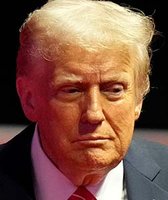
During the 2024 presidential campaign, Trump and Vance spread the falsehood that Haitian immigrants in Springfield, Ohio, were eating pets. What started as an online rumor reached national politics when Vance first shared that people had their pets abducted and eaten by Haitians. Despite local authorities and fact-checkers debunking the rumors, Vance and Trump continued repeating the claim on social media, debates, rallies and national TV, which led to dozens of bomb threats at schools, grocery stores and government buildings in Springfield.
2023: Robert F. Kennedy Jr.’s campaign of conspiracy theories
Kennedy, a former Democrat and then-independent presidential candidate, built a political following on a movement that seeks to legitimize conspiracy theories. PolitiFact found he constantly misinterpreted scientific data, took findings out of context or left out important caveats that debunked his narratives. His claims decrying vaccines roiled scientists, perplexed medical experts and stoked anger over whether his work harms children. Bolstered by his famous name and family’s legacy, Kennedy built a campaign of conspiracy theories that gained an electoral and financial foothold.
2022: Russian President Vladimir Putin’s foundation of lies that led to the Ukrainian war
Putin deployed a highly sophisticated propaganda machine — hundreds of websites, state-run media, social media channels, fake fact-checking and oppressive censorship laws — to wage an unprovoked war and join history’s most brutal authoritarians. Putin disseminated ruthless falsehoods — that Ukraine was committing genocide or under neo-Nazis’ leadership, for example — to co-opt Russian citizens whose family members would be sent to fight a war, kill others and perhaps die themselves.
2021: Lies about the Jan. 6 Capitol attack and its significance
On Jan. 6, 2021, after Trump lost the 2020 presidential election, a mob of his supporters attacked the U.S. Capitol in Washington, D.C. Although live news footage and videos from participants provided inescapable evidence of what happened, claims that Jan. 6 was an antifa operation, a false flag staged by the government, a tourist visit or an uneventful, forgettable day persisted and proliferated throughout the year.
2020: Coronavirus downplay and denial
Lies about COVID-19 infected America in 2020, as conspiracy theories and misinformation, including that new coronavirus was overblown, and maybe a hoax, spread. These lies hampered the U.S. response to the coronavirus pandemic and the worst of them were not just damaging, but deadly.
2019: Trump’s claim that whistleblower got Ukraine call "almost completely wrong"
A whistleblower raised concerns that a July 2019 phone call Trump had during his first term with Ukrainian President Volodymyr Zelenskyy amounted to 2020 presidential election interference. Trump, incensed, worked to discredit the whistleblower, but the complaint sparked months of investigation and Trump’s first impeachment in the House. More than 80 times, Trump insisted the whistleblower’s account was incorrect, "total fiction" and "almost completely wrong." But the record of the call the White House released and under-oath testimony from career diplomats and other officials collectively validate the whistleblower’s account.
2018: Online smear machine tries to take down Parkland students
After 17 people were gunned down at a Parkland, Florida, high school, students advocated for action against gun violence. Then came the lies, as the students were called "crisis actors" and "communist with ties to Cuba." With polarization high and bipartisanship scarce, the attacks on Marjory Stoneman Douglas High School’s students sparked shared outrage in nearly all political corners.
2017: Russian election interference is a "made-up story"
Trump continually asserted that Russia’s meddling in the 2016 election was fake news, a hoax or made up, despite widespread, bipartisan evidence to the contrary. Classified and public reports and U.S. intelligence agencies said Russian President Vladimir Putin ordered actions to interfere with the election.
2016: Fake news
Although conspiracy theories have long been part of America’s political conversation, they surged online in 2016. Fake news found a willing enabler in Trump, who repeated and legitimized fabricated reports as a presidential candidate. We defined fake news as fabricated information that was manipulated to look as if it were credible news reporting for easy online spreading.
2015: Trump’s campaign misstatements
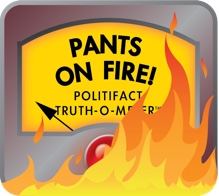
From dubious accounts of his own record and words to "thousands and thousands" of people cheering in New Jersey on Sept. 11, 2001, Trump’s inaccurate statements in 2015 exhibited boldness and a disregard for the truth previously unseen in presidential candidates. By December 2015, PolitiFact had rated 76% of Trump’s claims Mostly False, False or Pants on Fire. No other politician had clocked more falsehoods on our Truth-O-Meter, and our only real contenders for Lie of the Year were Trump’s.
2014: Exaggerations about Ebola
In 2014, there were two Ebola-related deaths in the United States, yet exaggerated claims from politicians and pundits stoked fear of the disease nationwide. Claims included that Ebola was easy to catch, that immigrants illegally in the country may have been carrying the virus and that it was all part of a government or corporate conspiracy.
2013: President Barack Obama: "If you like your health care plan, you can keep it."
Obama and other Democrats claimed this when touting the Affordable Care Act, but the promise was impossible to keep. Reducing the complicated health care law to a sound bite proved treacherous. In fall 2013, people started to receive insurance cancellation notices, proving the statement was wrong. Worsening matters, Obama and his team said the claim had been misunderstood. To quell the political uproar, Obama issued a rare presidential apology.
2012: Mitt Romney campaign's ad on Jeeps made in China
When Romney, former Utah U.S. senator, ran for president in 2012, his presidential campaign launched an ad claiming that Jeep was pulling its plants out of Ohio, a critical swing state, and moving production to China. But the Ohio Jeep plants weren’t going anywhere; the moves in China were to expand into the Chinese auto market. Even though Jeep's parent company gave a quick and clear denial, Romney repeated it. Negative press coverage rained down on Romney’s campaign; he lost in Ohio, the most important state in the presidential election. Then, he lost the election.
2011: Democrats: "Republicans voted to end Medicare."
Democrats absorbed two years of Republicans’ false charges about the 2010 Affordable Care Act. Then, they turned the tables, slamming House Republicans for voting for a cost-cutting budget resolution from former Rep. Paul Ryan, R-Wis. Democrats claimed that voting for this resolution amounted to voting to end Medicare, but Ryan never proposed ending Medicare. He wanted to bring more private insurers into the program. Democrats later altered their talking point to say Republicans wanted to end Medicare "as we know it."
2010: The Affordable Care Act was "a government takeover of health care"
As the Affordable Care Act moved toward enactment, Republicans repeated that the law was a government takeover of health care, though it wasn’t. "Government takeover" connotes a European approach in which the government owns the hospitals and the doctors are public employees. The Affordable Care Act, by contrast, relied largely on the free market and left employer-provided health insurance largely in place. In no way did the government take over the country’s health system.
2009: Former vice presidential candidate Sarah Palin’s "death panels"
Palin, the former Alaska governor and 2008 vice presidential candidate, earned PolitiFact’s very first Lie of the Year with her claim that the Affordable Care Act included "death panels." The idea of government boards that would supposedly determine whether older Americans and people with disabilities merited care, was wholly fictional. The law didn’t, and doesn’t, call for death panels or promote euthanasia. But in 2009, about 30% of the public believed the health care law did include them.
Our Sources
Sources linked in story.