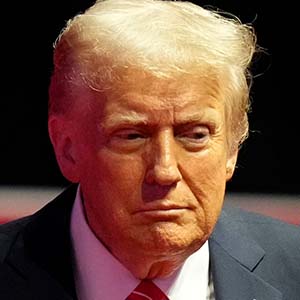
President Donald Trump’s proposed 2027 military budget would be “the largest spending increase since World War II.”

Would Trump’s proposed military budget be the largest increase since WWII?
If your time is short
-
Adjusting for inflation, President Donald Trump’s fiscal year 2027 budget proposal would represent the largest military spending increase since World War II.
-
In terms of percentage increase measured in actual dollars, Trump’s proposal would increase the defense budget by 44%, making it the largest percentage increase in actual dollars since the Korean War and the third largest since WWII.
President Donald Trump’s 2027 federal budget proposal includes a historic military budget increase alongside significant cuts to other federal programs.
The Democratic National Committee criticized the defense spending plan as outsized. “Trump wants $1,500,000,000,000.00 for his military budget,” the DNC’s official account posted on X April 3. “The largest spending increase since World War II.”
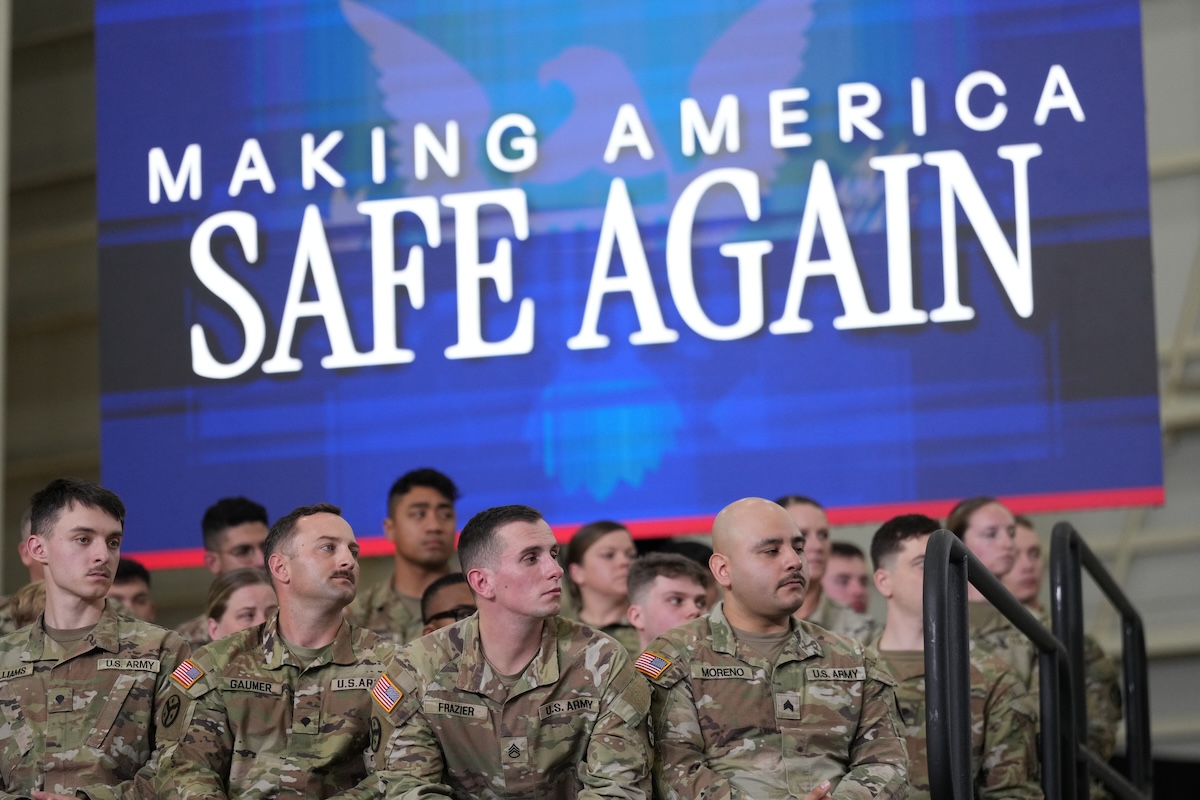
Trump requested military funding of $1.5 trillion for fiscal year 2027 — about $500 billion more than the U.S. allocated in fiscal year 2026. If the plan is approved, total national defense funding would increase by about 44%.
Beyond Trump’s preliminary budget request, he could request additional funds to support the Iran war.
When we contacted the DNC for evidence showing how the proposed increase compares with other military budgets in U.S. history, the organization pointed us to news coverage, White House statements and federal budget analyses from the Center for Strategic and International Studies that took inflation into account.
The White House’s budget proposal rollout itself similarly touted the defense spending increase, saying it was “approaching the historic increases just prior to World War II.”
Trump’s budget proposal represents the largest yearly military spending plan in U.S. history, exceeding the previous record of $1.2 trillion during World War II, when adjusted for inflation. And records confirm the DNC’s characterization of the increase being the largest since WWII when inflation is factored in.
There is one other way of measuring, however, that puts two Korean War spending increases higher than Trump’s: by examining the percentage increase in actual dollars from one year to another.
US defense budget nearly quadrupled during WWII from one year to the next
After the U.S. formally entered World War II following Japan’s Dec. 7, 1941, bombing of Pearl Harbor, Congress approved a 1942 budget that included a landmark 299% military spending increase over the year before, according to the Office of Management and Budget Historical Tables.
Nearly a decade later, in 1950, the U.S. under President Harry Truman entered the Korean War.
From 1950 to 1951, the U.S. increased its military budget by about 72%. The following year, Congress approved another military budget increase of about 96% over 1951.
Using this straight percentage increase, the Trump plan would represent the largest percentage increase in the military budget since the Korean War, not WWII.
When adjusting for inflation, 2027 budget largest bump since WWII
Comparing the inflation-adjusted dollar amounts, meanwhile, strengthens the DNC’s claim.
Todd Harrison, a senior fellow who tracks defense spending at American Enterprise Institute, recommended using the federal Office of Management and Budget’s inflation data as a means of finding how inflation affects defense-related purchases, such as jet fuel and steel.
Jessica Riedl, a budget and tax fellow at the Brookings Institution, used this data to adjust past budgets to 2026 dollars. Her analysis showed that the WWII military budget increase was about $310 billion from 1941 to 1942 and $611 billion from 1942 to 1943.
Meanwhile, Korean War spending increased by about $95 billion from 1950 to 1951 when the figures are adjusted for inflation and about $216 billion from 1951 to 1952. Using this metric, then, the 2027 budget proposal of $500 billion more would be the largest inflation-adjusted increase since WWII.
Riedl included another method of measurement in her analysis of OMB data. She compared spending as a percentage of the overall gross domestic product at the time. This measurement also corroborated the DNC’s statement. Experts, however, are split on how useful this metric is in analyzing defense spending over time.
Our ruling
The DNC said Trump’s 2027 proposed military budget would represent “the largest spending increase since WWII.”
Using inflation-adjusted dollars, Trump’s proposal to spend $500 billion more on defense in 2027 would be the largest spending increase since WWII, when the nation allocated about $611 billion more.
Based on percentage increase in actual dollars, the 2027 budget would represent the third largest spike in military spending. Trump’s proposal would increase the defense budget by about 44%. The percentage increases were higher during the Korean War and World War II.
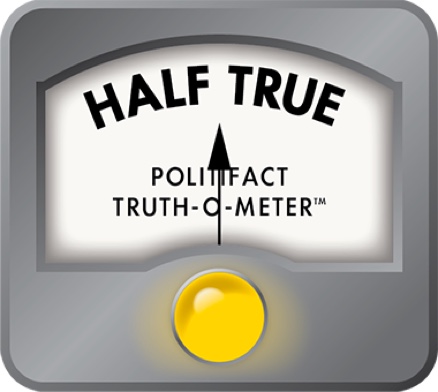
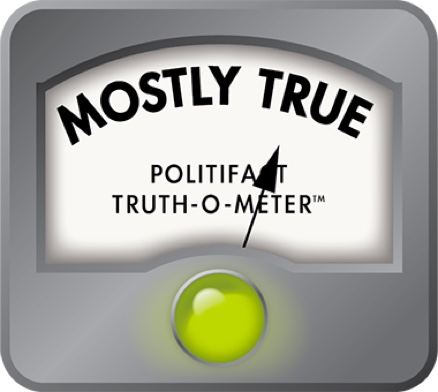
The DNC’s statement is accurate, but needs additional clarification. We rate it Mostly True.
Chief Correspondent Louis Jacobson contributed to this fact-check.
RELATED: Trump proposes record-breaking $1.5 trillion in military spending
Our Sources
DNC, X post, April 3, 2026
FY 2027 budget proposal, accessed April 15, 2026
Office of Management and Budget Historical Tables, accessed April 15, 2026
White House, "Rebuilding our military fact sheet," accessed April 20, 2026
CSIS, "Unpacking the $1.5 Trillion FY 2027 Defense Budget Topline," April 10, 2026
CNN, "White House seeks massive increase in defense spending and looks to slash housing, social services and health care," April 3, 2026
PolitiFact, "Trump proposes record-breaking $1.5 trillion in military spending," April 10, 2026
Email Interview with Todd Harrison, a senior fellow at the American Enterprise Institute, April 16, 2026
Email Interview with Gabe Murphy, a policy analyst for Taxpayers for Common Sense, April 16, 2026
Email Interview with Jessica Riedl, a budget and tax fellow at The Brookings Institution, April 20, 2026