What is cyclosporiasis and how can you avoid catching this, uh, ‘explosive’ GI illness?

If your time is short
- This summer, more than a third of U.S. states have reported cases of cyclosporiasis, an illness caused by a microscopic parasite found in human feces.
- The outbreaks’ causes are unknown. Historically, fresh herbs and produce consumed raw were the culprits.
- The illness isn’t life-threatening, but doctors recommend seeking treatment; it can be treated with antibiotics.
No one wants their summer festivities to be interrupted by gastrointestinal upset, but for hundreds of Americans who have contracted a nasty intestinal parasite it might already be too late.
Since May 1, more than 800 cases of cyclosporiasis have been reported in at least 18 states. By July 6, local, state and federal public health officials were investigating clusters of cases in multiple states to identify the outbreaks’ potential sources, according to the Centers for Disease Control and Prevention.
You might have already seen some rather unpleasant headlines describing the most noteworthy symptom of this illness that wreaks havoc on your digestive system.
Before we get into it, a word of caution: Even if this parasite hasn’t made you sick, some of the details in this story are a bit stomach-turning.
What is cyclosporiasis and how is it spread?
Cyclosporiasis is a gastrointestinal illness caused by microscopic, single-celled parasites called cyclospora, which are found in human feces. People can be infected after ingesting food or water contaminated with an infected person’s stool.
Some cyclosporiasis outbreaks in the U.S. have been linked to both imported and domestic fresh herbs and produce. People have also contracted cyclosporiasis after swallowing contaminated swimming water. It is not transmitted person-to-person.
“Historically, outbreaks linked to things that we eat raw,” including “stealth ingredients” such as herbs in a dipping oil, said Kali Kniel, a University of Delaware microbiologist and food safety expert.
It’s a national notifiable disease, which means local public health officials in states and territories can voluntarily report the illness to the CDC. Federal officials monitor cases to detect outbreaks linked to common food sources.
Cases rise during warmer months. The cyclosporiasis season runs from May 1 to Aug. 31. CDC data showed that there have been over 1,000 U.S. cases annually for the last five years, Kniel said.
What are the symptoms of cyclosporiasis?
Here’s where things get (predictably) gross. The most common symptom is frequent, watery diarrhea. Other symptoms are stomach cramps, nausea, bloating, gas, fatigue and reduced appetite and weight loss. It’s less common, but the CDC says some people might also experience vomiting, body aches, a headache, a low fever or other flu-like symptoms.
Cyclosporiasis isn’t life-threatening, but it’s not enjoyable, said Dr. Natascha Tuznik, a University of California Davis infectious disease professor.
“It can be potentially debilitating in the sense that it can last for months or longer,” Tuznik said. Symptoms can also subside and return.
For these reasons, Tuznik said doctors strongly recommend people with symptoms seek treatment.
Young children, older adults and anyone with a weakened or compromised immune system — including people taking immunosuppressants or receiving chemotherapy — are at the highest risk for severe or prolonged illness, she said.
Kniel said staying hydrated is key for cyclosporiasis patients and can help them avoid hospitalization.
How is cyclosporiasis diagnosed and treated?
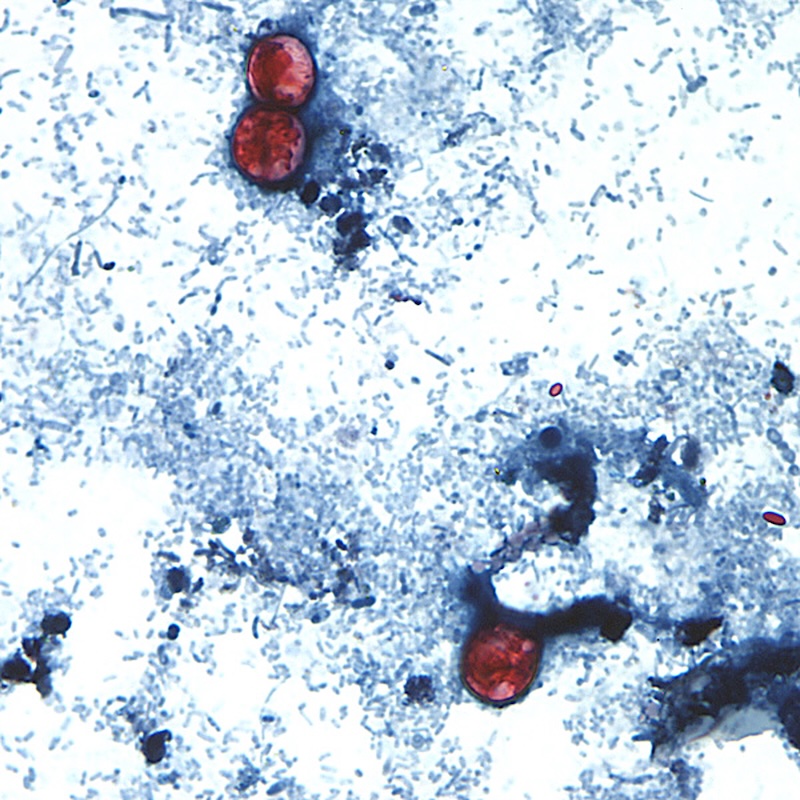
To diagnose cyclosporiasis, scientists typically examine a stool sample — sometimes multiple samples — under a microscope to see if cyclospora oocysts, the infectious stage of the parasite, are present. Some labs can also use molecular genetic testing to detect cyclospora oocysts in stool samples more accurately and quickly, but those tests aren’t available everywhere, Tuznik said.
Most people with the illness are treated with antibiotics.
How do you avoid getting cyclosporiasis?
There’s no foolproof way to avoid exposure. The causes of the current cyclosporiasis outbreaks are unknown and avoiding all fresh produce consumption is impractical. (There’s currently no evidence that a single cause is behind the cyclosporiasis outbreaks in multiple states, according to the CDC.)
“I don’t want to tell people, ‘Don’t eat fresh produce,’” Kniel said.
Sometimes cyclospora oocysts, bacteria and viruses cling to fresh produce, so washing your produce and herbs might reduce your chances of getting sick, but it won’t eliminate the risk entirely, Kniel said.
Still, Tuznik advised prioritizing good sanitation and hygiene practices around food. That means “thoroughly washing your hands prior to preparing food, and then washing all fruits and vegetables thoroughly under running water,” she said.
The best advice for avoidance is to cook your produce.
Cyclospora is inactivated when food is cooked, Kniel said.
Tuznik said consumers might consider skipping the bagged salad mixes in favor of buying a head of lettuce and preparing it themselves, removing the outer two or three layers and washing the inner leaves under running water.
For herbs like cilantro or basil, consider separating the leaves and washing them under running water, she said. For fruits like raspberries, it’s trickier — they’re very hard to thoroughly clean. Freezing the berries can help, but even that isn’t guaranteed to eliminate the parasite.
How long will it take to figure out what caused the outbreaks?
It can take weeks or even months for public health officials to identify an outbreak’s source.
It takes time for symptoms to appear and for testing to confirm someone has cyclosporiasis, and people struggle to remember everything they ate days earlier. The Trump administration has cut some public health programs that prevent and track health threats.
It’s frustrating for consumers, but scientists are waiting for certainty that they have identified the right product, Kniel said.
“We don’t want to implicate the wrong products,” Kniel said.
Try to be attentive to the sources of your fresh produce so that if you get sick you will know the potential causes, she said.
What states have reported cases amid this summer’s cyclosporiasis season?
At least 18 states have reported cyclosporiasis outbreaks so far.
From May 1 to June 16, the CDC said that 145 cases of cyclosporiasis were reported by 17 states: Alaska, Colorado, Connecticut, Florida, Georgia, Illinois, Louisiana, Massachusetts, New Jersey, New York, North Carolina, Ohio, Pennsylvania, Tennessee, Texas, Virginia and Wisconsin. In those cases, people fell ill after eating food in the U.S. They also had not reported any travel in the 14 days before they got sick, the CDC said.
As of July 6, several counties primarily in southeastern Michigan had also reported more than 670 cases of cyclosporiasis.
Some people recover without medical care or a test for the parasite, the agency said, so the number of people sick with cyclosporiasis is likely higher than reported.
PolitiFact Staff Researcher Caryn Baird contributed to this report.
RELATED: Traveling this summer? Tips on how to avoid getting sick
Our Sources
Interview with Kali Kniel, an animal and food sciences professor at the University of Delaware, July 6, 2026
Interview with Dr. Natascha Tuznik, a clinical professor in the division of infectious diseases at the University of California Davis, Sacramento, July 6, 2026
U.S. Centers for Disease Control and Prevention, Surveillance of Cyclosporiasis, July 1, 2026
Texas A&M University, Cyclospora: What Is The Parasite Infecting Some Texans, And How Does It Spread? July 11, 2023
Michigan Health and Human Services, Outbreak of cyclosporiasis occurring in Michigan, July 1, 2026
Stony Brook Medicine, What to Know About Cyclosporiasis: Symptoms, Treatment and Prevention, July 2, 2026
American Academy of Pediatrics Publications, Appendix III: Nationally Notifiable Infectious Diseases in the United, States, accessed July 2, 2026
U.S. Centers for Disease Control and Prevention, Symptoms of Cyclosporiasis, accessed July 2, 2026
U.S. Centers for Disease Control and Prevention, Preventing Cyclosporiasis, accessed July 2, 2026
University of Nevada, Reno, Parasitic: Bacterial summary of foodborne and waterborne disease characteristics, accessed July 2, 2026
Texas A&M Stories, Cyclospora: What Is The Parasite Infecting Some Texans, And How Does It Spread? July 11, 2023
ScienceDirect, Oocyst, accessed July 2, 2026
U.S. Centers for Disease Control and Prevention, Clinical Guidance for Cyclosporiasis, accessed July 2, 2026
Cleveland Clinic, Cyclosporiasis: Transmission, Symptoms & Treatment, accessed July 2, 2026
U.S. Centers for Disease Control and Prevention, About Cyclosporiasis, accessed July 2, 2026
PubMed Central, Waterborne transmission of Cryptosporidium, Cyclospora and Giardia, September-October 1997
Public Health Reports via PubMed Central, Cyclosporiasis associated with imported raspberries, Florida, 1996, September-October 1999
Food and Drug Administration, Cyclospora, accessed July 2, 2026
Ask IFAS, Preventing Foodborne Illness: Cyclosporiasis, accessed July 2, 2026
KFF Health News, New Disease Threats Follow Trump Administration’s Health Program Cuts, July 2, 2026
ABC News, Cases of parasitic infection growing in 2 states: Health officials, July 6, 2026