Michigan U.S. Senate candidate Mike Rogers “took a $14 million payout as a pharma lobbyist.”

Our only agenda is to publish the truth so you can be an informed participant in democracy.
We need your help.

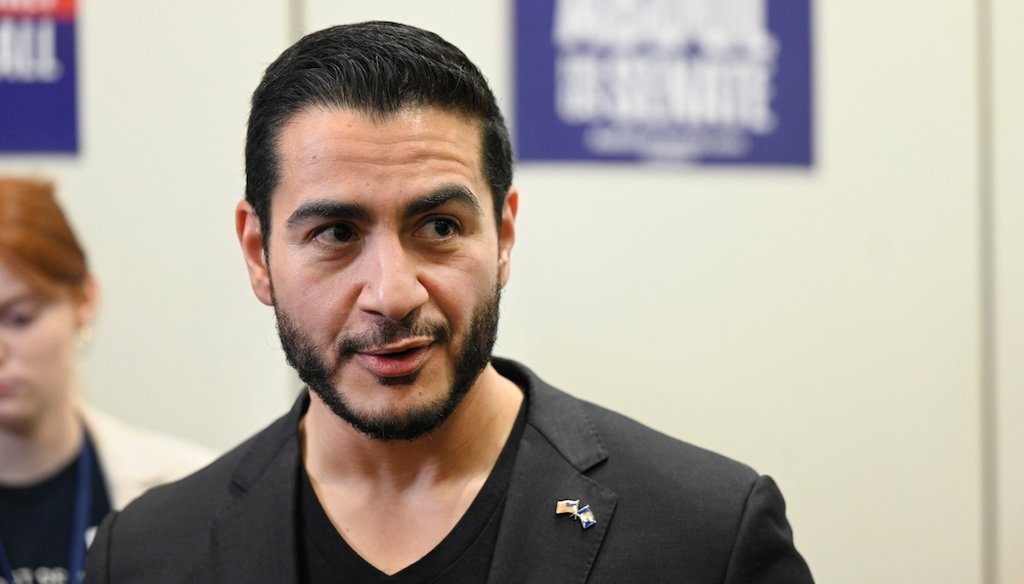
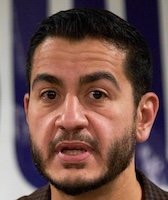
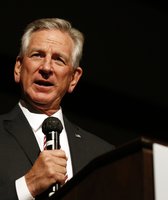
Abdul El-Sayed, a progressive candidate in the Democratic primary for U.S. Senate in Michigan, answers a question during a news conference at the Michigan Democratic Party State Endorsement Convention, April 19, 2026, in Detroit. (AP)

We found no record showing that former U.S. Rep. Mike Rogers worked for pharmaceutical companies.
He was never a registered lobbyist, and there’s no proof he received $14 million to lobby for the pharmaceutical industry.
Michigan U.S. Senate candidate Abdul El-Sayed has centered healthcare in his campaign, championing Medicare for All and critiquing his opponents, both Democratic and Republican, on the issue.
El-Sayed, a Democrat and former public health official, has accused former U.S. Rep. Mike Rogers, the sole Republican candidate in the Aug. 4 primary election, of being influenced by the pharmaceutical industry.
In multiple interviews and recent social media posts, El-Sayed said Rogers "took a $14 million payout as a pharma lobbyist."
Federal and Michigan records do not show Rogers ever working as a registered lobbyist for any company, including pharmaceuticals. We found no record that he worked in the pharmaceutical industry after leaving Congress.
Rogers did paid consulting work for technology companies after leaving Congress. His net worth may have increased by more than $14 million since then, but no single reported payment or group of payments match that amount.
Rogers’ campaign sent El-Sayed a June 22 cease and desist letter, demanding that El-Sayed stop referring to Rogers as a "pharma lobbyist" and stop claiming he received a $14 million payout from the pharmaceutical industry. The letter said El-Sayed’s statements "constitute defamation under Michigan law."
"Team Rogers put Abdul on notice for lying to Michigan voters about Mike’s background," Rogers campaign spokesperson Alyssa Brouillet said in a statement to PolitiFact.
In response to the letter, El-Sayed partially walked back the statement, saying Rogers is not a pharmaceutical lobbyist in a tongue-in-cheek social media video.
"My mistake, he just spent so much time in Congress helping the pharmaceutical industry that I thought he was a pharma lobbyist … When I say Mike Rogers, do not think of a pharma lobbyist. When I say pharma lobbyist, do not think of a Mike Rogers," El-Sayed said in the video.
When we asked El-Sayed’s campaign if he still stands by his statements that Rogers was a pharmaceutical lobbyist, the campaign pointed us to its June 22 statement responding to Rogers’ cease and desist, saying Rogers put "Big Pharma over the people he served." The statement did not say that Rogers is a pharmaceutical lobbyist.
Rogers represented Michigan in the U.S. House of Representatives from 2001 to 2015. After leaving office, Rogers worked as a consultant and served on boards for telecommunications and cybersecurity companies including AT&T, Nokia and Telefónica. He also served on nonprofit boards related to national security and was a CNN host and commentator.
Rogers’ financial disclosures from his 2024 Senate campaign and the current campaign don’t include any work for pharmaceutical companies. Consulting is distinct from lobbying, said Michael Beckel, the director of money in politics reform at Issue One, which seeks to reduce the role of money in politics.
Consultants advise clients on navigating issues, Beckel said, while lobbyists advocate for specific legislation and regulations.
"Both consulting and lobbying are part of Washington's influence industry, but consultants and strategic advisors are generally not required to register as lobbyists unless they meet the formal definition of being a lobbyist," he said.
Those rules are governed by the Lobbying Disclosure Act. To meet the federal definition of a lobbyist, people must be paid by clients, spend at least 20% of their time engaged in lobbying activities, and make at least two contacts with a covered federal official seeking to influence policy.
Rogers’ cease and desist letter said he never met those definitions under federal or Michigan law.
Rogers received a $30,000 payment from the lobbying firm CGCN Group before his 2024 Senate run, according to a financial disclosure. The firm represented more than 50 clients in 2022 and 2023, including drug companies and medical tech companies.
Rogers campaign spokesperson Alyssa Brouillet said Rogers worked for the strategic communications side of the business, not the lobbying side, and advised on telecommunications issues. It’s not uncommon for lobbying firms to employ people who aren’t lobbyists, Beckel said, though they may still work to influence government decisions.
"Accusing someone of earning a particular amount of money for paid lobbying work is a very specific criticism," Beckel said.
El-Sayed’s more recent statements have focused on contributions Rogers received while in office from pharmaceutical political action committees. Donations to a candidate’s campaign aren’t the same as lobbying, and they’re not personal payments to the candidate.
Political action committees tied to the pharmaceutical industry donated tens of thousands of dollars to Rogers’ campaign each cycle from 2004 to 2014, according to OpenSecrets. It was the No. 1 industry donor in PAC contributions in 2008 and 2014. In his current Senate campaign, Rogers has received $2,000 from pharmaceutical company PACs.
Although Rogers became significantly more wealthy after leaving office in 2015, El-Sayed’s narrative is a major misrepresentation of the financial picture.
When Rogers left office in 2015, he had non-property assets between $415,600 and $605,600, according to his financial disclosure. Business Insider estimated his net worth at between $800,000 and $1.7 million when combining his property values and liabilities. Rogers’ 2025 financial disclosure reported assets held by him and his wife valued between $6.7 million and $13.5 million and no debt. Combined with assessed property values of his homes in Michigan, Virginia and Florida, his net worth is estimated between $10.1 million and $16.9 million.
We don’t know every payment he received for the last 10 years, but his recent financial disclosures cover income between 2022 and 2025. The 2023 report includes more than $1 million in payments for corporate advising and consulting. Some of those positions he’s held since shortly after leaving Congress, and any payments before 2022 aren’t included in the disclosures. Investment and property value growth also account for part of the increase over the last decade.
Rogers also owns homes that aren’t included in those financial reports. A 2024 research memo from the Democratic group Defend the Senate said Rogers owned homes in Michigan, Virginia and Florida, with assessed values totaling $3.2 million, according to property records. In 2015, Rogers owned the Virginia home and a home in Maryland, worth a combined $1.8 million.
Taking the investments and property together, it’s plausible that Rogers’ net worth has increased by more than $14 million since he left office. The growth between the mid-point estimates is around $12.3 million. But that does not prove a specific "payout" for lobbying for pharmaceutical companies.
El-Sayed said Rogers "took a $14 million payout as a pharma lobbyist."
The statement mislabels Rogers’ post-Congress consulting as lobbying and offers a mangled interpretation of his net-worth growth, all while inserting a pharma connection that doesn’t exist.
Rogers never worked as a lobbyist and we found no record he ever advised or worked for pharmaceutical companies after leaving Congress. His wealth has increased substantially since leaving office, but not tied to any payment from pharmaceutical companies.
El-Sayed offered no evidence to support the statement.
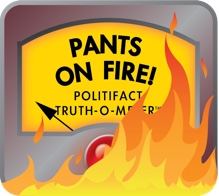
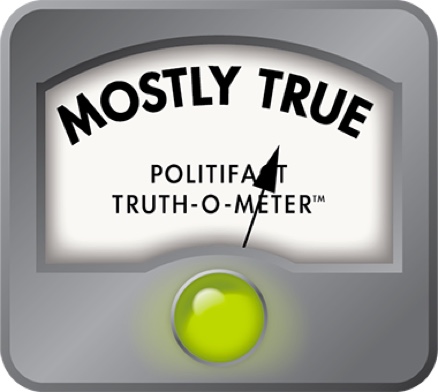
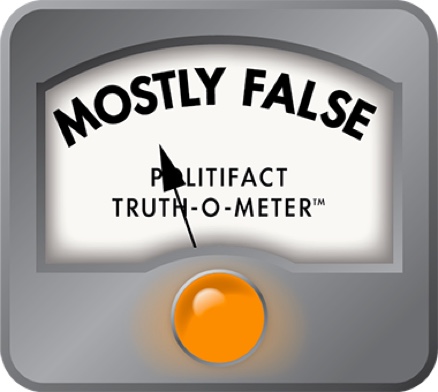
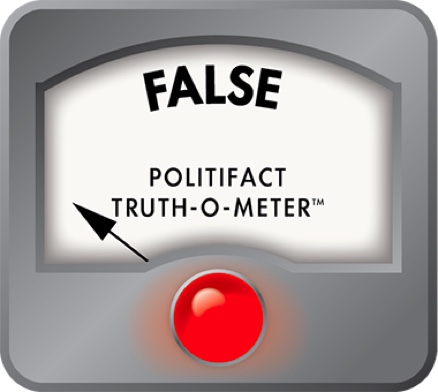
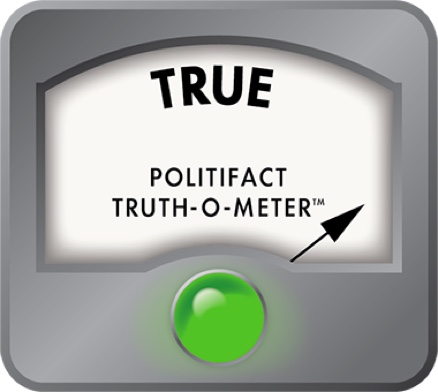
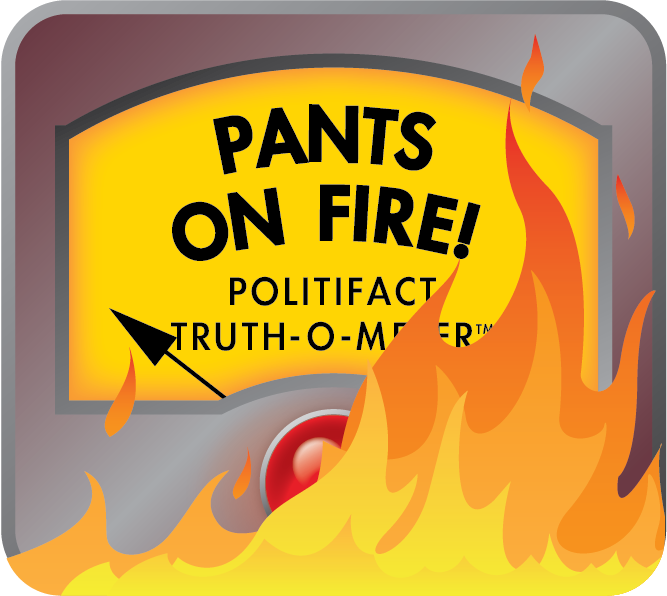
We rate the statement Pants on Fire!
Email exchange with Sophie Pollock, spokesperson for the Abdul El-Sayed campaign, June 30, 2026
Email exchange with Alyssa Brouillet, spokesperson for the Mike Rogers campaign, June 29, 2026
Email interview with Michael Beckel, director of money in politics reform at Issue One, June 30, 2026
Scott MacFarlane Reports, GOP Senators TURN ON TRUMP Over Secret Iran Deal, June 16, 2026
Abdul El-Sayed, X post, June 14, 2026
Lex Politica, Demand to Abdul El-Sayed, June 22, 2026
Abdul El-Sayed, Instagram reel, June 22, 2026
OpenSecrets, Lobbying Data Summary, accessed June 30, 2026
Michigan Secretary of State, Lobby Search, accessed July 1, 2026
Abdul for U.S. Senate, Rogers Threatens Legal Action Against El-Sayed to Hide His Record of Putting Big Pharma Above Michiganders, June 22, 2026
United States Senate, Electronic Financial Disclosure Search, accessed June 29, 2026
Business Insider, 9 years through the revolving door: How the GOP's top Senate recruit in Michigan got rich after leaving Congress, Feb. 12, 2024
CNN, Profile - Mike Rogers - Host, 'Declassified' & CNN National Security Commentator, accessed July 1, 2026
Venable LLP, Federal Lobbying Disclosure Act Overview, March 2025
OpenSecrets, Mike Rogers, accessed July 1, 2026
Defend the Senate, Michigan research document on Mike Rogers, accessed June 29, 2026









In a world of wild talk and fake news, help us stand up for the facts.