Stand up for the facts!
Our only agenda is to publish the truth so you can be an informed participant in democracy.
We need your help.
I would like to contribute


Passengers and crew at the hantavirus-stricken cruise ship MV Hondius after arriving at the port of Granadilla in Tenerife, Canary Islands, Spain, Sunday, May 10, 2026. (AP)

If Your Time is short
-
U.S. cases of hantavirus are rare, and generally don't transmit person to person.
-
Hantavirus does not easily mutate and spread like COVID-19 and flu viruses do, making it easier for public health officials to contain. There’s also no evidence that asymptomatic people infected by the virus can spread it.
-
U.S. passengers who were exposed on the MV Hondius cruise ship are in isolation at medical facilities in Nebraska and Georgia. Public health officials said the passengers who traveled back to the U.S. before the outbreak was identified did not have symptoms.
Is news of a hantavirus cruise ship outbreak giving you COVID-19 flashbacks? You aren’t alone. It’s hard not to think back to early 2020, when a few cases around the world quickly snowballed into a global pandemic.
But infectious disease experts say the hantavirus outbreak first confirmed on the MV Hondius cruise ship in May is much different than what the world experienced with coronavirus. Although hantavirus’ mortality rate is quite high — close to 40% for some strains — there is not evidence it easily spreads or mutates, making it more likely that the public health response can keep pace to reduce further spread.
Here are some facts that may quiet your concerns.
Hantavirus is largely spread among rodents, not humans.
Hantavirus typically spreads among rodents like rats and mice. Certain strains can infect humans who inhale aerosolized rodent feces and urine particles.
But not all mice carry the virus. The common house mouse, for example, does not. Deer mice are responsible for the rare cases of U.S. hantavirus — less than 900 from 1993 to 2023, almost all in the Western states.
Rodent-to-human transmission is possible with several strains, but scientists have only documented person-to-person transmission with one, the Andes strain. It was behind two outbreaks in 1996 and 2018 in Argentina, in addition to the current outbreak.
Although epidemiologists are still investigating the origins of the cruise ship’s outbreak, the World Health Organization said a passenger aboard the ship likely acquired it while visiting the country prior to boarding.

In this file photo from Oct. 3, 2007, Charlotte Demers of the State University of New York College of Environmental Science and Forestry releases a deer mouse from a trap at the Adirondack Ecological Center in Newcomb, New York. (AP)
Hantavirus doesn’t easily spread among people
Unlike COVID-19 or influenza, hantavirus doesn’t spread easily among people. "In those reports of human-to-human spread that we have, it's usually prolonged, close or even intimate contact that allows transmission," said Dr. Emily Abdoler, a University of Michigan Medical School clinical medicine professor.
Out of around 150 passengers aboard the MV Hondius cruise ship, "only a handful of people have become sick so far," said Dr. William Schaffner, an infectious disease doctor at Vanderbilt University Medical Center. "That's an indication that this is not a widely contagious virus."
Part of why this virus doesn’t spread easily has to do with how it replicates in the body.
Whereas COVID-19 and flu viruses replicate in the lungs and can reach very high concentrations in respiratory secretions, making them easy to pass along, hantavirus "principally resides in the blood vessels," said Dr. Ronald G. Nahass, president of the Infectious Diseases Society of America.
"It's hard to transmit viruses that are in the blood as opposed to in the lung," Nahass said.
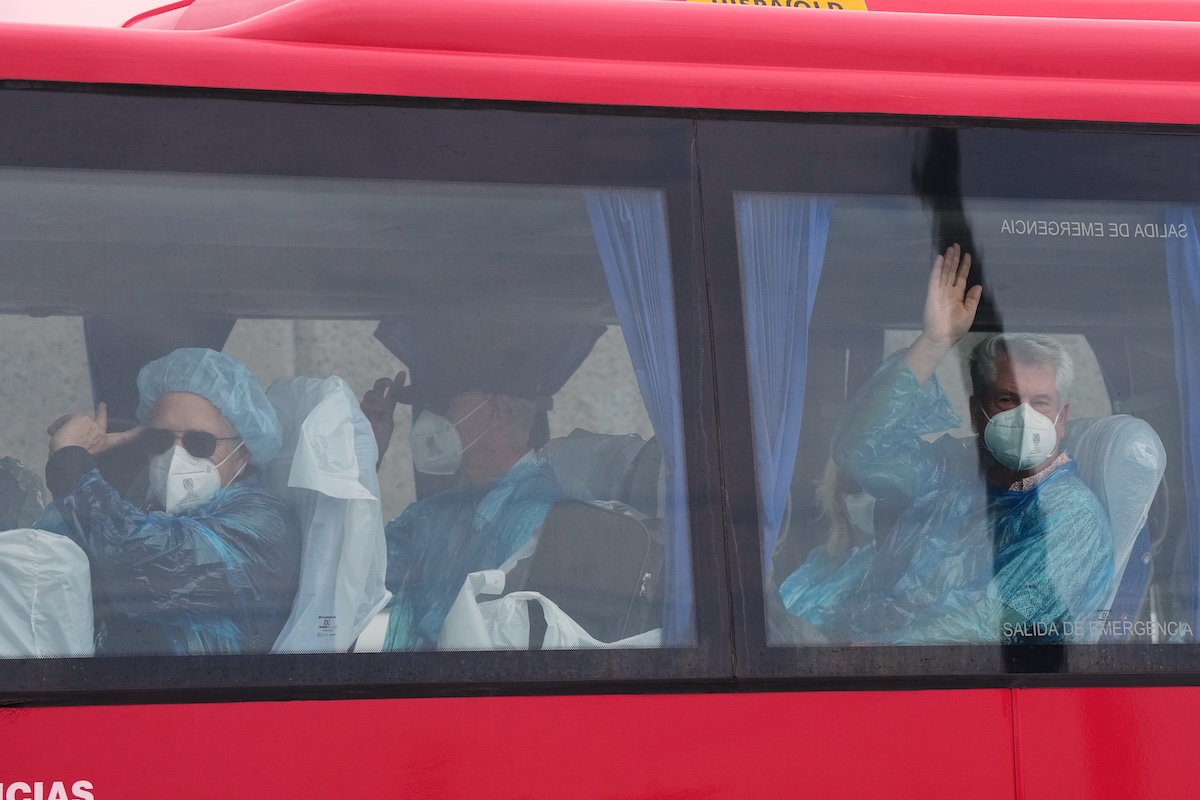
Passengers wave inside a bus after being disembarked from the hantavirus-stricken cruise ship MV Hondius at the port of Granadilla in Tenerife, Canary Islands, Spain, Sunday, May 10, 2026. (AP)
COVID-19 is infamous for its asymptomatic transmission. Andes hantavirus strain shows no signs of that
Part of why COVID-19 was so hard to contain was that people were contagious even when they showed no symptoms.
Although it is possible there is some asymptomatic hantavirus spread that researchers haven’t yet detected, evidence so far shows the virus transmits only when people are actively symptomatic.
That’s especially reassuring considering the seven U.S. passengers who got off the boat and flew home before the outbreak was flagged showed no symptoms during their travels, according to Dr. Jay Battacharya, acting director of the Centers for Disease Control and Prevention.
"They traveled when they weren't sick, they're currently not sick," Nahass said. "So the likelihood that they in their travels exposed and infected individuals would seem exceedingly small."
The lack of asymptomatic spread also makes an outbreak easier to contain. "It cannot circulate kind of in a subterranean mode in a community, going from one person to another, as COVID can," Schaffner said.
Hantavirus doesn’t mutate easily, research shows
All viruses have the ability to mutate, but there is some reassuring evidence that the hantavirus is relatively stable.
Researchers compared the genetic sequences of the Andes strain in the two Argentina outbreaks — that occurred 22 years apart — and found no significant mutations, Nahass said. "That's pretty extraordinary from the perspective of viral dynamics or viral biology."
Flu and COVID-19, meanwhile, are prone to mutation, keeping immunologists on their toes and requiring patients to get updated vaccines at least every year.
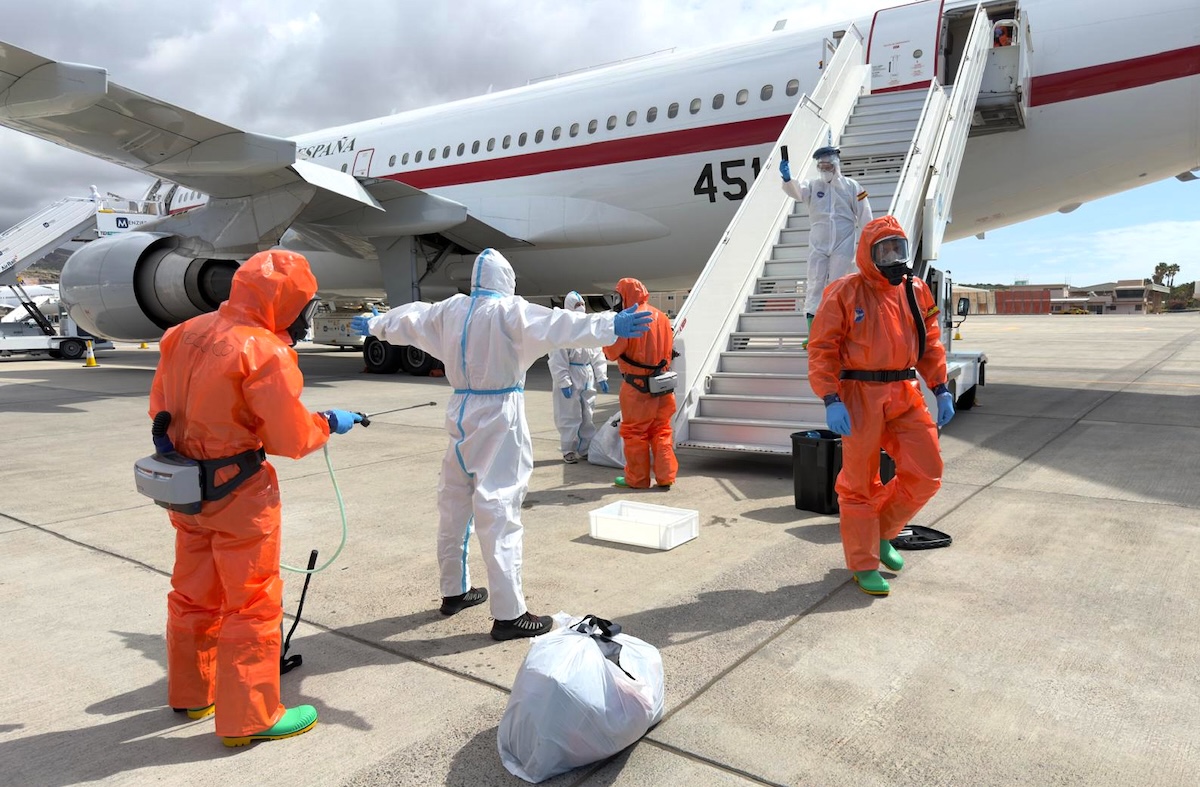
A Spanish passenger is sprayed with disinfectant by Spanish government officials before boarding a plane after disembarking from the hantavirus-stricken cruise ship MV Hondius at Tenerife airport in the Canary Islands, Spain, Sunday, May 10, 2026. (AP)
Exposed passengers are currently in isolation at medical facilities
On May 11, U.S. public health officials transported and isolated 18 affected American passengers who may have been exposed aboard the ship.
Two are being treated at Emory University Hospital in Atlanta, and the remaining 16 are at the National Quarantine Unit at the University of Nebraska Medical Center in Omaha. One patient in Atlanta is experiencing symptoms, and one patient in Nebraska has tested positive but is not experiencing symptoms, health officials said.
Passengers who are asymptomatic and have not tested positive will remain under medical supervision for a few days, but then will have the option of staying at the hospital or self-isolating at home.
"These are well designed facilities staffed by exceedingly well-trained people," Schaffner said. "Both facilities have a strong history in having cared for people with exotic infections such as Ebola."
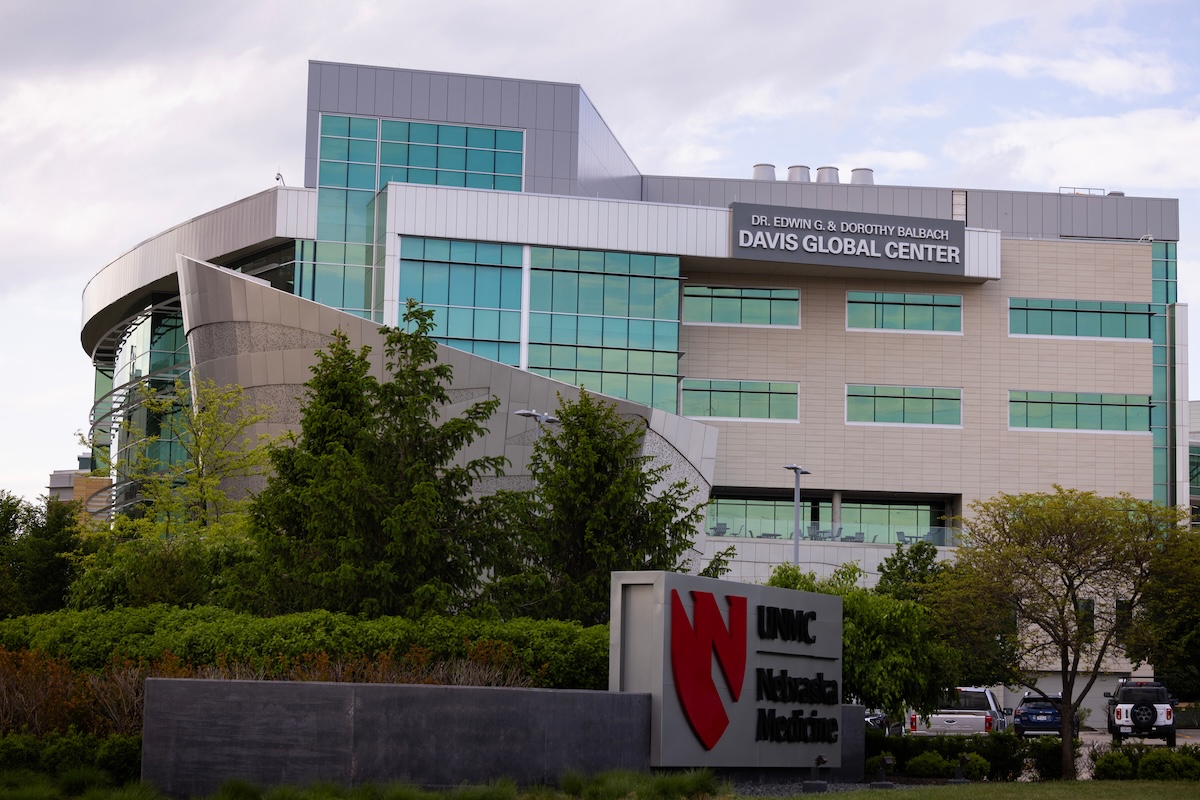
Nebraska Medicine's Davis Global Center is seen on Sunday, May 10, 2026, in Omaha, Nebraska, where American passengers from the hantavirus-stricken cruise ship are quarantining. (AP)
If you’re still worried
Experts advise closing your web browser, checking in with a trusted news source once a day and engaging with other people, but not about the virus.
Even armed with facts, it can be hard to ward off the anxiety of another global health episode like the COVID-19 pandemic.
"I think being this close to a pandemic of the proportion with COVID and the ways that it changed life makes it very hard to see these new things emerge and be logical," Abdoler said.
Nahass said he had "almost a PTSD-like response" when he first heard the story about a cruise ship and a respiratory virus. But he was relieved when he learned it was a hantavirus.
RELATED: For hantavirus infections, doctors provide supportive care. Evidence doesn’t support ivermectin use
RELATED: What is hantavirus? What we know about the fatal cruise ship outbreak
Our Sources
Interview with Dr. Emily Abdoler, a University of Michigan Medical School clinical medicine professor, May 12, 2026
Interview with Dr. Ronald G. Nahass, president of the Infectious Disease Society of America.
Interview with Dr. William Schaffner, an infectious disease doctor at Vanderbilt University Medical Center, May 11, 2026
The New York Times, U.S. Passengers Exposed to Hantavirus Begin Quarantine, Including One With Positive Test, May 10, 2026
The New York Times, Where Are the Passengers of the Hantavirus-Hit Cruise Ship Now?, May 11, 2026
Time, How to Manage Your Health Anxiety About Hantavirus, May 8, 2026
Michigan Medicine, Hantavirus: Do we need to worry about this rare infection?, May 8, 2026
Centers for Disease Control and Prevention, Andes Virus Outbreak on a Cruise Ship: Current Situation, May 8, 2026
C-SPAN, WHO Official on Hantavirus Outbreak: "This is Not Coronavirus", May 7, 2026
World Health Organization, Hantavirus cluster linked to cruise ship travel, Multi-country, May 8, 2026
PolitiFact, What is hantavirus? What we know about the fatal cruise ship outbreak, May 4, 2026
Centers for Disease Control and Prevention, Reported Cases of Hantavirus Disease, April 23, 2026
The Guardian, Argentina in spotlight over hantavirus as authorities retrace footsteps of ship’s passengers, May 10, 2026
Virological, Complete sequence of Orthohantavirus andesense virus: Swiss resident 2026, May 8, 2026
PolitiFact, For hantavirus infections, doctors provide supportive care. Evidence doesn’t support ivermectin use, May 11, 2026
NPR, Is hantavirus the next COVID? Is the U.S. response on point? An outbreak update, May 7, 2026
University of Nebraska Medical Center, 16 U.S. citizens safely repatriated to UNMC, Nebraska Medicine, May 11, 2026
University of Nebraska Medical Center, Second News Conference after arrival 5 11 26, May 11, 2026
Forbes Breaking News, BREAKING: Acting CDC Director Bhattacharya Speaks With CNN After Hantavirus Outbreak On Cruise Ship, May 10, 2026
NBC News, Hantavirus cases rise to 11 as cruise ship passengers quarantine, May 12, 2026
NBC News, American passengers from hantavirus-hit cruise ship arrive back in the U.S., May 11, 2026
New England Journal of Medicine, "Super-Spreaders" and Person-to-Person Transmission of Andes Virus in Argentina, Dec. 2, 2020
Centers for Disease Control and Prevention, About Hantavirus, May 13, 2024
CNN, All passengers evacuated from hantavirus-hit cruise ship, May 12, 2026
YouTube, Emory, federal officials hold press conference on hantavirus outbreak, May 11, 2026
YouTube, "Media briefing on #hantavirus hosted by Dr Tedros," May 7, 2026
Antiviral Research, Treatment of hantavirus pulmonary syndrome, Jan. 24, 2010
Browse the Truth-O-Meter
More by Grace Abels