What are kratom’s uses and risks and how are states regulating it?

If your time is short
- Traditionally extracted from tree leaves, kratom has become increasingly available for purchase in U.S. gas stations, convenience stores and online. It has both stimulant and opiate-like properties, depending on how much someone takes.
- People report using kratom to manage chronic pain, anxiety or opioid withdrawal. Toxicology and addiction experts say its safety and effectiveness for these purposes isn’t proven.
- Kratom can be addictive and too much can cause an overdose or liver toxicity. Experts are especially concerned about the harms of certain highly concentrated kratom products.
Is it an energy boost that helps people power through the day? A way to ease opioid withdrawal symptoms? Or a dangerous drug?
When it comes to kratom, it depends on who you ask.
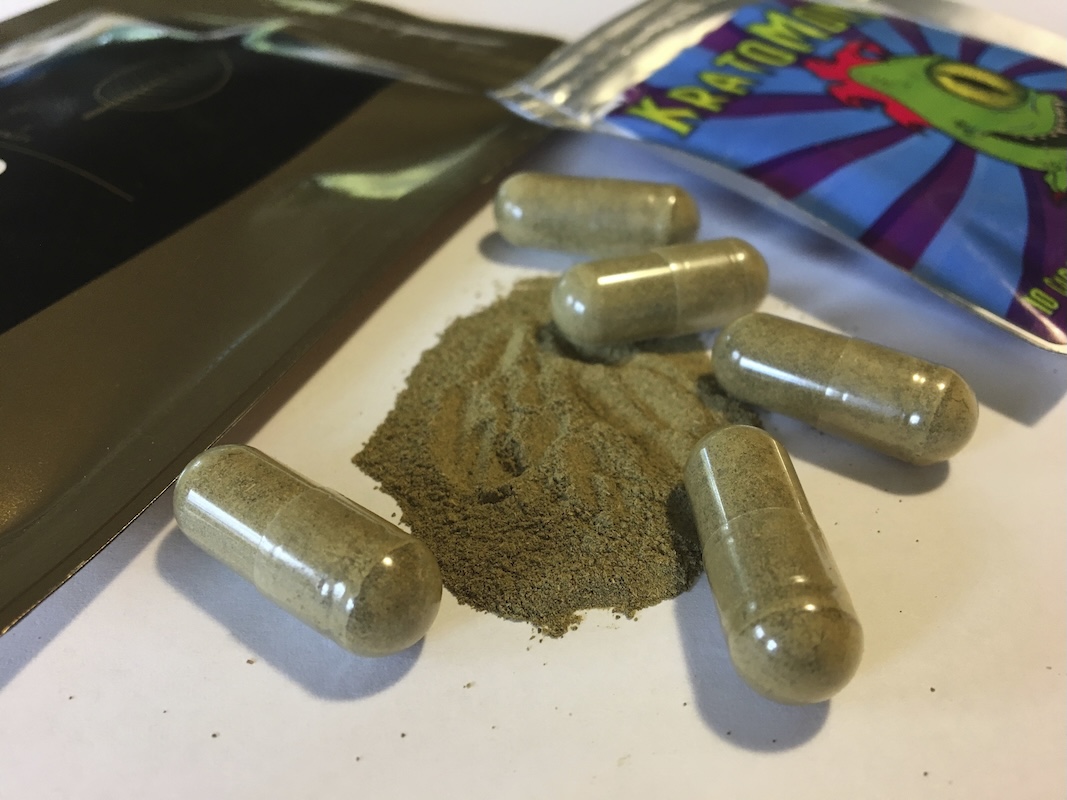
Kratom is a tree native to Southeast Asia and its leaves are used to make an herbal extract or supplement with the same name. It is sold in the form of teas, tonics, capsules and tablets.
Kratom has multiple active ingredients. In small amounts, it can be a stimulant; in larger amounts, it acts as an opioid-like sedative. Public health officials have raised concerns and warned consumers against its use — particularly when it comes to the more highly concentrated versions of kratom’s active ingredient.
In many states, it’s readily available for purchase with few warnings.
“Many consumers assume that because a product is sold in a gas station, vape shop, or convenience store and labeled as ‘natural,’ it must be safe or well regulated,” said Ashley Yaugher, a Utah State University health and wellness professor.
In reality, kratom products vary widely and some newer products contain concentrated compounds with significantly stronger opioid-like effects than other kratom preparations, she said.
Here’s what experts wish consumers understood about kratom.
What are kratom’s effects?
For centuries in Southeast Asia, kratom was a home remedy for pain and a pick-me-up for field laborers working long days in harsh conditions. Workers would chew kratom leaves or buy beverages made with kratom leaves the way people in the U.S. buy a cup of coffee.
Dr. Peter Grinspoon, an addiction specialist at Massachusetts General Hospital, said chronic pain and opioid addiction management are the most common kratom uses, but it is also marketed for its stimulant properties.
Yet, there isn’t much evidence showing its safety and effectiveness for these purposes, Yaugher said.
It’s hard to conduct rigorous scientific studies on kratom because there are different types of kratom, no quality control and no standard dose, Grinspoon said.
“Virtually all the evidence is anecdotal,” he said, rather than the clinical trials physicians and agencies such as the Food and Drug Administration would want to see.
What is 7-OH?
7-OH or 7-hydroxymitragynine is one of the kratom plant’s main psychoactive ingredients along with mitragynine. It exists naturally in kratom at low levels and has opioid-like properties.
More and more often, however, gas stations, smoke and vape shops and online retailers are selling more potent, lab-made 7-OH as highly concentrated stand-alone products: powders, tablets, energy shots, gummy candies and even “taffy” chews.
“They take the most powerful active ingredient that triggers the opiate receptors most directly and they just put that into a pill,” Grinspoon said. “That’s actually a really strong opioid.”
At Massachusetts General Hospital’s addiction clinic, Grinspoon said he has recently seen more and more patients who are addicted to 7-OH products and experiencing “vicious” withdrawal symptoms.
What are kratom’s risks?
The FDA’s warning against using kratom notes that it can cause liver toxicity, seizures and substance use disorder. Generally, the kratom products on the market aren’t sold as medications or supplements, so they don’t fall under the FDA’s rules for those products. The kratom and 7-OH products in gas stations and online that aren’t marketed as medications are supplements fall into a legal gray area.
People who use highly concentrated kratom and 7-OH products increase their chances of developing substance use disorders.
Similar to other opioids, kratom’s risks include the general impairment that comes with being high.
“If you just take a little bit of the plant-based kratom from five years ago, you probably wouldn’t be that impaired,” Grinspoon said. But if you took a larger amount or a smaller amount of the newer, concentrated 7-OH, “You’re out of it — you’re really high,” he said.
Overdosing is another risk, although kratom overdoses are reported less frequently than overdoses involving other opioids.
Opioids such as fentanyl and oxycodone directly suppress the respiratory center of your brain and overdoses kill people by stopping their breathing, Grinspoon said. Kratom doesn’t directly target the respiratory system as much.
7-OH products are “more potent than morphine,” and have a higher risk of overdose, said Dr. Michael Moss, a medical toxicologist and the Utah Poison Control Center’s medical director.
If needed, naloxone, or narcan, works to reverse certain symptoms of kratom and 7-OH overdose.
Rarely, medical examiners and toxicology reports have linked kratom to deaths, but kratom is usually not the only substance found in someone’s system when they die.
“You take fentanyl, you take kratom, you take valium — maybe together, it helped kill you,” Grinspoon said. “Kratom was probably contributing.”
These risks are all exacerbated by the fact that consumers don’t always know what they’re getting when they buy kratom at the corner gas station.
In many places, there are no rules or regulations requiring testing or clear labeling of kratom products, so it’s impossible to know the actual ingredients or concentrations.
Where is kratom legal and illegal?
Some states have banned kratom or otherwise restricted access in recent years, but federal law hasn’t labeled it a controlled substance.
The FDA has at times recalled kratom products for potential contamination. The agency has also sent warning letters to companies for illegal and deceptive marketing claims about kratom and 7-OH products.
On July 1, the Drug Enforcement Administration said it plans to temporarily classify certain 7-OH products and three related substances as Schedule I drugs — the strictest category used for drugs including heroin, ecstasy and LSD. It would mean manufacturing, selling and possessing 7-OH products and would be subject to federal criminal and civil penalties across the country. This could happen as soon as Aug. 5 and the notice in the Federal Register says it will remain in effect for at least two years.
The rules look different from state to state.
In Alabama, Arkansas, Connecticut, Indiana, Louisiana, Tennessee, Vermont and Wisconsin, kratom and its ingredients mitragynine and 7-OH are essentially banned. California hasn’t passed a specific law targeting kratom, but state officials have argued it’s illegal to sell foods and drinks containing unsafe food additives such as kratom.
Additionally, as of January, 23 states and Washington, D.C., regulated in some way the possession, sale and manufacture of kratom products.
Some states “adopted consumer protection laws that regulate manufacturing, labeling, purity, age restrictions and allowable concentrations of certain compounds,” Yaugher said.
Florida and Ohio, for example, made only 7-OH a Schedule I drug while leaving mitragynine, another psychoactive ingredient in kratom, unscheduled. Meanwhile, some states opted to limit the concentration of 7-OH in kratom products or ban the sale of all synthetic 7-OH. Seven states restrict sales of kratom products to people aged 18 and older, while 15 other states restrict sales to people aged 21 and older.
Websites selling the products sometimes include a pop-up question asking if the user is age 21 or older.
But buying super potent 7-OH products online is easier than ever, so it’s unclear whether piecemeal bans or age restrictions will be effective.
PolitiFact Staff Researcher Caryn Baird contributed to this report.
RELATED: Do you need that vitamin? Review this checklist first
RELATED: The US government didn’t legalize marijuana: 4 cannabis misconceptions explained
Our Sources
Interview with Dr. Peter Grinspoon, an addiction specialist at Massachusetts General Hospital, July 9, 2026
Interview with Dr. Michael Moss, a medical toxicologist and the medical director of the Utah Poison Control Center, July 9, 2026
Email interview with Ashley Yaugher, a health and wellness professional practice professor at Utah State University, July 8, 2026
Mayo Clinic, Kratom: Unsafe and ineffective, June 18, 2024
Harvard Health Publishing, Kratom: Fear-worthy foliage or beneficial botanical? Sept. 9, 2024
AskIFAS, ENH1389/EP653: Kratom: Botanical Insights and Cultivation Practices for a Conspicuous Medicinal Tree Species, July 11, 2025
University of Washington, Kratom & 7-OH: What do we know about use, safety, and overdose risk? August 2025
American Psychiatric Association, What is Kratom and Why is It Raising Concerns?, Oct. 22, 2025
Yale Medicine, Kratom: What Is It and Is It Safe? June 17, 2026
Frontiers in Pharmacology, Understanding Kratom Use: A Guide for Healthcare Providers, March 1, 2022
Drug Enforcement Administration, Drug Fact Sheet: Kratom, April 2020
University of Utah Health, Kratom: What You Need to Know About This “Natural” Opioid, Nov. 3, 2025
Michigan Medicine, Life-destroying addiction can start at a corner store, Feb. 12, 2026
Michigan Medicine, 7-OH, kratom and the emerging public health crisis for sale across the country, June 5, 2026
Upstate Medical University, Kratom: an addictive, unregulated and widely available opioid | The Informed Patient Podcast, July 2, 2026
Reuters, DEA moves to place some strong kratom-related products under strict federal drug controls, July 1, 2026
Drug Enforcement Administration, DEA to Temporarily Schedule 7-OH and Related Substances to Protect Public Safety, July 1, 2026
VCU Health, Is kratom safe? Rising health concerns explained, Nov. 14, 2025
The New York Times, How an Addictive Gas Station Drug Found Allies in Trump’s Cabinet, June 15, 2026
The Washington Post, They take kratom to ease pain or anxiety. Sometimes, death follows, Feb. 20, 2024
Food and Drug Administration, FDA Orders Mandatory Recall for Kratom Products Due to Risk of Salmonella, April 16, 2018
Food and Drug Administration, FDA Issues Warning Letters to Firms Marketing Products Containing 7-Hydroxymitragynine, July 15, 2025
Reuters, FDA issues warning letters to companies selling kratom products, May 22, 2018
NBC Connecticut, Kratom is officially banned from stores in Connecticut. Here’s what to know, March 25, 2026
WTVF, Tennessee addiction centers prepare for influx of kratom users ahead of the July 1 statewide ban, June 23, 2026
Mayo Clinic, Kratom for opioid withdrawal: Does it work? Dec. 30, 2023
Federal Register, Schedules of Controlled Substance: Temporary Placement of 7-Hydroxymitragynine Above a Specified Threshold in Schedule I, July 6, 2026
PBS NewsHour’s Instagram post, accessed July 10, 2026
San Francisco Chronicle, California declared kratom illegal, so why is it still available?, June 26, 2026
Science and Technology Law Review, Chemical Complications: Kratom’s Regulatory Gaps, Feb. 1, 2026
Legislative Analysis And Public Policy Association, Kratom: Summary of State Laws, January 2026
Centers for Disease Control and Prevention, Increases in Kratom-Related Reports to Poison Centers — National Poison Data System, United States, 2015–2025, March 26, 2026
Food and Drug Administration, Products Containing 7-OH Can Cause Serious Harm, July 29, 2025