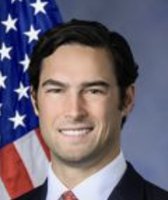

Jay Collins sponsored a bill to give AI hyperscale data centers “permanent tax incentives.”


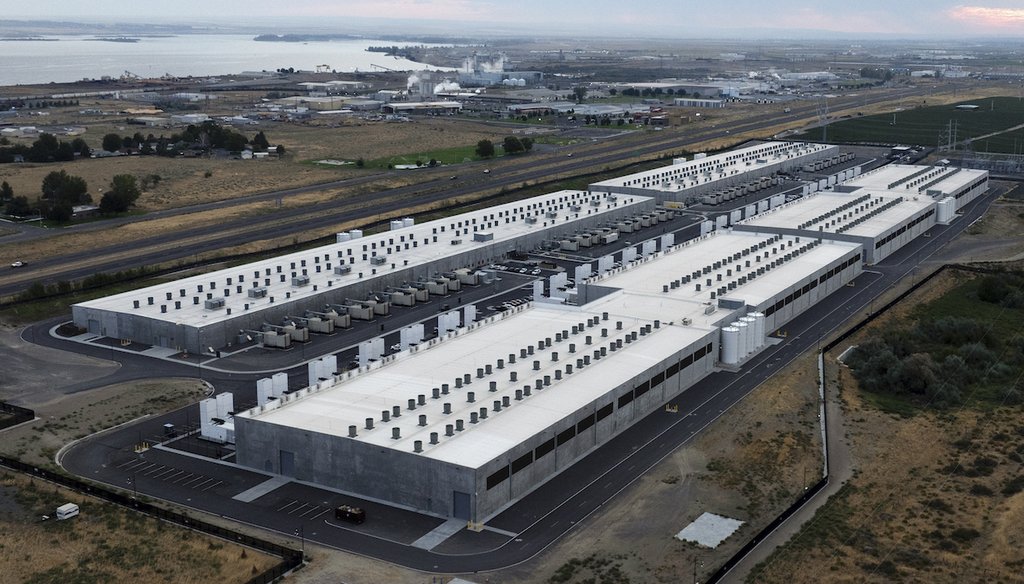
An Amazon Web Services' hyperscale data center is seen on Aug. 22, 2024, in Boardman, Ore. (AP)

As a state senator in 2025, Republican Jay Collins sponsored a bill that sought to indefinitely extend a June 2027 deadline for eligible data centers to apply for temporary tax exemptions. The bill died in committee.
The legislation didn’t seek to change how long data centers could use the incentive.
It did, however, open up an avenue that would allow more companies to eventually seek permanent tax breaks through a process already allowed under state law.
When most of Florida’s Republican gubernatorial candidates gathered in Fortt. Lauderdale recently to debate, they spent a good bit of time discussing the governor’s role in regulating AI data centers — at least, when they weren’t throwing barbs at the one candidate who didn’t show.
The July 2 debate, hosted by conservative podcast host and entrepreneur Patrick Bet-David, brought together Florida Lt. Gov. Jay Collins, former House Speaker Paul Renner and investor James Fishback to make their cases to Florida voters. GOP gubernatorial frontrunner Rep. Byron Donalds declined to debate.
At one point, Renner and Fishback both took aim at Collins, criticizing what they said was his past support for artificial intelligence industry development in the state.
"You’ve said that it’s not possible for the state to regulate hyperscale data centers at the state level. Why do you believe that it is?" Renner asked Collins during the debate. "If you believe that the state shouldn’t be involved, why did you sponsor a bill to give them permanent tax incentives at the expense of everybody watching tonight?"
The typical industry definition of a hyperscale center is one that requires 100 megawatts, whereas a 2026 Florida law defines "large-scale data centers" as 50 megawatts.
Collins responded that Renner was misrepresenting the bill but didn’t explain how.
Although during the debate Collins disagreed with his rivals about banning or instituting moratoriums on hyperscale data center projects, he has campaigned for data center regulations.
We wondered: Is Renner right that Collins sponsored a bill that sought to give these centers permanent tax breaks?
Not exactly.
Before Florida Gov. Ron DeSantis appointed him lieutenant governor, Collins was the 2025 state Senate sponsor of Florida Senate Bill 1264, a broad, 174-page bill that sought to change business infrastructure and employment rules.
The legislation would have indefinitely extended an existing June 2027 deadline for eligible data centers to apply for certain tax exemptions. But it didn’t automatically make those incentives permanent, policy experts said. It also had no effect on existing facilities’ tax breaks.
For years in Florida, certain data centers requiring 15 megawatts of power capacity or more have been able to get sales and use tax exemptions on their construction, materials and technology. (For reference, a 15-megawatt data center typically draws enough electricity to power around 12,000 to 15,000 homes.)
That offer was due to expire in June 2027, but Collins’ bill attempted to extend it indefinitely for new data centers moving into the state.
Avery Bernstein, a research analyst at the Florida Policy Project founded by former Republican state Sen. Jeff Brandes, said the existing exemption is temporary under Florida law but data centers can apply to make their tax breaks permanent later if they meet certain requirements.
"Once a facility receives a tax exemption certificate, the existing statute states it is temporary for up to five years" after construction starts, Bernstein said. The incentive becomes permanent if the facility has $150 million in cumulative capital investment and at least a 15 megawatt load.
The permanent tax exemption certificate is then up for review every five years to confirm the data center still meets the requirements, he said. Collins’ bill didn’t try to alter the length of the tax exemption certificates.
"The only change that Collins' bill would have made to the existing statute was the single line to delete the 2027 deadline," Bernstein said.
Collins’ bill died in committee, but when he pushed for its passage, he described data centers as a vital economic investment for Florida.
During a March 31, 2025, committee meeting, Collins said the exemption "entices significant investment in job creation to communities, both directly through the data centers and indirectly through customers they serve, by removing the sunset provision for the tax exemption."
Asked during the meeting about the exemptions’ effectiveness and how many data center projects had been built with the incentive, Collins turned to why he was seeking to remove the sunset, saying Florida needed to remain competitive for data center investment.
A "ton of organizations" were looking to invest in the state, he said, and operators "want to make sure the landscape isn’t going to get ripped out from underneath them."
"If they are going to invest capital and resources into our state we need to make sure it's a stable environment," he said.
In another committee meeting a few weeks later, Collins described his bill as extending availability of the data center exemptions "indefinitely."
"Hyperscale data centers are incredibly large and take a lot of time to reposition to make sure they have the market demographics before they land," Collins said. "It allows them time to go ahead and pick our areas in the state."
PolitiFact asked Collins’ campaign about Renner’s comments but did not hear back.
The data center tax break originated in legislation Florida lawmakers passed in 2017, when hyperscale AI data centers were still part of an emerging industry and lacked the political baggage they have today.
But state lawmakers still passed a companion bill to Collins’ in June 2025, extending the tax exemption through June 2037, and increasing the size threshold for eligible facilities so that only hyperscale data centers of at least 100 megawatts or higher would qualify. (Collins didn’t vote on it).
DeSantis, who has repeatedly called for strict regulation of AI data centers, signed the bill into law on June 30, 2025. (He also signed a data center consumer protection law in May.)
Renner said Collins sponsored a bill to give AI hyperscale data centers "permanent tax incentives."
Collins’ 2025 bill sought to indefinitely extend a June 2027 deadline for eligible data centers to apply for temporary tax exemptions.
The legislation didn’t try to change how long data centers could benefit from the incentive. Under state law, facilities granted the temporary exemption could later apply to make it permanent if they met certain requirements.
Hyperscale AI data centers benefit from the tax incentive, but Collins’ bill was a large legislative package that wasn’t exclusive to data centers and included several unrelated provisions.
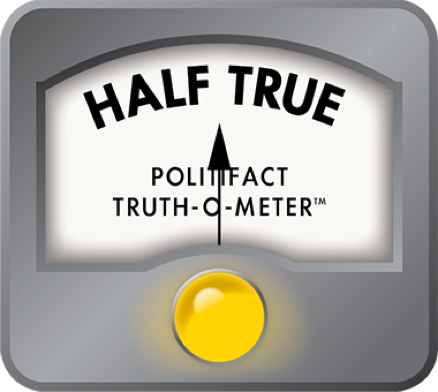
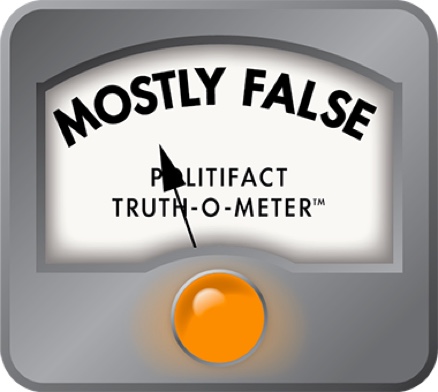
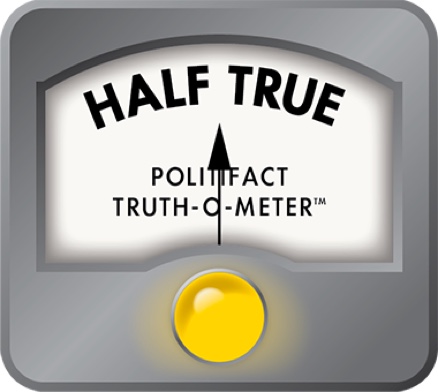
Renner’s statement is partially accurate: Collins’ bill would have allowed large data centers to indefinitely apply for certain tax incentives, opening up an avenue that would allow more companies to eventually seek permanent tax breaks under existing law. We rate this claim Half True.
RELATED: Fact-checking Florida governor candidate James Fishback on AI data center water, energy use
RELATED: How much have data centers increased electricity prices?
YouTube, Florida Governor Debate 2026 | PBD Podcast, July 2, 2026
Florida Senate, CS/CS/SB 1264: Rural and Urban Business Enterprises, 2025
Florida Senate, HB 7031: Taxation, 2025
Florida Senate, Committee Amendment 747702, March 31, 2025
Florida Senate, Senate Committee on Commerce and Tourism, March 31, 2025
Florida Senate, Senate Appropriations Committee on Transportation, Tourism and Economic Development, April 15, 2025
Florida House, HB 7109 (2017), Accessed July 8, 2026
Tampa Bay Times Florida gives millions in tax breaks to data centers under DeSantis-backed law, June 26, 2026
WFLA, Florida's data center incentives under fire amid AI boom, June 23, 2026
YouTube, WESH 2: Florida's new AI data center law takes effect amid ongoing concerns across party lines, July 3, 2026
GTLaw.com, Florida Legislature Passes Bill to End Sales Tax Exemption for Sub-100 MW Data Centers, June 26, 2025
Florida Politics, Jay Collins wants you to believe he’ll save Florida from AI data centers, but he was one of their biggest booster, June 5, 2026
Email interview, Yohana de la Torre, Paul Renner campaign spokesperson, July 7, 2026
Email interview, Avery Bernstein research analyst at the Florida Policy Project, July 8, 2026











In a world of wild talk and fake news, help us stand up for the facts.