Stand up for the facts!
Our only agenda is to publish the truth so you can be an informed participant in democracy.
We need your help.
I would like to contribute

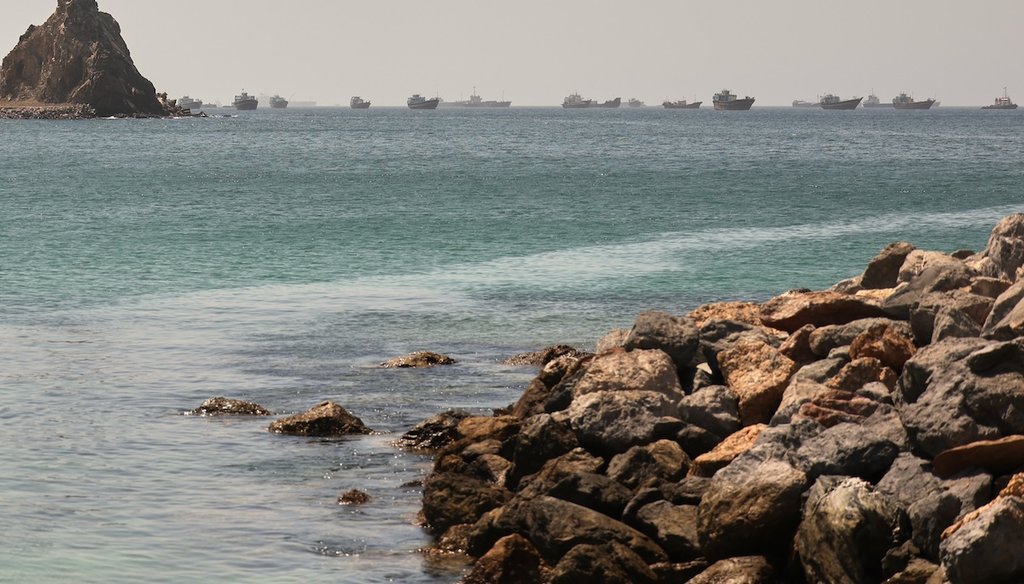
Tankers and cargo vessels in the Gulf of Oman, along shipping routes linking the Strait of Hormuz and the Arabian Sea on June 16, 2026. (AP)

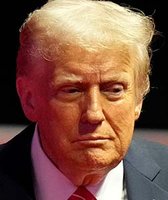
With Iran still seeking to control the Strait of Hormuz, President Donald Trump spent 24 hours promoting a plan for the United States to control the vital international waterway — and for cargo ships to pay the U.S. tolls to pass through it.
"The U.S.A. will be, from this point forward, known as 'THE GUARDIAN OF THE HORMUZ STRAIT,' but as such, and as a matter of FAIRNESS, will be reimbursed, at the rate of 20% on all cargo shipped, for any and all costs necessary to do the job of providing safety and security to this very volatile section of the World. The process and formation will begin immediately," Trump wrote in a July 13 Truth Social post.
Trump reiterated the plan to become "guardian of the strait" in a Fox News interview, and he said later that day that the U.S. would be "reimbursed for protection" in the strait.
Within a day, however, he reversed course, citing conversations with Gulf region allies who he said would offer investment and trade deals instead.
The notion of allies having to pay for U.S. for military protection is a familiar theme for Trump.
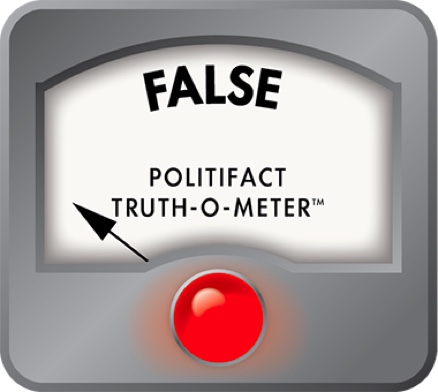
The second fact-check of Trump that PolitiFact ever published — in 2011 — examined his assertion that South Korea didn’t pay the U.S. for its military protection. (We rated that False.) Trump has also falsely said Kuwait never paid the U.S. for reversing Saddam Hussein’s 1990 invasion of their country, and he has repeatedly sought to have U.S. allies in NATO pay more for their own defense.
But military and legal experts say his now-dormant proposal to set up a U.S.-run tolling system in the Strait of Hormuz would have flown in the face of centuries of practice and international law that ensures the free transit of ships on international waters. The U.S. even went to war against the Barbary pirates in the early 1800s to ensure that the Mediterranean fiefdoms would no longer be able to require ships to pay tribute for free passage — an episode memorialized in the U.S. Marine Hymn.
"President Trump’s policy, if enforced, would constitute a massive departure from past U.S. policy, international practice and would be inconsistent with both the Law of the Sea Convention and customary international law," said Gunther Handl, a Tulane University law professor.
Such a policy also would also have been inconsistent with a statement by Trump’s own secretary of state, Marco Rubio, who said in June, "No country is allowed to charge tolls or fees on an international waterway. That’s existing international law. That’s the way it is in international waterways all over the world, and that’s the way we expect it’ll be here."
The White House did not respond to an inquiry for this article.
Is there legal precedent for charging tolls?
Military and legal experts agreed there’s no precedent for a policy as sweeping as the one Trump advocated.
"It is one thing to escort ships, your own, or those of other nations in troubled waters," said Frederick C. Leiner, author of "The End of Barbary Terror." "But I’ve never heard of making what is essentially a charge of insurance for that protection."
Charging any fee for transiting the Strait of Hormuz "would be a clear violation of the 1982 Convention on the Law of the Sea," said Anthony Clark Arend, a Georgetown University professor who specializes in international law.
"Even though the United States is not a party to the convention, it regards provisions on transit passage as binding customary international law," Arend said. "The United States and the Soviet Union worked collectively during the negotiations for the convention to ensure that it established the right of transit passage for all vessels and aircraft."
Mark F. Cancian, a retired Marine colonel and a Center for Strategic and International Studies senior adviser, called Trump’s plan "both illegal and unenforceable," because the U.S. has no authority to impose such a fee. Cancian said it’s also unenforceable without taking military action against shipping.
While some countries bordering shipping lanes in international waters take a role in managing those areas for reasons such as reducing pollution, those responsibilities don’t make those areas territorial waters or allow tolling or user fees, said Mark Meirowitz, a political scientist at the State University of New York’s Maritime College.
The U.S. doesn’t geographically adjoin the Strait of Hormuz, which would further weaken any claim to demanding tolls, he said.
Practical challenges to tolls
Charging tolls would involve a host of obstacles and risks.
Perhaps the biggest practical challenge would be the U.S. need to keep Iran — a country it’s at war with — from charging its own tolls instead. That would require a major, long-term military commitment, likely including U.S. troops on Iranian soil and frequent use of force on land, sea and air.
"Iran might acquiesce in the U.S. controlling the strait, but only following its decisive military defeat, which is very unlikely," Handl said.
Another big challenge is that the new precedent could backfire on the U.S..
"It would set a dangerous precedent for other states that border on international straits," Arend said. "They, too, could now wish to impose such fees. Needless to say, this would dramatically increase the costs of goods delivered by sea."
Our Sources
Donald Trump, Truth Social post, July 13, 2026
Donald Trump, interview with Fox News, July 13, 2026
Donald Trump, remarks to reporters after signing an executive order, July 13, 2026
Donald Trump, Truth Social post, July 14, 2026
Convention on the Law of the Sea, part III
U.S. Marine Band, Marine Hymn, accessed July 14, 2026
New York Times, "Trump’s Threat to Impose Fees in the Strait of Hormuz Contradicts His Aides," July 13, 2026
PolitiFact, "Donald Trump says South Korea doesn't pay United States for troop presence," April 1, 2011
PolitiFact, "Donald Trump says Kuwait never paid U.S. back for ousting Saddam Hussein," April 27, 2011
PolitiFact, "Donald Trump misleads on US defense spending, NATO budget," July 12, 2018
PolitiFact, "Trump falsely claims NATO countries owe United States money for defense spending," July 11, 2017
PolitiFact, "Why Donald Trump’s boast that he got ‘delinquent’ NATO allies to ‘pay up’ is misleading," Feb. 14, 2024
Email interview with James Kraska, professor of international maritime law at the U.S. Naval War College, July 13, 2026
Email interview with Frederick C. Leiner, author of "The End of Barbary Terror: America's 1815 War against the Pirates of North Africa, July 13, 2026
Email interview with Anthony Clark Arend, Georgetown University professor who specializes in international law, July 13, 2026
Email interview with Mark F. Cancian, senior adviser to the Center for Strategic and International Studies, July 13, 2026
Email interview with Gunther Handl, Tulane University law professor, July 13, 2026
Interview with Mark Meirowitz, political scientist at the State University of New York’s Maritime College, July 13, 2026